355
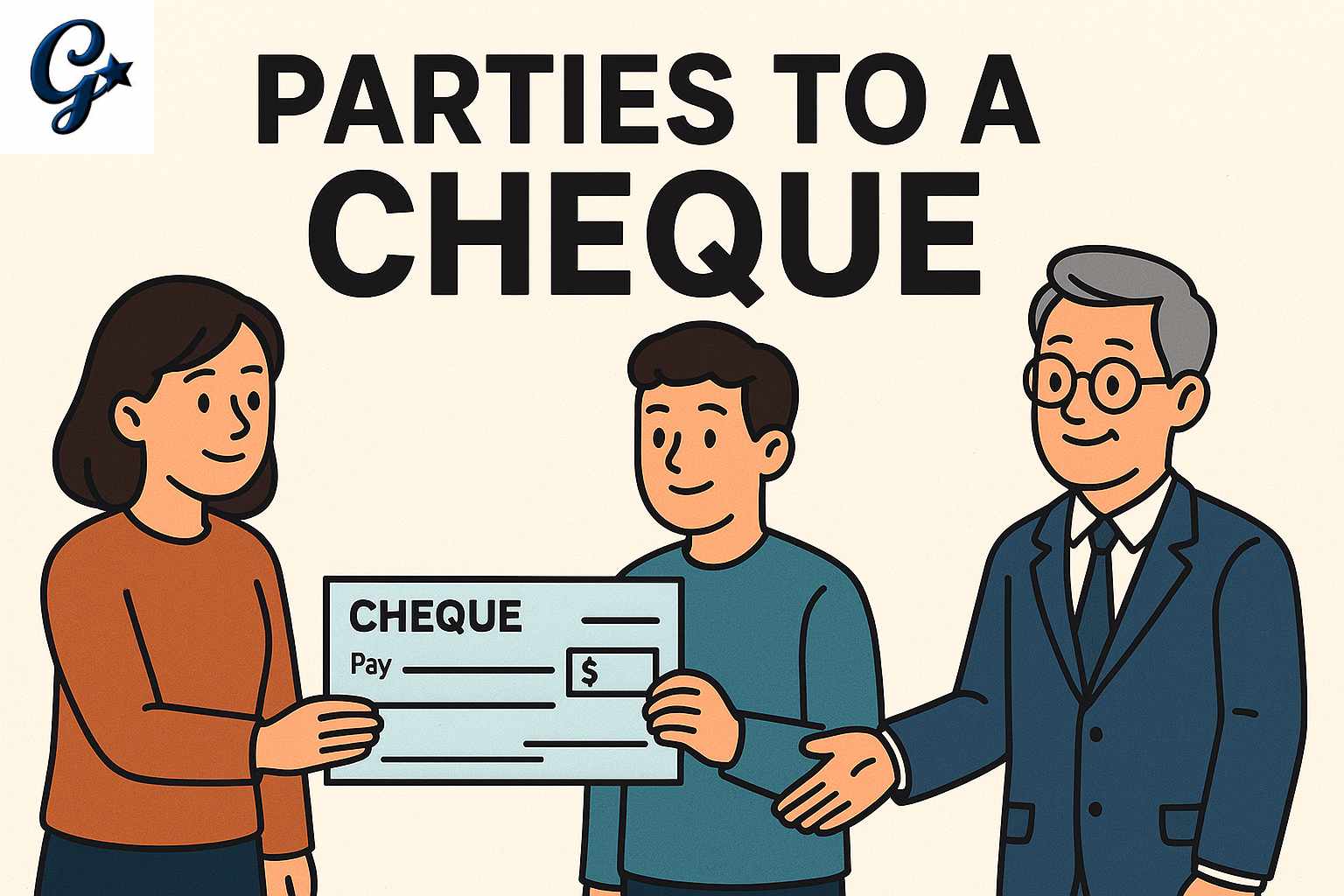
We will be looking at the parties to a cheque, such as the drawer, the drawee, and the payee. We will also examine types of cheques and reasons for dishonoring a cheque.
Lesson Objectives
By the end of the lesson, students should be able to:
- Name and explain the parties involved in a cheque transaction.
- Describe the different types of cheques.
- State the reasons why a cheque may be dishonored.
Table of Contents
Parties to a Cheque
There are three main parties to a cheque. Let’s take a look at these parties below.
- Drawer: The drawer is the person who writes and signs the cheque. This person must have a bank account from which the money will be taken. The drawer instructs the bank to pay a specific amount to the payee. Before writing a cheque, the drawer must make sure there is enough money in the account and that all details are written correctly. The cheque becomes valid only when the drawer signs it in the same way the bank has on record.
- Drawee: The drawee is the bank on which the cheque is drawn. It is the bank that holds the drawer’s account and is responsible for paying the amount written on the cheque. When a cheque is presented to the drawee bank, the bank checks the drawer’s signature, account balance, and all details to confirm that the cheque is valid. If everything is correct, the drawee pays the money to the payee. If something is wrong, the drawee may refuse to make the payment.
- Payee: The payee is the person or organisation that receives the money written on the cheque. The cheque is issued in the payee’s name, and only that person, or someone authorised by them, can collect the payment. The payee may cash the cheque, deposit it in a bank account, or endorse it to another person if the cheque allows it. The payee must also ensure the cheque is not altered and is still valid before presenting it for payment.
Types of Cheques
- Order Cheque: An order cheque is written in the name of a specific person or organisation, meaning only that person can receive the payment. The bank will ask for identification before paying the money. This makes the cheque safer because it cannot be freely transferred to anyone. If the payee wants someone else to receive the money, they must sign at the back to endorse it. Order cheques help prevent fraud because payment is restricted to the named person.
- Bearer Cheque: A bearer cheque is payable to whoever presents it at the bank. It does not carry the words “order” or the name of a specific person. The bank does not ask for identification before making payment. Because of this, bearer cheques are convenient and fast to use. However, they are risky because if they get lost or stolen, anyone holding the cheque can cash it. This makes bearer cheques less secure than order cheques.
- Open Cheque: An open cheque is a cheque that has not been crossed. It can be cashed directly over the counter in the bank. The payee can either receive cash or pay it into an account. Since it is not crossed, it behaves like a simple payment slip and can be easily used for quick transactions. However, open cheques carry a higher risk of theft or fraud because they can be misused if they fall into the wrong hands.
- Crossed Cheque: A crossed cheque has two diagonal lines drawn on the top left corner or across the cheque. These lines instruct the bank not to pay cash across the counter. Instead, the money must be paid into a bank account. This makes the cheque more secure because it cannot be stolen and cashed easily. Crossed cheques also provide a clear payment record and are often used by companies and individuals who want a safer form of payment.
- Stale Cheque: A stale cheque is a cheque that has stayed too long without being presented for payment. Most banks treat a cheque as stale when it is more than six months old. Once a cheque becomes stale, the bank will not honour it because too much time has passed and the information on it may no longer be reliable. The drawer will need to issue a fresh cheque if payment is still required.
- Post-Dated Cheque: A post-dated cheque is a cheque written with a future date instead of the current date. The bank cannot pay the cheque until the date written on it arrives. People issue post-dated cheques when they expect funds to be available at a later date or when they want payment to be made on a specific day. If someone tries to cash a post-dated cheque before the date on it, the bank will usually return it unpaid.
- Dishonored Cheque: A dishonored cheque is a cheque that the bank refuses to pay when it is presented. This means the cheque has been returned to the payee unpaid. A cheque may be dishonored for many reasons such as insufficient funds, wrong signature, irregular writing, alteration without confirmation, or if the cheque has been reported lost. Dishonoring helps protect banks and customers from fraud and financial mistakes.
Reasons for Dishonoring a Cheque
- Insufficient Funds: A cheque will be dishonored when the money in the drawer’s account is not enough to cover the amount written on it. Banks only pay when the account has enough balance. If the account balance is lower than the cheque amount, the bank returns the cheque unpaid because it cannot pay out more money than the customer has deposited.
- Wrong or No signature: Banks compare the signature on the cheque with the specimen signature the customer provided when opening the account. If the signature does not match, or if the drawer forgets to sign the cheque, the bank will dishonor it. This is to prevent fraud and ensure that only the account owner authorizes payments.
- Alterations Without the Drawer’s Signature: If there is any correction or change on a cheque, such as changing the amount or the name of the payee, the drawer must sign beside the alteration. If the change is not signed, the bank will reject the cheque because the alteration might have been made by someone else. This helps protect the customer and the bank from fraudulent activities.
- Differences Between Amount in Words and Figures: Payments are stopped when the amount written in words does not match the amount written in figures. The bank cannot guess which one is correct. To avoid paying the wrong amount, the bank dishonors the cheque. This ensures clarity and avoids disputes between the drawer, the payee, and the bank.
- Stale Cheque: A stale cheque is one that has been kept for too long, usually more than six months. Banks do not make payment on such cheques because they may no longer reflect the drawer’s intention. Cheques are meant to be presented within a reasonable time, so old cheques are returned to protect both the bank and the drawer.
- Post-Dated Cheque Presented Too Early: A cheque that carries a future date cannot be paid before that date. If it is presented early, the bank will dishonor it because the drawer has instructed the bank not to make payment until the stated date arrives. Accepting it before the valid date would go against the customer’s instruction.
- Frozen or Closed Account: If the account has been frozen due to legal issues or is completely closed by the customer, the bank cannot honor any cheque drawn on it. A frozen account is under restriction and cannot carry out transactions. A closed account no longer exists. In both cases, any cheque written on such an account will be rejected.
- Cheque Reported Missing or Stolen: When a customer reports that their cheque book or a particular cheque has been stolen or lost, the bank immediately places a caution on it. If anyone tries to present such a cheque, the bank will dishonor it. This helps prevent unauthorized persons from withdrawing money fraudulently
Final Thoughts
- Parties to a cheque: drawer (writer), drawee (bank), payee (recipient).
- Types of cheques: order cheque (paid to named person), bearer cheque (paid to holder), open cheque (cashed over the counter), crossed cheque (must be deposited into a bank).
- Other forms of cheques: stale cheque (older than six months), post-dated cheque (future date), dishonored cheque (bank refuses payment).
- Reasons for dishonoring a cheque: insufficient funds, wrong signature, alterations, amount mismatch, stale or early post-dated cheque, closed account.
Read also: Teaching Life Skills: Save, Spend Wisely Using Common Apps
Tags
Cheque, Bank note, Drawer, Drawee, Payee, Order cheque, Bearer cheque, Open cheque, Crossed cheque, Stale cheque, Post-dated cheque, Dishonored cheque
Was this article helpful?
Yes0No0