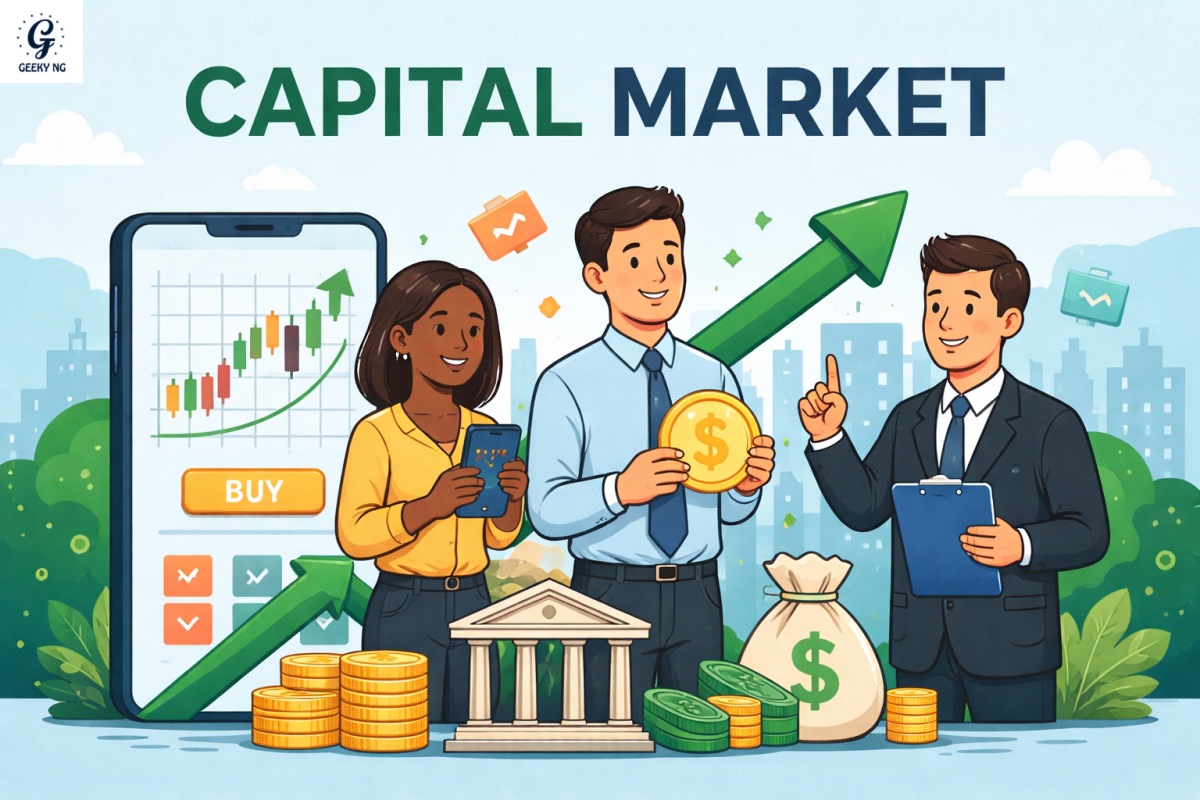
The capital market is one of the major markets in every economy, yet many citizens are not fully aware of how it operates. This article explains the key concepts and essentials of the capital market.
Lesson Objectives
By the end of the lesson, students should be able to:
- Explain the meaning of capital market.
- Identify instruments used and advantages of capital market.
- Describe the stock exchange and its importance.
Table of Contents
Capital Market
The capital market is a financial market where long-term funds are raised and invested. It provides a platform for companies, governments, and other institutions to borrow or raise money for projects that require funding over several years.
Through the capital market, investors can buy and sell securities such as shares, bonds, and debentures, allowing them to invest their money while providing organisations with the capital they need for expansion, infrastructure, and other long-term developments.
Instruments Used in The Capital Market
A. Shares:
Shares are units of ownership in a company. When a person buys shares, they become part-owner of the company and can benefit from its profits, usually through dividends. Companies sell shares to raise money for expanding their business, buying new equipment, or funding projects.
There are two main types of shares: ordinary shares, which give voting rights and dividends that vary depending on profit, and preference shares, which provide fixed dividends but usually no voting rights. Shares are bought and sold on the stock exchange.
Preference Shares: Preference shares are a type of share that gives shareholders a fixed dividend before ordinary shareholders receive any profit.
Preference shareholders usually do not have voting rights in the company, but they have priority in case the company is liquidated. These shares are a way for companies to raise money without losing control to ordinary shareholders. Investors like preference shares because they provide regular income with less risk than ordinary shares.
B. Bonds
Bonds are long-term debt instruments issued by companies or the government to borrow money from investors. When someone buys a bond, they are lending money to the issuer, who agrees to pay back the principal with interest after a fixed period.
Bonds are considered safer than shares because the interest is usually fixed and must be paid even if the company does not make a profit. They are useful for investors who want steady income and for companies or governments that need large sums for development projects.
C. Debentures
Debentures are a type of long-term loan issued by companies to raise funds from the public. Unlike bonds, debentures are usually unsecured, meaning they are not backed by specific company assets. The company promises to pay interest regularly and return the principal on a specific date.
Debentures help companies get money for expansion, modernisation, or other large investments. They are attractive to investors because they offer fixed interest, but they carry some risk since they depend on the company’s ability to pay.
Advantages of The Capital Market
- Provides Long-Term Funds for Companies and Government: The capital market allows businesses and governments to raise money for long-term projects. Companies can sell shares or bonds to get funds to expand their factories, buy machinery, or start new projects. Governments can also raise money for building roads, schools, and hospitals. This long-term funding is important because it is usually too large to get from banks alone and cannot be repaid immediately.
- Encourages Investment in Productive Projects: By offering opportunities to buy shares and bonds, the capital market encourages people to invest their money instead of keeping it idle. Investors put their money into companies that use it to produce goods and services. This helps the economy grow because more businesses are able to produce more, create jobs, and provide more services to the community.
- Helps Business Expansion: Capital markets give companies the money they need to grow. With funds from issuing shares or bonds, businesses can open new branches, increase production, or enter new markets. This expansion makes companies more competitive and increases their profits, which also benefits investors who own shares in the company.
- Helps Government Finance Infrastructure: Governments can use the capital market to raise money for big projects like roads, bridges, power plants, and schools. By issuing government bonds, they can get the funds needed without immediately increasing taxes. These infrastructure projects improve the quality of life for citizens and make it easier for businesses to operate, boosting the overall economy.
- Creates Job Opportunities: When companies raise money from the capital market and expand their operations, they often need more workers. This leads to the creation of new jobs in various sectors such as manufacturing, services, and construction. As more people get employed, income levels rise, and the economy benefits from increased spending and improved living standards.
The Stock Exchange Market
The stock exchange market is an organised marketplace where investors can buy and sell shares, bonds, and other securities of companies. It provides a platform for businesses to raise long-term funds from the public while allowing individuals and institutions to invest their money in these companies.
The market ensures that securities are traded in a regulated and transparent manner, helping investors determine the value of their investments and facilitating the smooth flow of capital in the economy.
Importance of The Stock Exchange Market
- Helps Companies Raise Capital: The stock exchange allows companies to raise money from the public by selling shares. When a company lists its shares on the stock exchange, investors buy them, providing the company with funds it can use to expand operations, invest in new projects, or improve infrastructure. This is a cost-effective way for companies to get large amounts of long-term capital without borrowing from banks.
- Provides a Place For Buying and Selling Securities: The stock exchange provides a regulated and organised platform where investors can buy and sell shares, bonds, and other securities. This ensures that transactions are safe, transparent, and fair. Investors can easily convert their investments into cash when needed, making the stock exchange a liquid and accessible market.
- Encourages Investment and Savings: By offering opportunities to invest in profitable businesses, the stock exchange motivates people to save and invest their money rather than keeping it idle. Investments in stocks and bonds can provide dividends and interest, which increase personal wealth over time. This also helps mobilise idle funds for productive use in the economy.
- Helps Investors Know the Value of Companies: The stock exchange provides information about the price of shares and performance of companies. Investors can assess the value of a company by looking at its share price trends and market performance. This information helps investors make informed decisions about buying or selling shares and promotes transparency in the business environment.
- Helps Government Raise Funds Through Bonds: Governments can issue bonds on the stock exchange to raise funds for projects such as building roads, schools, and hospitals. Investors buy these bonds, effectively lending money to the government in exchange for interest payments. This is an efficient way for the government to finance public projects without increasing taxes.
- Creates Employment in the Financial Sector: The operations of the stock exchange create jobs in areas like brokerage firms, investment advisory services, auditing, and market analysis. Many people work directly or indirectly in supporting roles related to the stock exchange, contributing to economic growth and development.
Summary
- Capital market provides long-term funds for businesses and governments through shares and bonds.
- The stock exchange allows buying and selling of securities, helping companies raise capital.
Tags
Capital Market, Shares, Bonds, Debentures, Preference Shares, Stock Exchange, Securities, Investment, Loans, Savings, Economic Development
Read on: The Nature Of The Nigerian Economy (Exploring Its Vast Potentials And Challenges)