Table of Contents
Table of Contents
- Introduction
- Strong Password Management
- Keeping Software Updated
- Email Security and Phishing Awareness
- Securing Your Internet Connection
- Managing Your Digital Footprint
- Building a Security-First Mindset
- Conclusion
Nigeria’s digital landscape transforms rapidly, bringing both opportunities and risks- hence the need for cybersecurity.
As more Nigerians embrace online banking, e-commerce, and digital services, cybercriminals sharpen their tactics to exploit vulnerabilities.
Recent statistics reveal that over 60% of Nigerian businesses have faced cyber threats or data breaches in the past five years, resulting in financial damage worth billions of naira. The year 2025 presents a complex cybersecurity environment where artificial intelligence serves as both shield and sword.
Whilst AI-powered defence tools help organisations detect threats faster, cybercriminals also harness this technology to create sophisticated attacks. They deploy AI to automate phishing campaigns and develop malware that evades detection.
This dual nature of technology creates an arms race between defenders and attackers. Nigerian internet users find themselves at the centre of this battle, where a single click on a malicious link or weak password can compromise years of personal data. Traditional security measures alone are no longer sufficient.
Understanding these challenges empowers individuals to take control of their digital security. By implementing robust cybersecurity practices and staying informed about emerging threats, Nigerians can navigate the digital world with confidence while protecting their valuable personal information.
Cybersecurity Requires Strong Password Management
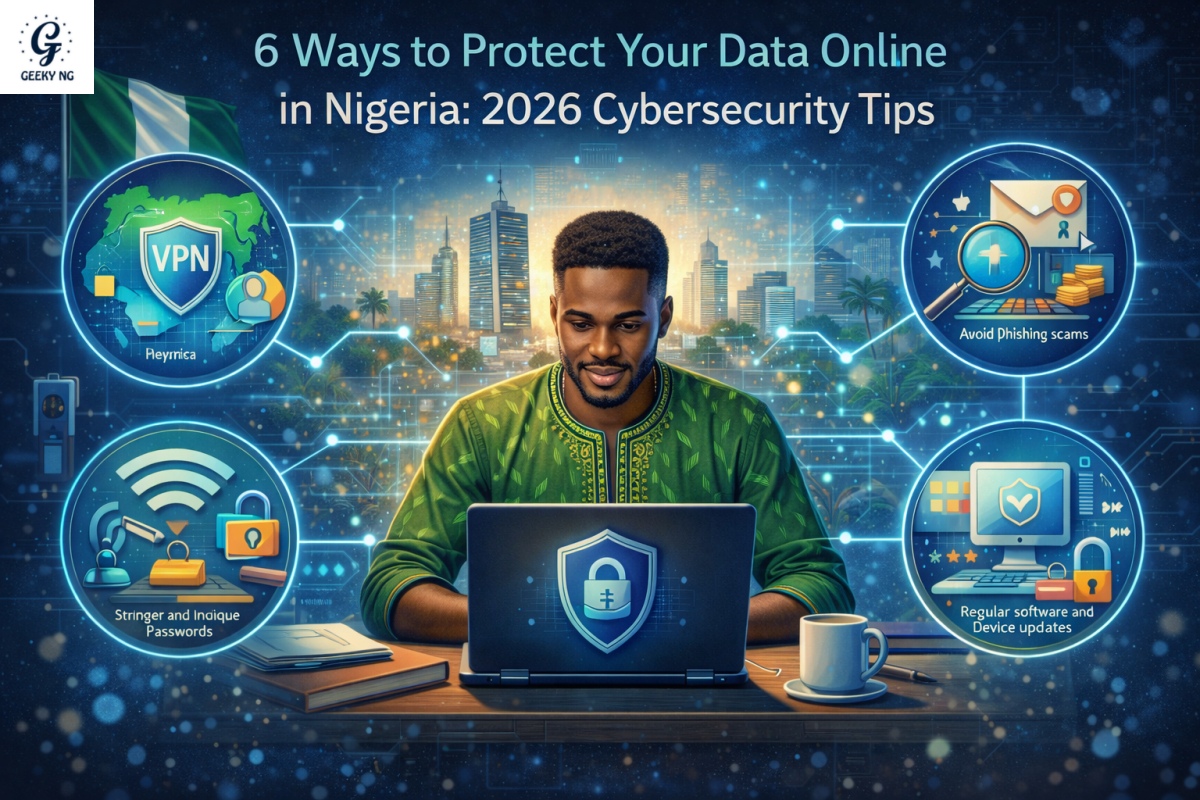
Your password serves as the first line of defence against cyber threats. Create strong, unique passwords for each online account to significantly reduce your vulnerability to attacks. Avoid using personal information such as birthdates, names, or common words that criminals can easily guess.
Consider implementing a password manager to generate and store complex passwords securely. These tools create unique combinations of letters, numbers, and symbols that would take years for attackers to crack. Additionally, enable two-factor authentication wherever possible, adding an extra layer of security that requires both your password and secondary verification.
Regular password updates remain crucial, especially for sensitive accounts like banking and email. However, avoid changing passwords so frequently that you resort to simple variations or write them down in unsecured locations.
Cybersecurity Keeps Software Updated
Software updates often contain critical security patches that address newly discovered vulnerabilities. Cybercriminals frequently exploit these known weaknesses to gain unauthorised access to devices and data. Therefore, maintaining up-to-date operating systems, applications, and security software creates a formidable barrier against attacks.
Enable automatic updates for your operating system and essential applications to ensure you receive security patches promptly. This practice eliminates the window of opportunity that criminals exploit between vulnerability disclosure and patch installation. Pay particular attention to web browsers, as they serve as primary gateways for many online activities.
Email Security and Phishing Awareness
Email remains one of the most common attack vectors for cybercriminals targeting Nigerian users. Phishing attacks have become increasingly sophisticated, with criminals crafting messages that closely resemble legitimate communications from banks, government agencies, or popular services.
Exercise caution with unexpected emails, especially those requesting personal information or urgent action. Legitimate organisations rarely ask for sensitive data through email. When in doubt, contact the organisation directly through official channels rather than clicking links or downloading attachments from suspicious messages.
Hover over links before clicking to preview the destination URL. Be wary of shortened links or URLs that don’t match the supposed sender’s domain.
Securing Your Internet Connection
Your internet connection serves as the pathway for all online activities, making its security paramount. Public Wi-Fi networks, whilst convenient, pose significant risks as they often lack proper encryption and can be easily compromised by attackers seeking to intercept data.
Avoid accessing sensitive information or conducting financial transactions over public networks. If you must use public Wi-Fi, consider investing in a reputable Virtual Private Network (VPN) service. A VPN encrypts your internet traffic, making it virtually impossible for attackers to intercept your data even on compromised networks.
At home, secure your wireless network with WPA3 encryption and change the default router password. Regularly update your router’s firmware to ensure it has the latest security patches.
Managing Your Digital Footprint
Social media platforms and online services collect vast amounts of personal information that can be exploited by cybercriminals. Regularly review your privacy settings across all platforms to limit the visibility of personal information to strangers.
Be mindful of the information you share publicly. Details such as your full name, address, phone number, or financial information should never appear on public-facing platforms. Criminals often piece together information from multiple sources to build detailed profiles for targeted attacks.
Consider the long-term implications of your online activities. Information shared today may be accessible years later, potentially impacting your security or reputation.
Building a Security-First Mindset
Technology alone cannot guarantee complete security; human behaviour plays a crucial role in cybersecurity. Developing a security-first mindset involves questioning unusual requests, verifying the authenticity of communications, and thinking critically about potential risks before taking action online.
Stay informed about current cyber threats and scams targeting Nigerian users. Cybercriminals often exploit current events or popular trends to make their attacks more convincing. Knowledge of these tactics helps you recognise and avoid potential threats.
Share cybersecurity knowledge with family and friends. Cybersecurity works best as a collective effort, and educating others creates a more secure digital environment for everyone.
Final Thoughts
Protecting your data online in Nigeria requires vigilance, knowledge, and proactive measures. The cybersecurity landscape of 2025 presents both challenges and opportunities, with AI serving as both a powerful defence tool and a weapon in the hands of cybercriminals.
By implementing strong password management, keeping software updated, exercising caution with emails, securing internet connections, managing digital footprints, and cultivating a security-first mindset, Nigerian internet users can significantly reduce their risk of becoming victims of cybercrime.
Remember that cybersecurity is an ongoing process, not a one-time effort. Stay informed about emerging threats, regularly review and update your security practices, and don’t hesitate to seek help when needed. Your digital safety depends on the actions you take today.