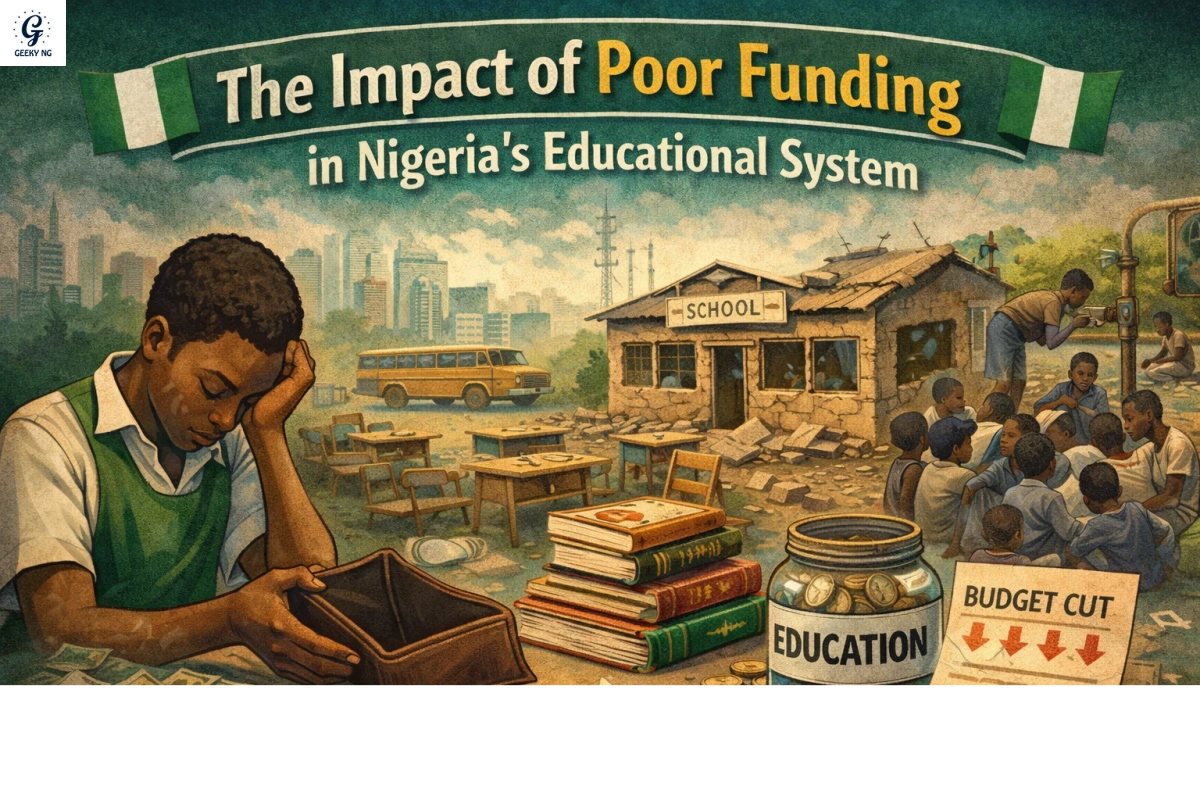
In a country where education is considered to be a key to unlocking a brighter future, the state of Nigeria’s educational system is a continuous reminder of the challenges that await us.
With a shocking 60% of its population under 25 years, Nigeria’s future depends on the quality of education its young people receive. The impact of poor funding on Nigeria’s educational system is a pressing issue that demands urgent attention.
When we talk about poor funding, we aren’t just talking about numbers on a spreadsheet; we are talking about why a child in a rural village has to sit on a cold floor to learn ABCs. To understand how to fix this, we have to look at where the money is getting stuck and what that does to our children’s future.
This article aims to explore the consequences of inadequate funding on Nigeria’s educational system and the potential solutions to this pressing problem.
Table of Contents
Consequences of Poor Funding on Educational System
One of the biggest reasons our schools are struggling is that the government simply doesn’t set aside enough money for them. Think of the country’s total budget like a big loaf of bread.
According to experts at UNESCO, for a country to really thrive, it should give at least 15% to 20% of that bread to education. However, back in 2020, Nigeria only gave about 6.7%.
This is like trying to feed a giant family with just a single slice of toast. Because the slice is so small, there isn’t enough money left to pay for new books, fix broken roofs, or build modern computer labs. This lack of investment makes it almost impossible for public schools to keep up with the rest of the world.
Nigeria relies a lot on “foreign aid,” which is money given by other countries or international groups to help our schools. While this help is great, it is also very risky. Relying on outside money is like depending on a neighbor to give you dinner every night; if that neighbor loses their job or decides they don’t want to help anymore, you go hungry.
This makes our educational system “unstable.” We can’t make long-term plans to improve our universities or primary schools if we aren’t sure if the money will still be there next year. True growth happens when a country can fund its own dreams rather than waiting for a gift from abroad.
We must fix this problem so students can get the education they deserve.
The Impact of Poor Funding in Nigeria’s Educational System
When schools don’t have enough money, the environment becomes “hostile” to learning. Many public schools today look tattered and old, lacking basic things like clean toilets, science equipment, or even enough chairs for everyone to sit down.
This makes students lose interest in school. If a classroom is hot, crowded, and has no books, it is hard to stay focused. This leads to many students failing their exams or dropping out entirely because they feel like they aren’t gaining any real skills. It also hurts the teachers.
When a teacher isn’t paid well or doesn’t have the tools to teach, they lose their motivation. This “brain drain” means our best teachers might leave the country to work elsewhere, leaving our students even further behind.
Recommendations
Fixing this isn’t just the government’s job; it’s a job for everyone. First, the government must prioritise education by hitting that 15% budget target. We can also look for new ways to get resources.
Private companies could “adopt” a local school, providing them with things like internet or solar power in exchange for tax breaks. Communities can also step up – parents and local leaders can volunteer to fix broken fences or donate old books.
We can even use modern technology like “crowdfunding” to raise money for specific school projects. If we treat education like a precious investment rather than a boring expense, we can give every Nigerian child a fair chance to succeed and help our country grow rich in both knowledge and wealth.
Final Thoughts
Poor funding poses serious threats to Nigeria’s educational system. It affects the quality of education, the teachers, and the students.
We need to work together to find solutions to this problem. We need to make sure that every child in Nigeria has access to quality education.
This will help them grow and develop, and it will also help the country become stronger and more prosperous. We must take action now to fix this problem and give Nigerian children the education they deserve.
Read more: The Impact of Poverty and Inequality on Educational Outcomes