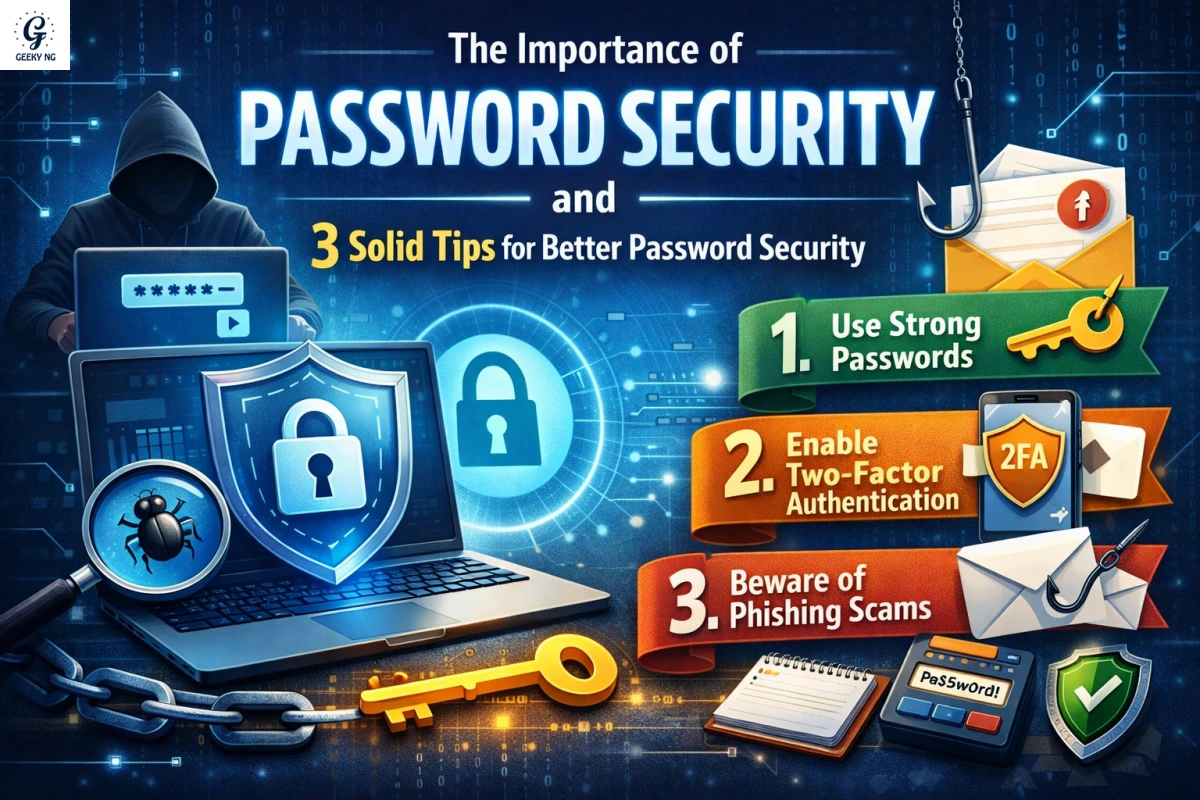
In our increasingly interconnected world, where digital footprints extend into every aspect of our lives, the importance of password security cannot be overstated.
From personal emails to financial accounts and social media profiles to workplace systems, passwords are the first defence against unauthorised access to our most sensitive information.
Yet, despite their critical role, many people still underestimate the significance of robust password practices.
Consider this: According to a recent Verizon Data Breach Investigation report, over 70% of employees repeat passwords at work.
Even more alarmingly, 81% of hacking-related breaches exploited either stolen or weak passwords. These statistics paint a sobering picture of our collective vulnerability in the digital realm.
The consequences of poor password security extend far beyond individual inconvenience. For businesses, compromised passwords can lead to devastating data breaches, resulting in financial losses, reputational damage, and erosion of customer trust.
In 2019 alone, weak passwords accounted for 80% of all data breaches, highlighting the urgent need for improved password practices across personal and professional spheres.
As we explore the world of password security more deeply, we’ll uncover the reasons behind its critical importance, uncover the common pitfalls that leave us vulnerable, and provide practical strategies for fortifying our digital defences.
Whether you’re a casual internet user, a tech enthusiast, or a business professional, this guide will equip you with the knowledge and tools to protect your digital identity in an increasingly complex cyber landscape.
Table of Contents
The Anatomy of a Strong Password: Password Security Tips.
At the heart of effective password security lies the concept of strength. A strong password is a formidable barrier against unauthorised access, significantly reducing the risk of cybercriminals gaining entry to sensitive data. What exactly makes a password strong?
1. Length: The First Line of Defence.
When it comes to passwords, size does matter. The longer your password, the more difficult it becomes for hackers to crack it through brute-force attacks.
While the minimum recommended length is often cited as 8 characters, security experts now advise you aim for at least 12. A 20-character randomised password combining uppercase and lowercase letters, numbers, and symbols would take a computer an astonishing 3 sextillion years to crack!
2. Complexity: Mixing It Up.
A truly robust password incorporates a diverse mix of characters:
- Uppercase and lowercase letters
- Numbers
- Special symbols (e.g., @, #, $, %, &)
This complexity significantly increases the number of possible combinations, making it exponentially harder for cybercriminals to guess or crack your password.
3. Uniqueness: Avoiding the Reuse Trap.
One of the most common and dangerous password practices is reusing the same password across multiple accounts. Despite 91% of people being aware that this is risky behaviour, 59% still do it at home and work. Using unique passwords for each account is crucial; if one account is compromised, your other accounts remain secure.
Common Password Pitfalls to Avoid.
While understanding the components of a strong password is essential, it is equally important to recognise and avoid common mistakes that can undermine your security efforts. This can be done by:
1. Personal Information: A Hacker’s Goldmine.
Using personal information such as birthdays, pet names, or favourite sports teams in your passwords is a recipe for disaster. This information is often easily obtainable through social media or other public sources, making it simple for hackers to guess your password.
2. Dictionary Words: Not as Clever as You Think.
Simple words found in the dictionary, even when combined, are vulnerable to dictionary attacks, a method where hackers systematically enter every word in a dictionary as a password guess. Instead, consider using a passphrase: a combination of random words interspersed with numbers and symbols.
3. Default Passwords: Change them Immediately.
Many devices and accounts come with default passwords. These are often widely known and should be changed immediately upon setup to prevent unauthorised access.
Strategies for Enhanced Password Security.
Now that we’ve covered the do’s and don’ts of password creation let’s explore some strategies to bolster your password security further.
1. Embrace Password Managers.
Password managers are powerful tools that generate, store, autofill strong and are unique passwords for all your accounts. By using a password manager, you only need to remember one master password while ensuring that each of your accounts has a robust, unique password.
2. Implement Multi-Factor Authentication (MFA).
MFA adds an extra layer of security by requiring additional verification beyond just your password. This could be a fingerprint, a code sent to your phone, or a physical security key. Even if your password is compromised, MFA can prevent unauthorised access to your accounts.
3. Regular Password Updates.
While the frequency of password changes is debated among security experts, regularly updating passwords for your most critical accounts is still a good practice. This is especially important if you suspect your account may have been compromised.
4. Be Wary of Phishing Attempts.
Cybercriminals often trick users into revealing their passwords through phishing emails or fake websites. Always be cautious about entering your password, especially if you’ve been directed to do so from an unsolicited email or text message.
The Future of Password Security.
As technology evolves, so do the methods for protecting our digital identities. While strong passwords remain crucial, emerging technologies are shaping the future of authentication and here is how:
1. Biometric Authentication.
Fingerprint scanners, facial recognition, and even behavioural biometrics (such as how you type or move your mouse) are becoming increasingly common authentication methods.
2. Passwordless Authentication.
Some systems are moving towards eliminating passwords altogether. Instead, these systems rely on biometrics, security keys, and other factors to verify identity.
3. Artificial Intelligence and Machine Learning.
These technologies detect unusual login attempts and potential security breaches in real time, adding an extra layer of protection to password-based systems.
Conclusion.
In an age where our digital lives are as important as our physical ones, robust password security is not just a recommendation. It’s a necessity. Understanding the principles of strong passwords, avoiding common pitfalls, and implementing advanced security strategies can significantly reduce your risk of falling victim to cyber-attacks.
Remember, your passwords are the keys to your digital kingdom. Treat them with the care and attention they deserve. Regularly review and update your password practices, stay informed about emerging security threats, and never underestimate the importance of this crucial aspect of your digital life.
Ultimately, the effort you invest in password security pays dividends in peace of mind and protection against the ever-evolving landscape of cyber threats. By taking control of your password security today, you’re safeguarding your digital future for tomorrow.
Read also: Cybersecurity: Staying Safe In The Digital Age