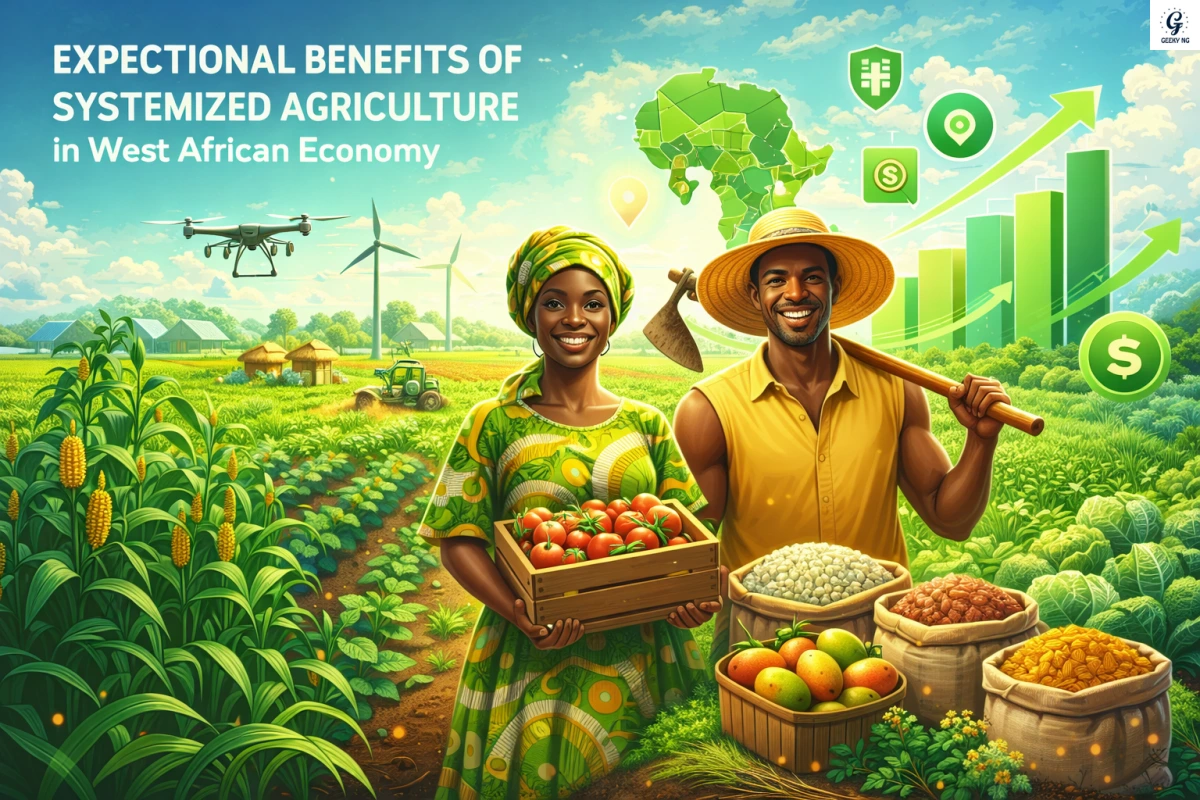
Lesson Objectives:
By the end of the lesson, students should be able to:
- Define the term agriculture in simple economic terms; as well as understand the benefits of agriculture in West African economy.
- Identify and explain the major components (branches) of agriculture.
- Describe the different systems of agriculture practiced in West Africa.
- Discuss the contributions of agriculture to the economic development of West African countries.
Table of Contents
Meaning of Agriculture
Agriculture is the practice of cultivating the land, growing crops, and rearing animals to provide food, raw materials, and other essential products for human use. It is one of the oldest and most important economic activities because it supports human survival and national development. Through agriculture, people obtain food to eat, materials like cotton and timber for industries, and employment opportunities for millions of workers, especially in rural areas. In simple terms, agriculture means farming and all related activities that help sustain life and promote economic growth.
Components of Agriculture
Agriculture is made up of several parts or branches. The main components include:
-
Crop Production:
Crop production is the branch of agriculture that deals with the growing of plants and crops for food, raw materials, and export. It involves activities such as land preparation, planting, weeding, irrigation, pest control, and harvesting. Crops may include food crops like maize, rice, cassava, yam, and vegetables, as well as cash crops like cocoa, cotton, and palm oil which are grown mainly for sale and export. Crop production provides food for people, income for farmers, and raw materials for industries such as flour mills, textile factories, and beverage companies.
-
Livestock Farming (Animal Husbandry):
Livestock farming, also known as animal husbandry, involves the breeding, rearing, and management of animals for human use. Animals such as cattle, goats, sheep, pigs, and poultry are kept to produce meat, milk, eggs, hides, and wool. Livestock farming provides a steady source of protein for human diets and raw materials for industries such as leather, dairy, and textile production. In addition, it creates employment for farmers and traders and supports other branches of agriculture through the use of animal waste as manure for crop production.
-
Forestry:
Forestry is the science and practice of managing forests and trees for economic and environmental benefits. It includes the planting, care, and harvesting of trees for timber, paper, furniture, and fuel. Forestry also plays a vital role in protecting the environment by preventing soil erosion, maintaining rainfall patterns, and serving as a home for wildlife. In many parts of West Africa, forests provide non-timber products such as fruits, herbs, and honey which serve as food and medicine. Sustainable forestry ensures that trees are replaced after they are cut down, preserving natural resources for future generations.
-
Fishing:
Fishing is the act of catching, processing, and selling fish and other aquatic animals for food and commercial purposes. It can be carried out in rivers, lakes, and oceans, or through fish farming known as aquaculture. Fishing provides a major source of protein for human consumption and employment for millions of people, including fishermen, processors, and traders. It also supports industries such as canning, cold storage, and transportation. In countries like Nigeria, fishing contributes to both domestic food supply and export earnings when surplus fish is sold abroad.
-
Agricultural Processing and Marketing:
Agricultural processing and marketing involve transforming raw farm produce into finished or semi-finished goods and distributing them to consumers. Processing adds value to farm products, for example, turning cassava into garri or maize into flour. Marketing includes the buying, selling, storage, packaging, and transportation of these products to ensure they reach buyers in good condition. This component links farmers to consumers, helps stabilise prices, and encourages more production. It also provides many job opportunities in transport, packaging, and retail sectors, thereby contributing to economic growth.
SEE MORE: NG@65: 6 Wins In Agriculture And 5 Moves To End Food Insecurity
Systems of Agriculture
The system of agriculture refers to the different ways farming is practiced. The main systems include:
-
Subsistence Farming:
Subsistence farming is a system of agriculture in which a farmer produces crops and rears animals mainly to feed themselves and their family. In this system, very little or no surplus is left for sale. The farmer uses simple tools such as hoes, cutlasses, and local planting methods. The farms are usually small in size and labour is provided by the farmer and their family members. Common crops grown include maize, yam, cassava, and vegetables. This type of farming is common in rural areas of West Africa, where people depend largely on farming for their daily food supply.
-
Commercial Farming:
Commercial farming is the opposite of subsistence farming. It is the large-scale production of crops and animals mainly for sale and profit. Farmers in this system use modern machines like tractors, harvesters, and irrigation systems. They also make use of fertilizers, improved seeds, and pesticides to increase yield. Commercial farming requires a lot of capital and skilled labour. Examples of commercial farming include large cocoa plantations in Nigeria, rice farms in Kebbi State, and poultry farms in Ogun State. The main goal is to produce enough food and raw materials for the market and industries.
-
Mixed Farming:
Mixed farming is a system where both crop production and animal rearing are practiced on the same piece of land. The waste from animals, such as dung, is used to fertilise the soil, while crop residues serve as feed for the animals. This system helps to reduce waste and ensures that the farmer earns income from both crops and livestock. For example, a farmer may plant maize and yam while also rearing goats and chickens on the same farm. Mixed farming promotes efficient use of resources and helps farmers maintain soil fertility naturally.
-
Mechanised Farming:
Mechanised farming involves the use of modern machines and technology to carry out most of the farming activities. Machines like tractors, ploughs, harvesters, planters, and irrigation systems are used to make farming faster, easier, and more productive. It is usually practiced on large farms with sufficient capital. Mechanised farming helps to increase agricultural output and reduce dependence on manual labour. It is common in developed countries and in some large-scale farms in Nigeria where modern agricultural methods are adopted to meet the growing demand for food and raw materials.
SEE MORE: The Future of Agriculture In Nigeria: AgriTech Insights
Contributions of Agriculture to the Economic Development of West Africa
Agriculture plays a vital role in the economic growth of West African countries. Its contributions include:
-
Provision of Food:
Agriculture plays a vital role in providing food for the people of West Africa. Through farming and animal rearing, people are supplied with basic food items such as rice, yam, maize, cassava, beans, meat, fish, and vegetables. This helps to reduce hunger and malnutrition in the region. When there is enough food, people become healthier, stronger, and more productive, which contributes to national development. A well-fed population is able to work efficiently in other sectors of the economy, thereby supporting overall economic growth.
-
Employment Opportunities:
Agriculture is one of the largest employers of labour in West Africa. A large number of people, especially in rural areas, are engaged in farming, fishing, forestry, and agricultural processing. It also creates indirect employment for traders, transporters, and workers in agro-allied industries. By providing jobs, agriculture helps to reduce unemployment and poverty, increases household income, and improves the standard of living of citizens. This continuous flow of income supports the growth of the economy as people spend money on goods and services.
-
Source of Foreign Exchange:
Agriculture serves as a major source of foreign exchange for many West African countries. Cash crops such as cocoa, coffee, cotton, palm oil, groundnuts, and rubber are exported to earn foreign currency. The income earned from these exports helps governments to import machinery, technology, and other essential goods needed for development. For instance, Ghana earns foreign exchange from cocoa exports, while Nigeria earns from palm oil and rubber. The money realized from agricultural exports strengthens the balance of payment and boosts economic growth.
-
Source of Raw Materials:
Agriculture supplies raw materials needed by various industries in West Africa. For example, the textile industry depends on cotton, the food processing industry relies on maize and cassava, and the beverage industry uses cocoa and sugarcane. Without agricultural raw materials, many industries would not be able to produce their goods. The steady supply of farm produce supports industrial growth, creates more jobs, and increases production in the economy. In this way, agriculture and industry work hand in hand to promote economic development.
-
Contribution to National Income:
Agriculture contributes a significant share to the Gross Domestic Product (GDP) of West African countries. The income earned from farming, fishing, and forestry adds to the total wealth of the nation. The government also earns revenue through export duties, taxes, and levies from agricultural businesses. When agriculture performs well, the national income increases, allowing the government to invest more in infrastructure, education, and healthcare. Thus, agriculture remains a key source of national prosperity and stability in West Africa.
-
Development of Rural Areas:
Agricultural activities help to develop rural communities where most farming takes place. When farming expands, it attracts roads, electricity, water supply, schools, and health centres to those areas. Farmers’ income also increases, which encourages the growth of local markets and small businesses. In addition, agricultural extension services train farmers and improve their productivity. All these contribute to rural development, reduce rural-urban migration, and ensure that economic progress spreads evenly across the country.
Lesson Summary
- Agriculture is the cultivation of land and rearing of animals for human needs.
- It includes crop production, livestock, forestry, and fishing.
- Systems of agriculture include subsistence, commercial, mixed, and mechanized farming.
- Agriculture contributes to economic and industrial development through job creation, food supply, export earnings, and raw materials.
Tags
Agriculture, Farming, Crops, Livestock, Food production, Raw materials, Economic activity, Crop production, Livestock farming , animal husbandry, Forestry, Fishing, Agricultural processing, Marketing of produce, Subsistence farming, Commercial farming, Mixed farming, Mechanised farming, Small-scale farming, Large-scale farming, Capital and labour, Farm tools and machinery, Employment, Food supply, Foreign exchange, Raw materials, Gross Domestic Product, GDP, Export crops, Rural development, National income.