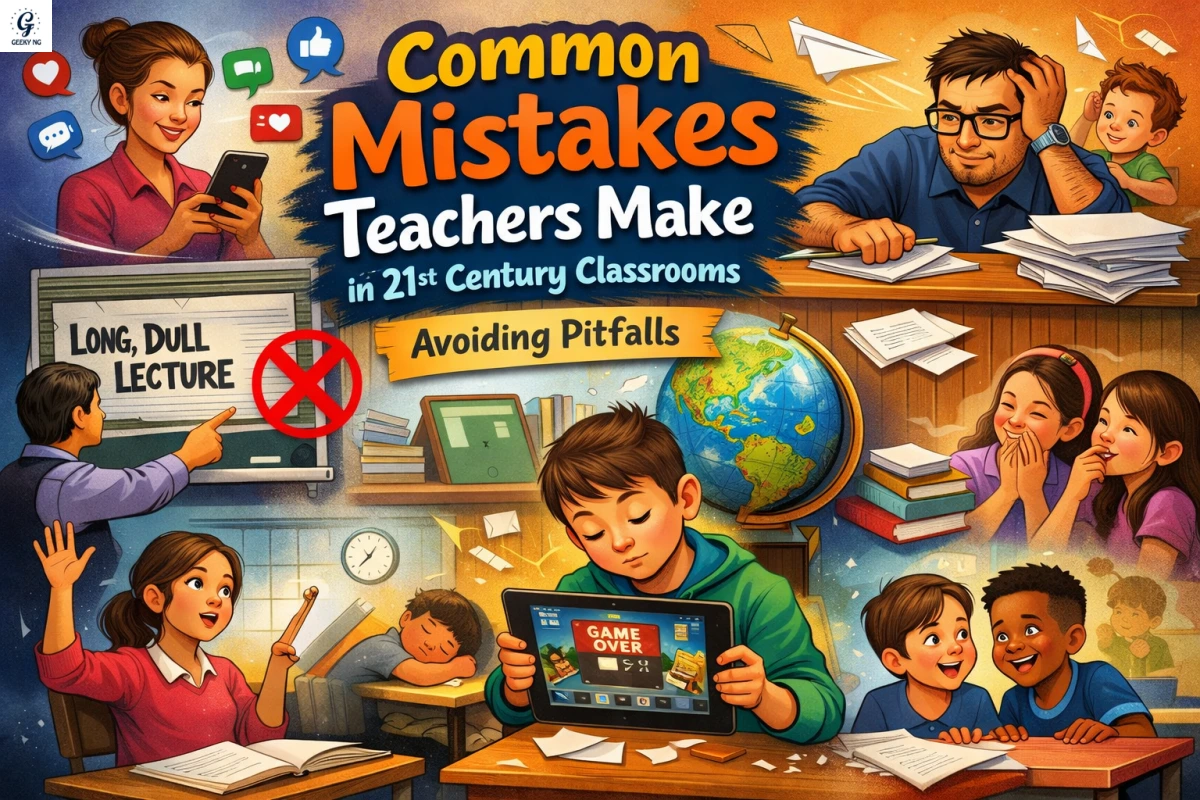
In the past, the teacher was often seen as the police, the judge, and the executioner of the classroom.
Whatever the teacher said was law and binding. Educators were viewed as people who rarely made mistakes, and their authority was never questioned.
Today, teaching has evolved significantly. It is about more than just a syllabus. It is about managing a classroom where Socio-Emotional Learning (SEL) is as important as grades.
Whether you teach in a modern or a traditional school setting, your words and the way you use them matters. The way you talk to a student can help them succeed or make them want to give up.
Even the best teachers fall into traps. These mistakes often come from those old “command and control” methods that do not work in 21st-century classrooms. Correction is necessary, but how you do it is what counts.
When we use words that shame students, we lose their trust. Once that trust flies out of the window respect goes out with it too, the student stops learning.
Table of Contents
What Defines a 21st-Century Classroom?
A 21st-century classroom is a place for teamwork, critical thinking, positive communication, and empathy. Modern education tips focus on partnership instead of fear-based or forced authority.
Today’s students are more aware of their feelings and social surroundings. This is where Socio-Emotional Learning (SEL) helps. It is the process of helping students manage their emotions and set goals.
When teachers make mistakes in how they speak to students, they hurt these goals and create new teaching gaps between them and their learners.
Avoid Saying These 8 Things When Correcting a Student
Correction is part of teaching and learning. In a modern classroom, your delivery determines if a student learns or retreats. Here are eight phrases to avoid and better classroom strategies to use instead.
1. “How many times must I repeat this?”
Teachers often say this when they are frustrated. However, it tells the student: “You are slow,” or “I have given up on you.” This causes shame, which can stop the learning process entirely.
- Try this instead: “Let’s review this one more time,” or “I need you to show me you understand this now.” This focuses on the task, not the student’s failure
2. “So, you are the only one who doesn’t understand this?”
Singling out a student in front of the class is a big mistake. It hurts their dignity and makes the classroom feel unsafe. Once a student feels exposed, they stop participating to protect themselves.
- Do this: “Let me explain this in a different way,” or “This part is tricky for many people.” This validates their struggle and encourages them to keep trying.
3. “You are always doing this.”
Using words like “always” or “never” creates a negative identity for the student. If a child believes they are “bad,” they might stop trying to improve. They simply become the label you gave them.
- Say this instead: “This specific behavior is not okay,” or “This does not meet our agreed standards.” You are correcting the action, not the child’s character.
4. “You should know better.”
This phrase assumes the student meant to be bad. In reality, students may be tired, distracted, or simply not mature enough to handle the situation yet.
- Say this instead: “Let’s focus on making a better choice next time,” or “This is what I expect from you from now on.” This gives the student a clear path to follow.
5. “If you do this again, you’ll see.”
Vague threats create fear rather than responsibility. Without clear consequences, students feel anxious and defensive. This stops their emotional growth.
- Try this instead: “If this continues, the consequence will be [specific action],” or “This choice leads to [XYZ], and I want you to succeed.” Authority works best when it is firm and predictable.
6. “Why can’t you be more like your classmates?”
Comparison kills confidence. Every classroom has fast and slow learners. When you compare a student to others, they stop thinking about the lesson and start doubting their own worth.
- Say this: “You are a work in progress,” or “I see your effort; I believe you can do better.” Growth should be measured against the student’s own past performance.
7. “You aren’t serious.”
Labeling a student as “not serious” turns a small mistake into a character flaw. Often, a student who looks “unserious” is actually overwhelmed or lacks the tools to do the work.
- Try this instead: “I don’t think you are fully focused right now,” or “Let’s take a moment to reset and try again.” This treats focus as a skill they can improve.
8. “If you fail, you are on your own.”
This sentence ends the partnership between teacher and student. Students need to know the teacher is on their side. If they feel abandoned, they lose the motivation to work hard.
- Say this instead: “I am here to help you, but you also need to put in the effort,” or “Let’s work together to find a way to improve.” This helps students know that they can rely on you in their challenging situations.
The Role of SEL in Effective Correction
Why are these classroom strategies so important? Research shows that when students feel supported, their brains are more open to learning.
When a teacher is harsh, the student’s brain enters a “fight or flight” mode. This shuts down the part of the brain used for logic.
By avoiding these mistakes as a teacher, you are:
- Building Trust: Students work harder for teachers they respect.
- Encouraging a Growth Mindset: Students learn that mistakes are just part of the journey.
- Reducing Discipline Issues: Most bad behaviour is a reaction to feeling misunderstood or belittled.
Key Takeaways;
- Correction is not about winning. It is about keeping the student on your side while fixing a problem.
- Separate the child from the act. Always correct the behavior, never the person.
- Be predictable. Use clear, calm consequences instead of scary, vague threats.
- Empathy gets results. Understanding why a student is struggling is better than punishing them for it.
Final Thoughts
Teaching today requires high emotional intelligence. While large classes and heavy workloads make it easy to fall into old habits, your words stay with students forever.
Students might forget a date in history or a math formula, but they will never forget how you treated them when they were wrong.
By avoiding these pitfalls and using Socio-Emotional Learning, you can make your classroom a place where every student feels respected and ready to succeed.
Read Also: Teacher Burnout: Causes, Symptoms & Solutions