Children are young people, defined as people below the age of 18 years or from the age of infancy to adolescence.
Childhood is considered one of the developmental stages that involves a lot of physical, cognitive, emotional, and social changes.
In early childhood, the child’s brain is still developing and is very malleable, meaning that the child can easily be trained and can easily acquire new knowledge and even skills at a very young age.
This period is therefore crucial in establishing the child’s learning, behaviour and health patterns in the future.
These years involve profound learning from educational activities and caregivers, which determine the child’s cognitive and social-emotional development.
Table of Contents
What Exactly are Disabilities?
Disability in children means any of the physical, mental, sensory, or emotional developmental or learning problems that affect a child’s ability to carry out functional activities compared to their peers
These disabilities can either be inherited or develop during the early period of a child’s life.
They may differ in terms of the extent, effects, and kinds.
These may include physical ones like cerebral palsy or muscular dystrophy, or mental ones like autism or intellectual disability.
Pre- and post-identification and subsequent care are crucial in the management of disabled children and their development.
Children with disabilities are disadvantaged when it comes to education, social interactions, health, and psychological needs.
These children require proper care and support services, therapies, and facilities that will enable them to reach their full potential.
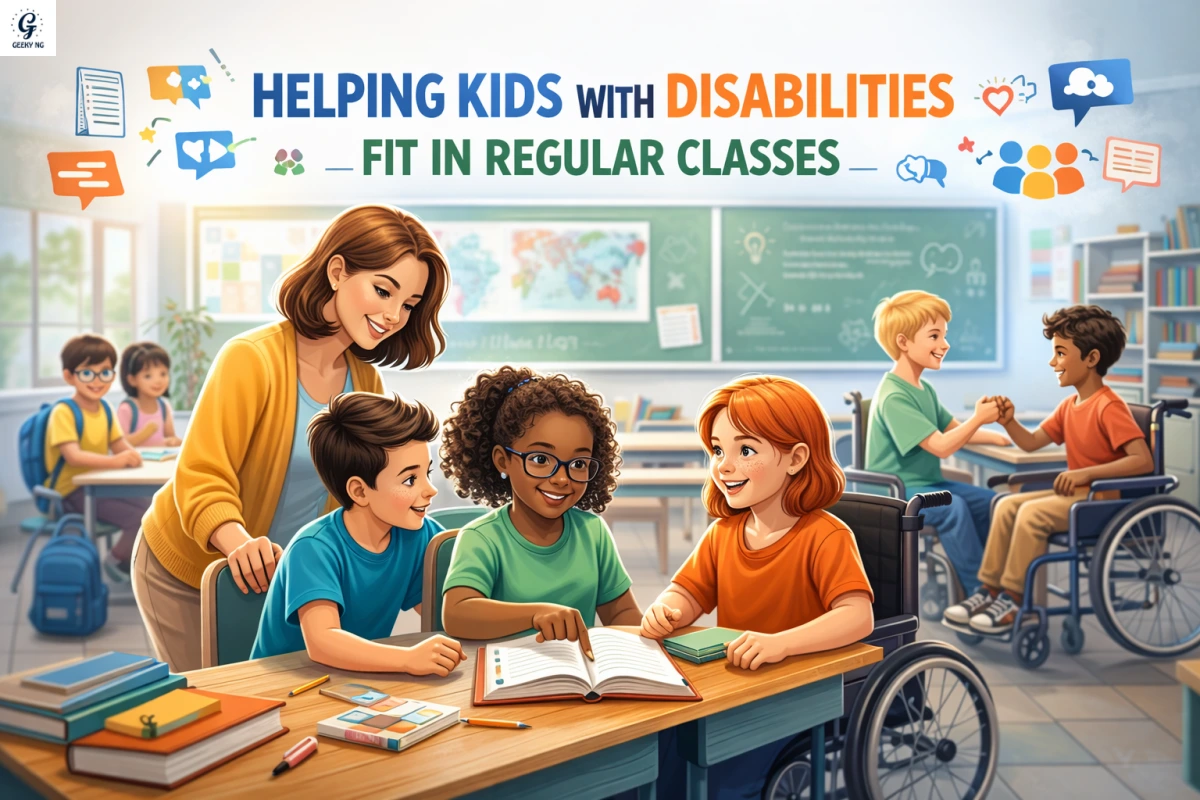
How to Help Kids with Disabilities Fit in Regular Classes
Making children with disabilities attend regular classes is crucial in improving the integration of such children and enhancing the status of all children in school.
These can be done at individual student level, by writing individual education plans; teacher professional development on inclusion, modified materials, peer support initiatives, and building a welcoming classroom.
Through these approaches, it will be possible to make necessary adjustments and allow children with disabilities to have equal chances of succeeding in learning and social relationships as other children in regular classes.
1. Individualised Student Level.
Ensuring that children with disabilities attend and learn in regular classes is one of the major measures of education for all goals.
There is a need to appreciate and equip such children to enable them to fit into a normal class setting.
One good practice is providing student support services, especially to disabled students.
This can include creating IEPs (Individualised Education Plan (or Program) that detail goals, modifications, and services unique to the child’s circumstance.
These plans can assist teachers, parents and other personnel in school to develop programs that would foster a conventional learning atmosphere that would enhance learning for all students.
2. Training Teachers on Inclusion
Pre-service and in-service teacher training is another area that can help children with disability to be integrated into normal classes.
Teachers should be armed with adequate knowledge and skills in how to teach learners with diverse disabilities.
Seminars on integration, understanding learning modalities, and communication skills can enable teachers to promote and sustain the culture of inclusiveness to enhance learning for all children.
3. Use of Modified Teaching Materials
Besides general, particular, and professional attention, offering easy-to-read teachers’ aids is crucial for the concerned children’s inclusion in standard groups.
This can involve the use of a computer or a human assistant in the classroom, making notes and handouts available in other formats and changing the approach to teaching the students.
4. Peer Support Initiatives
Peer support programs are also useful in enhancing the social acceptance of children with disability in class.
Having students with disabilities sit with other students or get a peer buddy can help students with disabilities have positive interactions with their peers.
Students learn about kids with disabilities and help in creating a welcoming classroom community.
Therefore, establishing a positive learning environment is one of the major factors that can help children with disabilities to be effectively included in regular classes.
A positive learning environment entails supporting a culture of diversity acceptance, respect, and understanding, encouraging good student relations and diversity in students’ backgrounds.
Conclusion
The process of integration of children with disabilities into mainstream classes is complex and should involve the following measures: identification of each child’s needs, staff development, provision of materials for the teachers, peers, and students, support of peers, and class environment.
Incorporation of these strategies will ensure that every learner is given an equal opportunity to learn and excel in their education.
Read on: Children’s Special: Gadgets And Applications That Help Kids With Disabilities