
Table of Contents
Understanding Environmental Issues in Nigeria
Nigeria, one of the most populous countries in Africa, faces significant environmental challenges that threaten its ecosystems and the livelihoods of its citizens.
Among these challenges, deforestation has become a critical issue, with an estimated loss of approximately 4 million hectares of forest annually.
This rampant deforestation is primarily driven by agricultural expansion, logging, and urban development, leading to a reduction in biodiversity and increased carbon emissions, which exacerbate climate change.
Another pressing concern is the management of waste. Nigeria generates millions of tons of solid waste each year, yet only a fraction is effectively managed.
The growing population and urbanisation contribute to an increase in waste generation, which often ends up in water bodies and on streets, causing significant health hazards.
According to recent studies, about 70% of the waste generated in urban areas is not collected, leading to unsightly garbage piles, and contributing to various diseases.
Water pollution is also a considerable issue, particularly in coastal and riverine communities. The contamination of freshwater sources by industrial effluents and poor waste disposal practices poses severe risks to public health and ecosystems.
A report by the World Bank estimates that about 60 million Nigerians lack access to clean and safe drinking water, making them vulnerable to waterborne diseases.
The impacts of these environmental issues extend beyond ecological degradation; they manifest in increased poverty levels, health crises, and reduced agricultural productivity.
Urbanisation, while an indicator of economic growth, has led to unplanned cities with inadequate infrastructure, further straining resources and the environment.
These statistics and examples underscore the critical need for innovative technological solutions that can address these pressing environmental challenges in Nigeria.
Emerging Technologies Addressing Environmental Challenges
Nigeria, a country rich in natural resources, faces significant environmental challenges, including deforestation, pollution, and waste management issues.
As these problems escalate, innovative technological solutions have also emerged to counteract the detrimental effects on the environment.
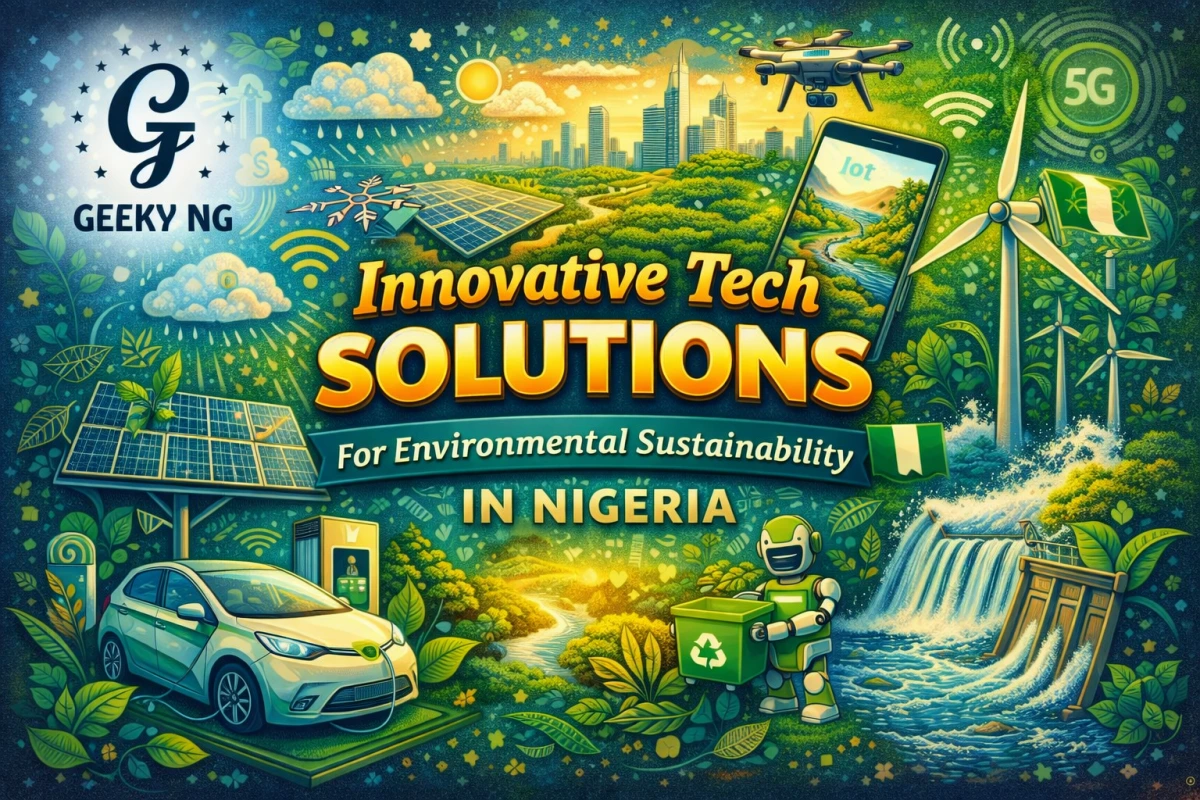
Renewable energy technologies, particularly solar and wind energy, have gained traction in recent years. With abundant sunshine available throughout the year, solar energy projects are being implemented in various states, enabling communities to access clean and sustainable electricity while reducing reliance on fossil fuels.
In addition to renewable energy, waste recycling technologies are making a considerable impact. Initiatives like the Waste to Wealth program have been established in several urban areas, transforming waste materials into valuable resources.
These programs not only promote recycling but also create job opportunities for local citizens, thus improving their livelihoods while addressing the growing waste crisis. In some cases, advanced sorting and processing technologies have been integrated to streamline recycling efforts, ensuring that more materials are reused rather than ending up in landfills.
Digital platforms also play a critical role in monitoring environmental changes. Organisations and startups are employing real-time data collection tools that utilise satellite imagery and IoT devices to track deforestation rates, air and water quality, and other ecological indicators.
This data-driven approach enables better decision-making by local governments and stakeholders, allowing for proactive measures to mitigate environmental degradation.
Furthermore, smart agriculture techniques, such as precision farming, are being adopted to increase food security while minimising ecological impacts. By utilising sensors and data analytics, farmers can monitor soil health, optimise irrigation, and manage pest control more effectively.
These technological advancements not only enhance agricultural productivity but also preserve natural resources, ensuring a more sustainable approach to farming in Nigeria.
Government and Private Sector Initiatives
The integration of innovative technology in promoting environmental sustainability in Nigeria requires collaborative efforts between the government and private sectors.
In recent years, the Nigerian government has established various policies and regulations aimed at fostering eco-innovation. For instance, the National Environmental Policy reinforces the commitment to sustainable development and outlines strategies for reducing environmental degradation.
This policy supports the adoption of green technologies and encourages the public and private sectors to invest in environmentally friendly practices.
In addition to government policies, partnerships between public and private entities are crucial for advancing sustainable technologies. Initiatives such as the Renewable Energy Master Plan (REMP) facilitate collaboration between the government and private firms to enhance the country’s renewable energy landscape.
This comprehensive framework not only promotes solar, wind, and biomass energy but also serves as a catalyst for attracting investment into Nigeria’s green technology sector.
Furthermore, private organisations are increasingly collaborating with government agencies to implement projects that utilise environmentally friendly technologies, exemplifying a commitment to environmental stewardship.
Investment opportunities in green technologies are expanding, with diverse sectors such as agriculture, waste management, and energy generation receiving significant attention. The potential for financial gains associated with eco-innovative solutions encourages the private sector to engage actively.
However, challenges persist in policy implementation and funding for these sustainable tech initiatives. The lack of efficient regulatory frameworks can hinder progress and affect the overall effectiveness of technology solutions.
Additionally, securing adequate funding remains a significant obstacle, as many startups struggle to obtain financing for their innovative projects.
Finally, the collaboration between the government and the private sector in Nigeria forms a cornerstone for advancing environmental sustainability through technology. To foster further growth in this area, it is essential to address challenges related to policy execution and funding while enhancing partnerships that prioritise eco-friendly innovations.
The Future of Tech-Driven Sustainability in Nigeria
As Nigeria grapples with the pressing challenges of environmental degradation and climate change, the future of tech-driven sustainability appears bright. Various technological advancements, including artificial intelligence (AI), Internet of Things (IoT), and renewable energy systems, have the potential to reshape how sustainability is approached in the country.
For instance, AI can optimise resource management, enabling farmers to increase crop yields while reducing waste. The use of IoT devices can facilitate real-time monitoring of environmental conditions, informing policies and initiatives aimed at sustainability.
Collaboration among stakeholders is paramount for realising these technological potentials. Governments, private sector players, and non-governmental organisations must work together to create an integrated approach that leverages technology effectively.
Public-private partnerships could drive significant investment in sustainable practices, ensuring that financial resources are directed toward innovations that address environmental issues.
Moreover, educational initiatives can cultivate a culture of sustainability among younger generations, equipping them with the knowledge necessary to adopt and promote tech solutions for ecological challenges.
Engaging with local communities is also crucial. Technology can bridge the gap between urban and rural areas, allowing for knowledge transfer and shared benefits.
Community-based projects, enhanced by technology, can empower individuals to implement sustainable practices in their daily lives. For example, solar energy projects can provide reliable power, reducing reliance on fossil fuels while improving living standards.
The societal benefits of adopting such tech solutions go beyond environmental impact; they also include economic growth and improved public health.
Final Thoughts
Emerging technologies can scale up efforts for environmental sustainability in Nigeria. As these innovations gain traction, they can lead to more extensive shifts in how resources are used and conserved.
Encouragingly, this transition towards tech-driven sustainability will require collective action, appealing to every individual and entity to partake in this necessary movement for the future of Nigeria’s environment.
Read also: The Role Of Environmental Care In The Society