
Edited by Paul Elegbeleye and Olorundare Oluwapelumi
The concepts of demand and supply are very essential in every economy in determining market structure. Let’s take a careful look at these two forces one after the other.
Table of Contents
Meaning of Demand, Supply, and Market Equilibrium
What is Demand?
Demand refers to the quantity of a good or service that consumers are willing and able to purchase at different prices within a specific period of time.
It goes beyond mere desire because a person must also have the income and readiness to pay for the product. Therefore, demand shows the relationship between the price of a commodity and the amount that buyers are prepared to buy in the market at a given time.
What is Supply?
Supply is the quantity of a good or service that producers are willing and able to offer for sale at various prices during a given period of time.
It involves the intention of sellers to produce and make goods available in the market, as well as their ability to do so. Supply therefore indicates how much of a commodity sellers are prepared to sell in response to different price levels.
What is Market Equilibrium?
Market equilibrium is the situation in which the quantity demanded by consumers is equal to the quantity supplied by producers at a particular price. At this point, the market is said to be in balance because there is neither excess supply nor shortage of the commodity.
The price at which this occurs is known as the equilibrium price. The quantity bought and sold at that price is called the equilibrium quantity.
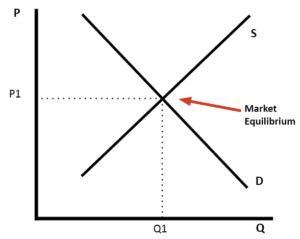
The Laws of Demand and Supply
The law of demand states that, other things being equal, the quantity of a effective or service that consumers are willing and able to buy decreases when the price increases, and increases when the price decreases.
This means there is an inverse relationship between price and quantity demanded. Consumers tend to buy more at lower prices because the effective becomes more affordable. Higher prices discourage them from buying large quantities.
The law of supply states that, other things being equal, the quantity of effective or service that producers are willing and able to offer for sale increases when the price increases and decreases when the price decreases.
This shows a direct relationship between price and quantity supplied. Producers are encouraged to supply more at higher prices because they expect higher profits, while lower prices reduce their willingness to produce and sell.
7 Factors Affecting Demand
Price of the Commodity
The price of a commodity is the most important factor that affects demand. According to the law of demand, when the price of a good increases, the quantity demanded usually decreases. This is because fewer consumers can afford to buy it.
On the other hand, when the price falls, more consumers are willing and able to buy the good, so demand increases. For example, when the price of rice increases in markets across Abuja, many households may reduce the quantity they buy or switch to cheaper food items.
Income of Consumers
The income of consumers greatly influences their ability to buy goods and services. When income increases, demand for normal goods such as clothing, electronics, and better housing also increases. This is because people can afford more.
However, when income falls, demand for such goods decreases. For inferior goods, the opposite happens because low income consumers may depend more on cheaper alternatives. Therefore, changes in income can either increase or decrease demand depending on the nature of the good.
Prices of Related Goods
The demand for a commodity is also affected by the prices of related goods, which include substitutes and complements. Substitute goods are goods that can replace each other, such as butter and margarine.
When the price of one substitute rises, demand for the other increases. Complementary goods are used together, such as cars and petrol. When the price of petrol increases, demand for cars may fall because both goods are consumed together.
Taste and Fashion
Changes in consumer taste and fashion can increase or decrease demand. When a product becomes popular or fashionable, more people want to buy it, which increases demand. For example, when certain styles of clothing or mobile phones become trendy, many consumers rush to buy them.
However, when tastes change or a product goes out of fashion, demand for it declines. Advertising and social media influence consumer tastes and play an important role in this factor.
Population Size
Population growth leads to an increase in demand for goods and services because more people need food, housing, transport, and other necessities.
A large population means a bigger market and higher demand. On the other hand, a decrease in population leads to lower demand. For example, an increase in population in countries like Nigeria increases the demand for basic goods such as food, education, and healthcare.
Expectations About Future Prices
Consumer expectations about future prices can influence current demand. If consumers expect the price of a commodity to rise in the future, they may buy more now. This is to avoid paying higher prices later. This increases current demand.
However, if they expect prices to fall, they may postpone purchases, leading to a decrease in present demand. This behaviour is common in goods such as land, houses, and durable goods.
Season
Seasonal changes affect demand because some goods are used more in certain periods of the year. For example, the demand for raincoats and umbrellas increases during the rainy season.
Also, the demand for cold drinks and ice cream rises during the dry or hot season. Agricultural products also experience seasonal demand depending on their availability and use. Therefore, season is an important factor that causes fluctuations in demand.
Conclusion
Demand and supply are the basic tools used in economics to explain how prices are determined in the market. The interaction of demand and supply determines equilibrium price and quantity. Understanding these concepts helps students explain real life market situations.
Read more: Concept Of Supply
https://www.investopedia.com/terms/l/law-of-supply-demand.asp
https://www.britannica.com/money/topic/supply-and-demand
https://www.cbn.gov.ng/Out/2017/CCD/The%20Nigerian%20Financial%20System.pdf
https://www.economicshelp.org/microessays/equilibrium/supply-and-demand/