Across 26 states, free online learning is now reaching millions of school children in Nigeria as UNICEF Extends Digital Learning to More Nigerian School Children through the Nigeria Learning Passport (NLP)
A joint effort by UNICEF and Airtel Nigeria that seeks to lift educational results and give Nigerian school children access to learning digital skills.
The digital learning platform, now in use at more than 1,600 schools across the country, gives learners access to over 15,000 resources aligned with the national curriculum, and they can open them outside school without paying for data.
UNICEF Partners Airtel to Provide Remote Learning for Children in Africa
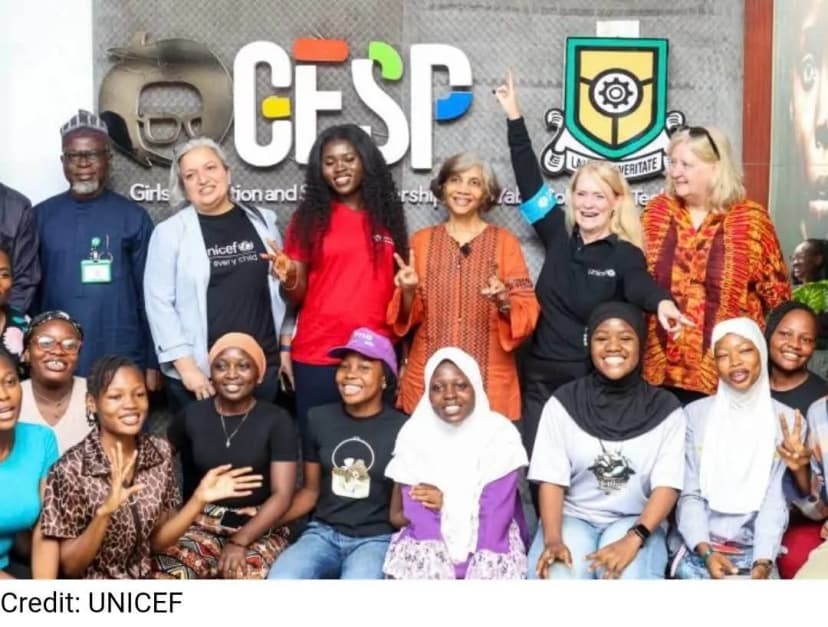
Dr Rownak Khan, UNICEF Nigeria's Deputy Representative, announced this on Tuesday during a tour of selected educational establishments in Lagos State to review how they were getting on.
Visits were paid by the team to Senior Government College in Iyana-Ipaja, Yaba College of Technology and the primary school named after St George in Ipaja, with the aim of judging the effectiveness of digital education and skills-training programmes.
Khan praised the Federal Ministry of Education, its Lagos State counterpart and Airtel Nigeria for backing the initiative, noting in particular the zero-rated data arrangement that lets pupils use the platform at no cost. She said she was pleased with how the students were advancing, and singled out the girls who are picking up digital and technical know-how.
Digital Learning
Pupils from pre-primary through to secondary level can study with the Nigeria Learning Passport, a platform that works online, on mobile devices and without an internet connection, with materials in Hausa, Igbo, Yoruba and English. The Federal Ministry of Education now hosts it, having first launched it while COVID-19 was disrupting schooling.
Esi Asare Prah, who heads Programmes at the Airtel Africa Foundation, stressed that bringing everyone into the digital world is of great importance now, as AI and other emerging technologies change how people learn and seek jobs.
According to her, the free access is helping young people build skills and produce content based on what they study, with girls, who have long met obstacles in technology, among the beneficiaries.
According to Prah, the foundation's work centres on building up digital infrastructure, bringing connectivity to rural communities that lack it, supporting marginalised groups and advancing fairness in education over the long term. She also noted that any young person in Nigeria on an Airtel line can use the Nigeria Learning Passport without paying for data.
Students, too, said their learning had got better.
Tosin Adeola, the head girl of Government Senior College, expressed gratitude to UNICEF and Airtel Nigeria for backing the initiative and described what the platform does:
- It lets students go over their classroom lessons again once they are home;
- It makes hard topics easier for students to grasp; and
- It helps them build better study habits.
Fair Access to Online Learning for All
UNICEF and the organisations working alongside it intend to widen the platform's coverage, aiming to give each child in Nigeria the same chance to learn digitally. Through this effort, the partners hope to lower the obstacles that keep children out of school, boost their progress in class and equip the young for the jobs of tomorrow.