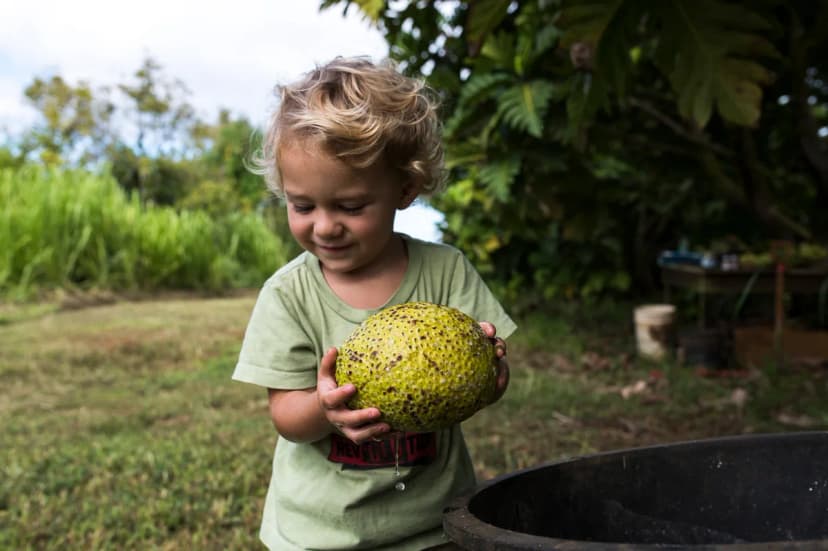
Pupils across Hawaiʻi are getting more locally grown food on their school plates, with dishes such as a breakfast banana bread made using flour from ʻulu and a lunchtime hamburger stew of ʻulu and kalo. The change comes from the state's farm-to-school drive, which allows keiki to taste the islands' own crops while giving farmers a reliable buyer.
Through the initiative, new recipes built around ingredients grown locally now appear on the menus for breakfast, lunch and the after-school snack. Hands-on teaching about nutrition and farming has also been broadened.
The Hawaiʻi Department of Education has promised to source a larger share of its food from within the state, and it is still working alongside growers, producers of food and local community groups to put more Hawaiʻi-grown produce on school menus.
The Hawaiʻi ʻUlu Cooperative's supply link to schools
For nearly a decade, the farmer-owned cooperative has worked towards establishing a supply arrangement between the state's Department of Education and agricultural producers across the islands.

The cooperative is owned outright by farmers. It wants breadfruit (ʻulu) and other staple crops grown in Hawaiʻi to regain a central place in island life. With more than 230 growers behind it, it is developing a lasting, homegrown food sector that would move Hawaiʻi a little nearer to food security.
Dana Shapiro, the Hawaiʻi ʻUlu Cooperative's chief executive, called the deal a commitment worth making, adding that farmers, schoolchildren, and food security throughout the islands stand to benefit for many decades.
“We have the resources to aggregate a good volume of crops from small farms, the ability to store and process what the DOE needs, build volume and sell the crops that they can distribute to the schools,” Shapiro said.
Shapiro said the school links have opened up the institutional market for farms across four of the biggest islands in Hawaiʻi. She added: “Our farmers need dependable markets to keep growing, and our schools need consistent access to nutritious, locally-grown food.”
Act 175 and the farm-to-school target
By working with growers and producers, the Department of Education is able to comply with Act 175 of 2021, which requires that 30% of what public schools spend on food goes to locally produced agricultural goods by 2030.
Chris Kaʻiakapu, the Hawaiʻi ʻUlu Cooperative's head of agroforestry, argues that a lone small-scale grower would need substantial capital in advance simply to put produce into school kitchens, whether that produce was given away or sold. The cooperative can fill the volumes the DOE requires and also handles the paperwork, so smaller farmers are able to supply an institution of that size.
“Our farmers, who range in size and experience, seem to be grateful to be part of this movement together, especially since there aren’t many options when it comes to selling ʻulu,” Kaʻiakapu said.
What the cooperative sends and what pupils are eating
At present, the cooperative sends the Education Department locally produced items, which the department in turn passes the produce on to schools throughout the state:
- breadfruit (ʻulu)
- taro (kalo)
- sweet potato (ʻuala)
- pumpkin (palaʻai)
- unripe papaya
- honey
Breadfruit is delivered either frozen or ground into flour.
The new dishes added this year show how these home-grown crops can work in familiar meals that pupils like, served on rotating menus. Fresh recipes include a hamburger stew made with ʻulu and kalo, loco moco topped with gravy made from ʻulu, and after-school snacks such as banana bread made with ʻulu and crackers made with ʻulu and blueberry.
“It has been a journey for the DOE to figure out how to present these foods in their recipes, especially to kids who are notoriously picky eaters,” Shapiro said. “I think they have done a great job really developing recipes that students love since we first started the partnership in 2018.”
School menus in Hawaiʻi go further than ʻulu. Other island-grown produce on offer includes papaya (green) in a chicken soup cooked Filipino style, a roasted vegetable dish featuring honey and kabocha squash, a mash made from Okinawan sweet potatoes, and bok choy, among other local ingredients. This mirrors a wider push to broaden what public schools in the state serve.
“We have started to meet with the DOE regularly to talk about potential additional crops that they would like to implement in the schools,” Shapiro said. “Today, they were asking if we could do a puréed ripe papaya for smoothies. We also bring them ideas about crops that our farmers have been growing more.”
For Hawaiʻi ʻUlu Cooperative, working with the DOE is a big step towards its goal of bringing ʻulu back into wider use and improving Hawaiʻi's food security.
“We believe ʻulu is the most important food crop we use to feed ourselves, especially as we take more steps to secure more food security in the future,” Shapiro said. “It is a staple starch that comes from a viable tree that produces an abundant amount of fruit.”
Hoʻopili ʻAi takes farm-to-school learning into the classroom
Hoʻopili ʻAi, a farm-to-school education effort, carries this work beyond the dining hall. It helps pupils, teachers, and families build real ties with the staple foods grown in Hawaiʻi.
The Hoʻopili ʻAi programme has published figures for the 2025–2026 school year, and they show it reached roughly 66,025 pupils across 134 schools spread over four Hawaiian islands. Its report further notes that upwards of 7,007 pounds (3.18 t) of locally grown produce was supplied, with a combined value of $149,000.
Hoʻopili ʻAi forms one strand of the Harvest of the Month scheme in Hawaiʻi. It supplies Farm to School Sampler Boxes at no cost, packed with foods that are value-added or grown in the islands, together with recipes, educational videos and classroom materials matched to learning standards.
Taking part in the scheme introduces pupils to plants of deep cultural significance, among them ʻuala, kalo and ʻulu. The produce list also takes in other foods grown on the islands, such as macadamia nuts, palaʻai and local honey.
Sandy Mayberry, who teaches gardening at Kealakehe Elementary School, says the sweet potato, called ʻuala in Hawaiʻi, features frequently in her lessons. The pupils create their own recipes and then cook them together at the processing station in the school's māla. Mayberry explained: "We use the ʻuala in our garden classes where students develop recipes and cook together in our māla’s processing station. Students have made recipes such as homemade ʻuala tortillas filled with jackfruit and mango salsa, ʻuala latkes, ʻuala gnocchi, ʻuala tater tots, ʻuala chips and fries. They continue to develop recipes in a collaborative setting and love it."
Anyone wanting further details about Hoʻopili ʻAi can consult its 2025-2026 Impact Report.