
Manchester United's dramatic 3–2 comeback win over Roma may have delivered more than a much-needed result. It may also have offered an important glimpse into the relationship between manager Michael Carrick and his captain, Bruno Fernandes.
Following weeks of speculation surrounding their relationship, Fernandes has publicly defended Carrick, dismissed reports of a personal fallout and admitted that the manager was right to drop him after his earlier criticism.
His comments come at a crucial moment for a club that has endured a difficult run of results, growing supporter frustration and increasing questions about its leadership. But does this signal that Manchester United are finally beginning to find unity, or is it simply an attempt to restore calm after weeks of turbulence?
The Background: How Did the Tension Begin?
The disagreement can be traced to Manchester United's disappointing 4–1 defeat against Como in the Champions League. Following that match, Fernandes openly questioned aspects of Carrick's tactical approach, particularly the team's pressing and overall organisation.
The comments generated considerable debate about the relationship between the captain and his manager. Carrick subsequently left Fernandes on the bench for the Premier League encounter against Bournemouth, a decision that many interpreted as a disciplinary response to the captain's public criticism.
Although Fernandes returned to the starting lineup afterwards, speculation about a possible disagreement between the two continued. For a club already struggling with consistency, the situation created another unwanted distraction.
Also Read: Spanish Footballer Jesús de Miguel Dies at 30 After Horrific
Fernandes Finally Sets the Record Straight
Speaking after United's victory over Roma, Fernandes attempted to put an end to the speculation. The Portuguese midfielder rejected suggestions of a personal disagreement with Carrick and insisted that the decision to leave him out was based on his performances.
More importantly, he accepted the manager's decision.
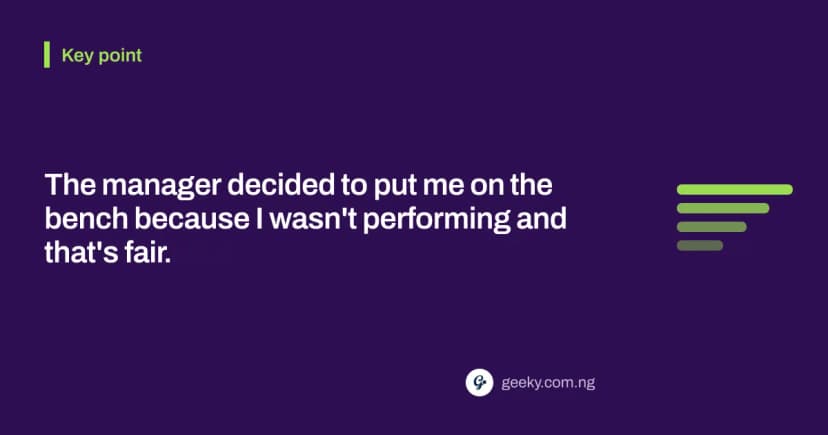
Fernandes explained: “The manager decided to put me on the bench because I wasn't performing and that's fair. Everyone felt it was a punishment for the words I had. If it was, it was right.”
He also dismissed suggestions that the players had won against Roma specifically to save Carrick's job. “We don't need to save anyone's job,” he said, stressing that the club, players, and supporters needed the victory.
These comments are significant because they demonstrate an acceptance of managerial authority from one of the most influential figures in the dressing room. For a captain, accountability must work in both directions.
Players must be willing to challenge decisions when necessary, but they must also accept responsibility when their performances fall below expectations.
Carrick's Authority: An Important Moment for the Manager
One of the biggest challenges facing any Manchester United manager is establishing authority in a dressing room filled with experienced and high-profile players.
Carrick's decision to leave Fernandes out was therefore important. A manager who cannot make difficult selection decisions without facing questions about his authority risks losing control of the dressing room.
However, the decision also carried risks.
Fernandes is one of United's most influential players, and leaving him out meant sacrificing considerable creativity, leadership and attacking contribution. Carrick had to balance the importance of maintaining discipline with the need to select his strongest available team.
Fernandes' latest comments have helped clarify the situation. Rather than portraying himself as a victim of managerial punishment, the captain has publicly acknowledged that selection must be earned through performance.
That is an important message for the rest of the squad.
The Roma Comeback: A Sign of Changing Mentality?
United's 3–2 victory over Roma was particularly important because of how it happened. Conceding twice inside the opening 20 minutes could easily have resulted in another damaging defeat.
Instead, the team responded after the break.
Fernandes converted a penalty to begin the comeback, while Matheus Cunha scored twice to secure the victory. The performance demonstrated resilience, attacking ambition and a willingness to keep fighting even when the situation appeared difficult.
It also allowed Carrick to see his players respond positively under enormous pressure. However, one comeback should not be mistaken for a complete transformation.
United's defensive problems were still evident, particularly in the first half. Their inability to control the game consistently remains a concern.
The real question is whether the mentality displayed against Roma can become a regular feature of their performances.
Leadership Is More Than Wearing the Captain's Armband
Fernandes' comments also raise a wider question about leadership at Manchester United. A captain must be willing to speak when things are going wrong. But leadership also involves taking responsibility, respecting the team's structure and helping maintain unity during difficult periods.
Publicly criticising a manager's tactics can create unnecessary distractions, particularly when a team is already struggling. At the same time, managers must be open to constructive criticism. A healthy football environment should encourage honest conversations rather than silence or fear.
The challenge is finding the right balance between accountability and mutual respect. Fernandes appears to have acknowledged his own part in the situation, while reaffirming his belief in Carrick and the coaching staff.
That is a positive development.
But rebuilding trust within a football club requires more than public statements. It requires consistent behaviour, improved performances and results.
Aston Villa: The Next Test of United's Progress
Manchester United cannot afford to spend too long celebrating their Champions League comeback. Aston Villa are next, and the Premier League encounter presents another important opportunity for Carrick's team.
The challenge will be to reproduce the intensity and determination shown against Roma while correcting the defensive weaknesses that allowed their opponents to take an early two-goal lead.
United must also demonstrate that the relationship between their manager and senior players is strong enough to withstand future setbacks. If Fernandes and his teammates can translate their words into consistent performances, the Roma victory could become an important turning point.
If not, the questions surrounding Carrick and the club's leadership will quickly return.
Final Verdict: Unity Has Been Encouraged, but Trust Must Still Be Earned
Bruno Fernandes' comments represent an important moment in Manchester United's difficult season.
By accepting Carrick's decision to drop him and dismissing reports of a personal fallout, the captain has helped reduce the speculation surrounding the manager's relationship with his players. It is a welcome development for a club that desperately needs stability.
However, Manchester United should not confuse a public show of support with a fully resolved leadership problem. Carrick must continue demonstrating tactical clarity. Senior players must take responsibility for their performances. The club must establish a consistent footballing direction.
The Roma comeback has given United hope. Fernandes' comments have offered reassurance. Now the team must deliver something even more important: consistency.
Because at Manchester United, unity should not simply be something players talk about after a victory. It must be something they demonstrate when the pressure is at its highest.
Also Read: Man United's Cunha Scores Twice To Beat Roma at Old Trafford