
The 14th Ake Arts and Book Festival will take place in Lagos from November 19 to 21, 2026, with discussions on how African indigenous knowledge, creativity and artificial intelligence (AI) relate to one another.
The event matters because it asks how Africa's inherited knowledge should sit alongside fast-moving technology in the creative industries.
The three-day event will be held at Silkwood Hotel, Ikeja GRA, bringing together writers, poets, artists, storytellers, filmmakers, musicians and other creative professionals from Africa and beyond.
Organised annually by the Book Buzz Foundation, the festival promotes African literature, arts and reading culture while creating opportunities for conversations about the continent's creative development.
Founded in 2013, the festival has grown into an international literary and cultural gathering, providing a platform for established and emerging creatives to share ideas, present their work and engage with audiences.
Why "Native Intelligence" is the focus of this year's Ake Arts & Books Festival
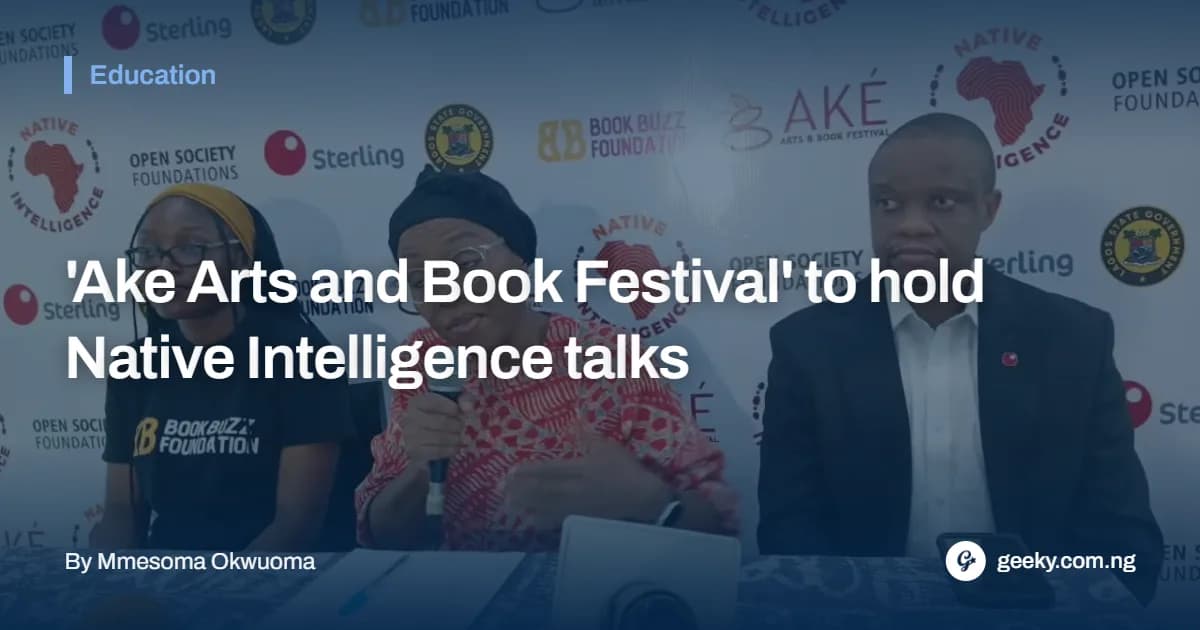
At a Lagos press conference, Lola Shoneyin, who founded the festival and serves as its director, explained that this year's conversations will revolve around "Native Intelligence", a theme that looks at the ways artificial intelligence is shaping creative work across Africa.
Shoneyin explained that native intelligence refers to knowledge developed and preserved by African communities over generations. She said this knowledge exists in different forms, including proverbs, praise poetry, oral history, traditional crafts, rituals and community practices.
In her words, artificial intelligence itself relies on knowledge that humans have already built up, so it would be a mistake to presume that those who stay away from the technology, or who never had a formal education, are lacking in intelligence.
She maintained that African knowledge systems should be recognised as valuable sources of understanding, particularly as technology continues to influence how information is created, preserved and shared.
Challenging how intelligence is defined
Shoneyin said the festival would challenge the perception that intelligence is limited to knowledge acquired through formal schooling.
"It's really about looking inward with everything that we have about Artificial Intelligence and the fact that many people seem to think that the intelligence we derive from education is the only type of education," she said.
The festival director added that people without formal education are sometimes wrongly regarded as lacking knowledge or intellectual ability.
She insisted that the idea of native intelligence reaches well past the classroom and academic certificates, and instead reflects what people and communities come to know and experience as time goes by.
The theme also raises questions about the relationship between traditional knowledge and emerging technologies. As AI tools become increasingly involved in writing, storytelling and other creative activities, the festival seeks to examine the importance of preserving indigenous perspectives. It also seeks to recognise the knowledge that existed long before modern digital technologies.
Shoneyin said the Ake Arts and Book Festival would provide a platform for Nigerians and other Africans to examine these forms of knowledge, particularly as artificial intelligence continues to influence creative expression and the way people access information.
Festival panels on AI and creative work
The 2026 programme will include panel discussions examining technology, literature, poetry and the future of creative industries. Key sessions include:
- "The Future of Creative Work with Artificial Intelligence", featuring Jerry Falade, speculative fiction writer Marvellous Michael Anson and Osahon Ize-Iyamu, with Jude Umeh as moderator.
- "Memory, Myth and the Machine", bringing together writers Irenosen Okojie, Jowhor Ile and Rotimi Babatunde to explore the relationship between storytelling, memory and technology.
- A discussion on Nigerian comics and animation going global, with Olufikayo Adeola, Jide Martin and Roye Okupe among the speakers.
- "Granta Magazine – Nigerian Literature Now", which will examine contemporary Nigerian writing, featuring Dipo Faloyin, Ngozi John and Sada Malumfashi.
These conversations will give participants opportunities to consider how technology, cultural identity and creative expression intersect, while examining the place of African stories in the global literary landscape.
Book chats, film and poetry performances
Beyond the panel discussions, the festival will host 11 book chats featuring African and international writers.
Among the featured authors are Nnedi Okorafor, Chika Unigwe, Wole Talabi, Suyi Davies Okungbowa, A. Igoni Barrett, Fatima Bala and Oyin Olugbile.
The sessions will introduce readers to new literary works and provide opportunities to engage authors on the ideas, experiences and subjects explored in their books.
The programme will also include a screening of How to Build a Library, a documentary by Maia Lekow and Christopher King. The film follows Kenyan novelist Wanjiru Koinange and publisher Angela Wachuka as they work to transform Nairobi's McMillan Memorial Library into a public cultural space.
A discussion following the screening will explore the importance of public libraries, colonial history, urban development and efforts to make reading spaces more accessible.
Other activities include poetry performances, a music night featuring Nigerian singer-songwriter Savy Henry and the festival's Palm Wine and Poetry session, which will bring together several poets and spoken-word performers.
The annual Bedtime Stories segment will also return, giving participants an opportunity to listen to authors read excerpts from their works at the end of the day's activities.
Supporting African literature and cultural exchange
Through its combination of literary conversations, performances, film and discussions on emerging technologies, the Ake Arts and Book Festival continues to provide a meeting point for people working across Africa's creative industries.
The event is organised by the Book Buzz Foundation, a non-governmental organisation established in 2012 to promote literacy, particularly among school-age children, support reading resources and encourage cultural activities.
The 2026 edition is supported by Sterling Group, the Lagos State Government and the Open Society Foundations.
As conversations around artificial intelligence continue to shape the future of creative work, this year's theme places African indigenous knowledge at the centre of the discussion, encouraging participants to consider how inherited traditions and modern technology can inform one another.