Following the discovery of AI photos on INEC’s voter register, the credibility of the agency has been under scrutiny.
The Independent National Electoral Commission (INEC), Nigeria's electoral umpire, has announced that it has removed photographs created by artificial intelligence from its roll of registered voters.
This has raised concerns giving the critical nature of the upcoming 2027 elections. The disclosure has further queried the credibility on INEC in delivering a free and fair election as it ought to.
As the 2027 elections draw near, this affair throws up questions that simply purging the dubious pictures cannot answer. INEC is faced with the accountability and explanation for how artificially generated photos found their way onto the register.
Moreso, it questions the initial claims of the agency to employ technology to reduce human-interference in its operations. Nigerians are reacting and asking why the systems set in place for this did not indicate a foul play. Citizens and stakeholders of the forthcoming election are concerned about the extent of sufficiency of image capturing only.
The commission says that, going forward, pictures will no longer be uploaded using external webcams; instead, they must be taken with an approved app, straight from the device.
On November 11, 2026, INEC stated that 54 registration staff spread over 10 states had been singled out as facing possible disciplinary measures for irregularities in enrolment.
However, that does not erase the implications and dent of having 54 submitted AI-made pictures ornaments INEC’s voter register. There is call for investigations to be carried out. This involves interrogating past applicants who supplied doubtful details as well as the officials charged with guarding the process of enrolment.
At an online seminar hosted by the PUNCH Media Foundation on November 11, Mohammed Kudu Haruna, who serves INEC as its commissioner responsible for voter education and information at national level, spoke about cases that involved the commission's own employees: “But the ones involving our own staff, where it is our own staff that did so, that one is within our control.” He went on: “They have been flagged.” Haruna also said, “Obviously, they are going to face disciplinary action.”
The allegations could have implications well beyond the question of how employees are disciplined inside the commission.
Under the Electoral Act 2026, knowingly submitting registration declarations that are materially false is a criminal offence, and the same offence extends to anyone who enters fictitious persons, or people not eligible, on the register.
Whether any particular staff member broke these rules can only be established by a thorough investigation, and an accusation is not the same thing as a conviction. Haruna has promised internal disciplinary sanctions, which raises a further question: if the evidence points to conduct amounting to a crime, will those cases also be referred to the courts?
Read Also: AI and Automation: Reshaping How Nigerians Work
The Real Conversation
The striking conversation is not another AI photos, but the part played by INEC’s registration staff. Applicants can be expected to give inaccurate information, and electoral bodies have to plan for that. But when authorised personnel are alleged to have bypassed registration protocols, what is at stake is whether the institution is able to make its own protections hold.
Although artificial intelligence brings a new technical angle, investigators still have to tackle basic questions about who controls the institution. Who had the power to upload a photograph or swap one out? Which verification steps were mandatory? Was it possible for a single official to alter records with nobody independent checking the work? Do logs exist that show who changed each entry?
Removing the dubious pictures only deals with what can be seen. To stop it happening again, it is essential to find out how they got into the system in the first place.
For now, what has been disclosed does not show that the register was breached by an outside cyberattack, nor that doctored photographs led to fraudulent votes. Neither possibility should be reported as an established finding.
INEC’s Data and Irregularities
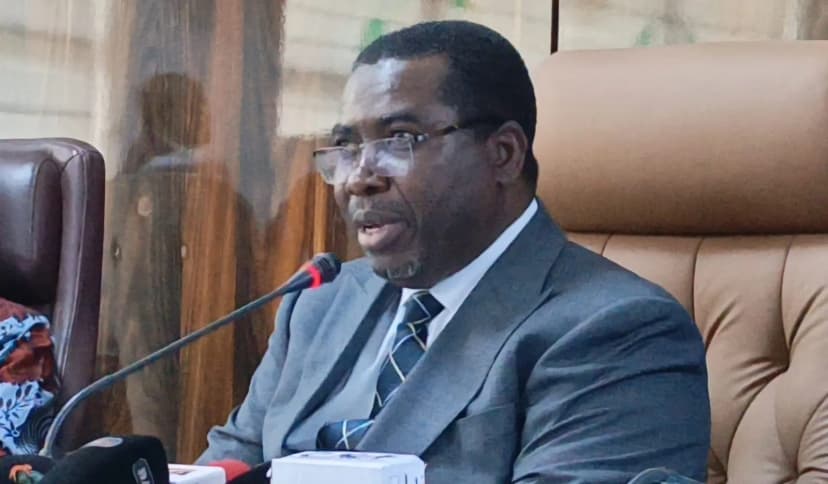
The numbers around the clean-up also need to be read with care. INEC Chairman Joash Amupitan stated that 1,608,660 faulty entries on the register had been taken out. In a separate strand, accounts indicate that the electoral body examined 268,000 disputed cases, throwing out 217,722 and keeping 50,278.
Because nothing published so far shows how these different sets of figures relate to each other, adding them up would be a mistake. By the same token, it would be wrong to describe the 1.6 million total as the count of voter records that AI produced.
Several kinds of irregularity were dealt with in the clean-up, among them double entries and registration records that were incomplete or faulty. Doctored or computer-generated photographs formed only one strand of this wider exercise.
Getting this right is important, because loose numbers can make what is really an administrative failing look like something more serious, with accusations the evidence cannot back. Equally, a big figure for deletions says nothing about what the commission found, how it checked every type of record, or whether the weaknesses behind the problem have been fixed.
Equally significant are the 50,278 entries that came through adjudication and remained on the register. Being under suspicion does not make someone ineligible. For the exercise to be credible, it has to block invalid registrations without wrongly excluding voters who are entitled to take part.
Read Also: The Role of the Electoral Commission: How Elections Are Managed in Nigeria
Sanctions and Tightening Systems
INEC says it released the register in preliminary form so that the public could inspect it and lodge objections before it is finally certified. Such a step can help catch mistakes ahead of an election, yet it is no substitute for the checks that should already be working at the point of registration.
Two things can hold at once: scrutiny by the public may have helped bring the irregularities to light, and the fact that they surfaced shows weak spots the commission has to tackle. How far INEC is trusted will turn on whether it can explain the mistakes that occurred and show how its safeguards inside the organisation are being changed.
The disciplinary step now proposed marks the beginning of the process rather than its conclusion. Staff who have been named should get the chance to answer the claims made against them, while the commission needs to distinguish honest errors from negligence and from wilful falsification. Nor should a disciplinary measure be mistaken for a criminal charge, a sacking or a guilty verdict.
Going beyond punishment of individuals, the public is owed an account of what the investigators discovered, which procedures broke down and what fixes have since been put in place. Even if some personal details need shielding, INEC is free to publish its findings about the institution itself.
INEC’s AI Policy
In October, INEC said it was putting the finishing touches to an AI policy. The row now prompts whether that document will cover merely campaign material generated by AI, or will also reach the commission's internal tools, its staff and how automated systems are used.
Speaking at the webinar held on November 11, Haruna said: “We have that policy. Very soon, we will concertise it, and we will be able to share it with the media,”
The timing adds to the significance. Voting in the polls for the presidency and the National Assembly is fixed for January 16, 2027, yet with polling day only about eight weeks away, the policy had still not been published. Matters are made worse by the fact that registration of voters was still under way when irregularities began to emerge, and a framework of this sort could well have helped forestall them.
Any worthwhile policy has to say more than a general caution about AI. It needs to spell out which people may view and change voter records, what checks are needed before a photograph is taken as valid, the route that doubtful submissions follow upwards, and an independent party that examines sensitive amendments. Staff and their supervisors should also have clearly assigned duties, with every decision recorded and available for audit.
That no standalone AI policy has been made public does not show that INEC lacked safeguards of any kind. Nor does it imply that releasing one sooner would certainly have stopped the irregularities. What the commission owes the public is an account of whether the controls were absent, insufficient or knowingly circumvented. Because it has itself conceded that staff were involved, this question becomes the heart of the matter.
In the end, Nigerians want proof, not just reassurance that questionable photographs have been taken down or that staff members will be disciplined. They want to see that enrolment is well protected, that no qualified voter will be wrongly shut out, and that the people trusted with the register can be held to account.
Removing the photographs can be done swiftly. Yet the explanation of why they got through must not vanish along with them. If it does, the next image produced by AI could prove harder to spot, while the weakness within the institution stays just as it was.