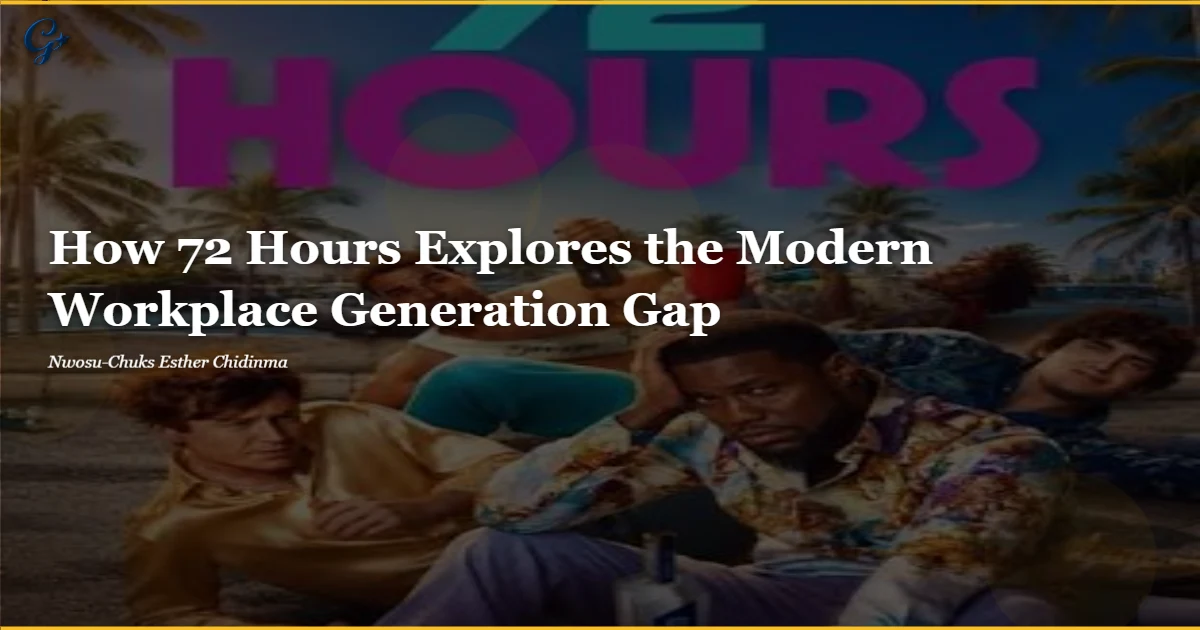
Netflix’s 72 hours may be packed with comedy and outrageous moments but beneath its entertaining surface lies a conversation workplaces are having today which is the growing generation gap between older professionals and younger employees. Through the story of Joe, a seasoned advertising executive trying to reconnect with a younger audience, the film explores the challenges of staying relevant in a rapidly changing world.
Rather than presenting the workplace as a battle between generations, 72 Hours Highlights the value of adaptability, collaboration, and lifelong learning. It reminds viewers that success in today’s professional world often depends on the willingness to embrace new perspectives while respecting experience.
Read Also: How Gen Z Is Redefining Success Beyond Traditional Careers
Table of Contents
Why the Workplace Is Changing Faster Than Ever
The modern workplace looks very different from what it did a decade ago. Technology, social media, artificial intelligence, and remote work have transformed how businesses operate and how employees communicate.
As a result, professionals from different generations often have contrasting ideas about productivity, leadership, communication, and career growth.
While older employees may value structure, loyalty, and years of experience, younger professionals tend to prioritize flexibility, innovation, digital tools, and meaningful work. 72 Hours uses humour to highlight these differences while showing that both perspectives have something valuable to offer.
Experience Versus Innovation
One of the central themes in the movie is the tension between experience and fresh ideas.
Joe represents years of industry knowledge, strategic thinking, and professional expertise. However, he quickly realizes that understanding today’s audience requires more than experience alone. Trends evolve rapidly, and businesses must continuously adapt to changing consumer preferences.
This reflects a reality many organizations face. Companies need experienced professionals who understand the bigger picture, but they also benefit from younger employees who bring creativity, digital skills, and new ways of thinking.
Success Requires Both Perspectives
The most successful workplaces are not those that choose one generation over another. Instead, they create environments where experience and innovation complement each other, leading to stronger decision-making and better results.
Understanding Gen Z’s Workplace Expectations
Generation Z has entered the workforce with expectations that differ from those of previous generations. Rather than focusing solely on salary and job security, many young professionals also value flexibility, purpose, career development, and work-life balance.
Flexibility Matters
Remote work, hybrid schedules, and flexible hours have become increasingly important to younger employees. They appreciate workplaces that trust them to deliver results without requiring constant supervision.
This shift has encouraged many organizations to rethink traditional office culture and adopt more employee-focused policies.
Digital Communication Is Second Nature
Unlike previous generations, Gen Z grew up using smartphones, social media, and instant messaging. They are comfortable collaborating through digital platforms, learning new software quickly, and adapting to technological changes.
Businesses that embrace these strengths are often better positioned to remain competitive in an increasingly digital economy.
Why Mentorship Still Matters
Although younger employees bring fresh perspectives, experience remains invaluable.
One of the film’s underlying messages is that learning should happen in both directions. Older professionals can mentor younger colleagues by sharing leadership skills, industry knowledge, and problem-solving techniques. At the same time, younger employees can introduce emerging technologies, digital marketing strategies, and evolving consumer trends.
Reverse Mentorship Is Growing
Many organizations now encourage reverse mentorship, where younger employees help senior colleagues understand digital tools, social media, and changing workplace expectations.
This two way exchange strengthens collaboration, builds mutual respect, and creates a culture of continuous learning.
Learning Never Stops
Whether someone is just starting a career or has decades of experience, professional growth depends on remaining curious and open to change. The willingness to learn from others is often a greater asset than simply relying on past achievements.
Career Reinvention in a Changing World
Perhaps the biggest lesson from 72 Hours is that career reinvention is no longer unusual, it has become essential.
Industries continue to evolve due to technological innovation, changing consumer behaviour, and global competition. Professionals who resist change risk becoming less relevant, while those who embrace learning often discover new opportunities.
Many people today are expanding their skills through online courses, professional certifications, networking, and digital platforms. Others are transitioning into technology, entrepreneurship, content creation, freelancing, or remote work to stay competitive in an increasingly dynamic job market.
The movie humorously illustrates that stepping outside your comfort zone can be uncomfortable, but it can also be the first step toward meaningful growth.
Final Thoughts
While 72 Hours is first a comedy, its story reflects important realities about today’s workplace. The film reminds us that the generation gap is not a barrier to success but an opportunity for collaboration.
Organizations thrive when they combine the wisdom of experienced professionals with the creativity and digital expertise of younger employees. Likewise, individuals remain relevant by embracing continuous learning, adapting to change, and recognizing that every generation has valuable lessons to share.
As the workplace continues to evolve, success will belong to those who see differences not as obstacles but as opportunities. 72 Hours shows that bridging the gap between generations is less about age and more about openness, adaptability, and the willingness to grow together.