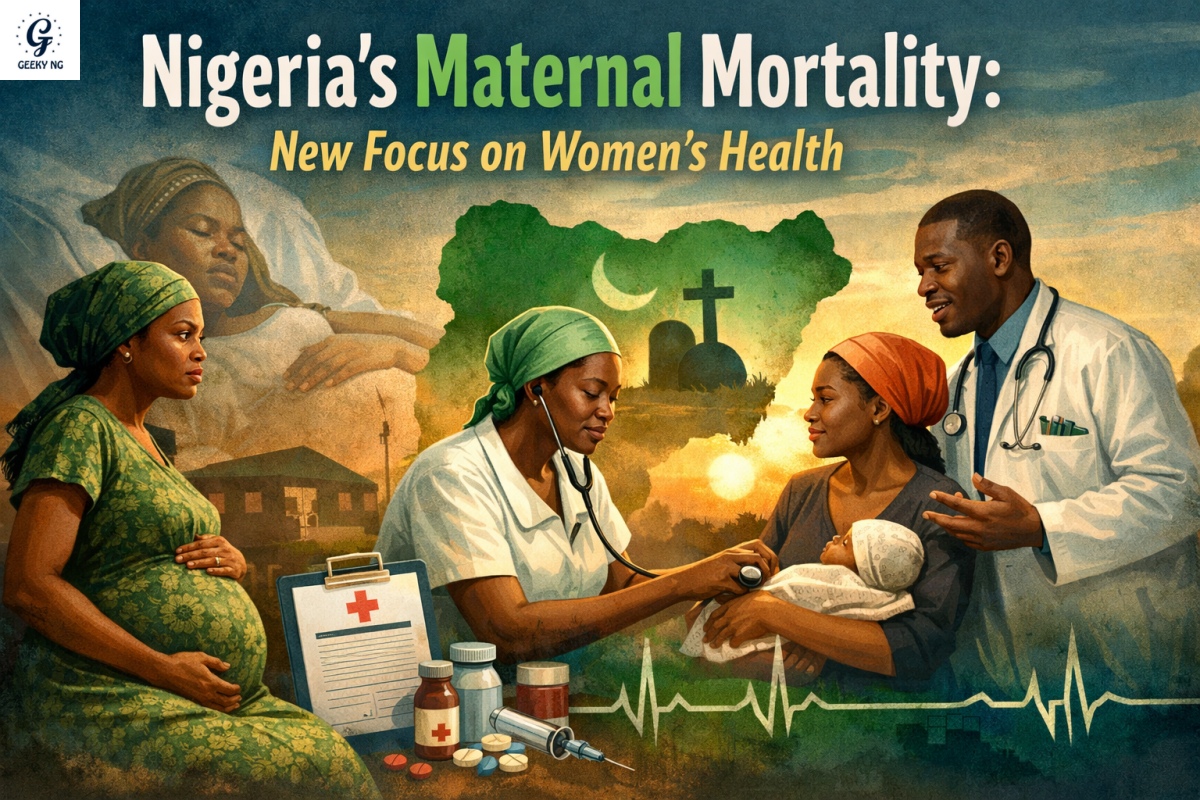
Nigeria’s maternal mortality rates could experience a turnaround for the better with the government’s new focus on women health.
The Nigerian Federal Government recently made a statement that caught many public health advocates’ attention: “women’s health is central to economic growth and sustainable reform“. It might sound like a motivational slogan but for millions of Nigerian women and girls, it represents a turning point in how policymakers see maternal health, reproductive rights, and women’s access to care.
This changes matters because, for too long, the health of Nigerian women, especially during pregnancy and childbirth has been an uphill battle. Maternal deaths, preventable complications, and poor access to quality care have caused family tragedies across communities large and small.
Table of Contents
Nigeria’s Maternal Health Reality
Nigeria still carries one of the highest maternal mortality rates in the world. Despite strides made over the past two decades, a woman giving birth in Nigeria today still faces far greater risks than in many other countries developed or developing.
National health data, revealed that the most common causes of maternal deaths include:
- Severe bleeding
- High blood pressure during pregnancy
- Infections
- Complications from unsafe abortions
With timely and quality medical care, these conditions can be prevented or managed but unfortunately women do not have access to such care which increases mortality rate.
Why Maternal Health Is More Than Just a Health Concern
When we talk about maternal health, it is more than just talking about delivery rooms and obstetric wards. Women play vital roles in the family and community. A mother’s health affects children’s nutrition, school attendance, and overall household resilience which affects the community directly or indirectly. Things that are necessary for women:
- Access to clean water and nutrition during pregnancy
- Education and awareness about danger signs
- Transportation to health facilities
- Respectful and culturally sensitive care
- Affordable health services without catastrophic out of pocket costs
What Nigeria’s Government Is Saying Now
In the recent policy announcement, federal officials emphasized that investing in women’s health is an investment in national development. A healthier mother means healthier children, stronger families, and more productive communities which is worth investing in. This new approach signals a broader lens:
- Tackling underlying social determinants of health
- Strengthening primary healthcare systems
- Promoting gender equity in health planning
- Reducing financial barriers that keep women from seeking care
There are evidences that show that countries with strong maternal health systems perform better on education, economic growth, and societal stability.
SEE MORE: Menopause And Women’s Health: What You Should Know
A Quick Description of Maternal Health
Using the story of Aisha from the northern part of Nigeria as case study will help with a more vivid emphasis on the need for a policy shift in maternal health. Pregnant with her third child. Aisha develops preeclampsia (a high blood pressure).
Aisha knew something was wrong and needed quick attention but the nearest health facility was far, and and commuting costs were high. By the time she made it to the health centre, her condition had worsened. She got admitted, but the facility lacked adequate monitoring equipment which led to severe complications. Aisha lost her life in the process, leaving her family devastated.
Stories like Aisha’s are far too common. They are not random incidents. They are proofs and a result of gaps in systems, not fate.
Barriers Women Face Every Day
Even when policies exist, everyday barriers continue to stand in the way:
1. Financial Restraint
Finance has been one of the reasons why many families delay healthcare. The idea of having to pay for prenatal care, delivery and emergency obstetric services has become a huge burden for many families that are not able to afford the bills.
2. Distance To Facilities
Nigeria’s rural women often travel long distances to reach health centres. Transportation costs, poor road networks, and lack of public transport systems make this journey risky, especially in late pregnancy.
3. Quality Of Care
The quality of maternal healthcare facilities is not always guaranteed. Some clinics are understaffed, under equipped, or lack basic supplies. Many women report the dismissive or harsh treatment from health workers during childbirth. It is has become a common thing among nurses in some facilities in Nigeria to be rude which in turn dissuades others from seeking help.
4. Cultural Beliefs And Awareness Gaps
Some communities, still prefer traditional birth practices due to cultural familiarity. Complications require skilled medical attention that only a trained facility can provide. This is not to disregard traditional practices. However, exposure and embrace of modern medicine goes a long way in preventing maternal mortality.
SEE MORE: Essential Energy For Life: JMG Commissions Solar Power System At Ketu Healthcare Centre
Why This Policy Shift Is Important
The government’s renewed focus on women’s health will bring about a great change which include:
1. Recognition At The Highest Level
Maternal care now stands a chance to be a policy priority. This new framework places women’s health at the centre of national development discussions. These policies, when put in place will reduce the risk of maternal mortality in the country.
2. Broader Health System Strengthening
Investing in women’s health means improving primary care, emergency referral systems, transport networks, and health financing mechanisms which strengthens the health system for everyone, not just pregnant women. Every health centre around the country should be adequately equipped such that a pregnant woman can walk into any hospital without fear of harm or complications.
3. Breaking Financial Barriers
Policymakers are now talking more openly about reducing the burden of costs for maternal services. This could lead to subsidies, insurance schemes, or targeted funding for the poorest women.
4. Elevating Gender Equity In Healthcare
By proving women’s health as essential, the government acknowledges gender as a factor in health outcomes a change that can find its way into education, employment, and economic participation.
Where Challenges Still Remain
Although the advocacy is going in a promising and optimistic direction, translating policy into impact will require:
- Adequate funding and budgeting
- Local implementation plans at state and community levels
- Accountability and performance tracking
- Meaningful engagement with women and community leaders
Policies must not remain words on paper, they must become lived experiences for women in Zaria, Aba, Gusau, Makurdi, Awka, and every town and village across Nigeria.
The Role of Communities and Health Workers
Strengthening local health workers’ training, support, and working conditions is essential regarding maternal health as they are often the first point of contact, the ones who reassure anxious mothers, identify danger signs early, and refer complicated cases to higher level care. Communities too must be part of the solution through:
- Birth preparedness plans
- Maternal health education
- Support networks for pregnant women
- Advocacy for respectful care
Final Thoughts
Maternal health is about mothers who want to live to see their children grow. It is about families who feel safe when a woman goes into labour. It is about a nation that values the health of half its population not as an afterthought, but as a foundation for progress.
The new path to change and focus Nigeria has brought on women’s health rooted in economic growth and sustainable reforms indeed offers hope. But the real test will be in the everyday experiences of women like Aisha. It is a story worth telling if this policy shift can transform systems so that no woman dies giving life. Cheers to good health!