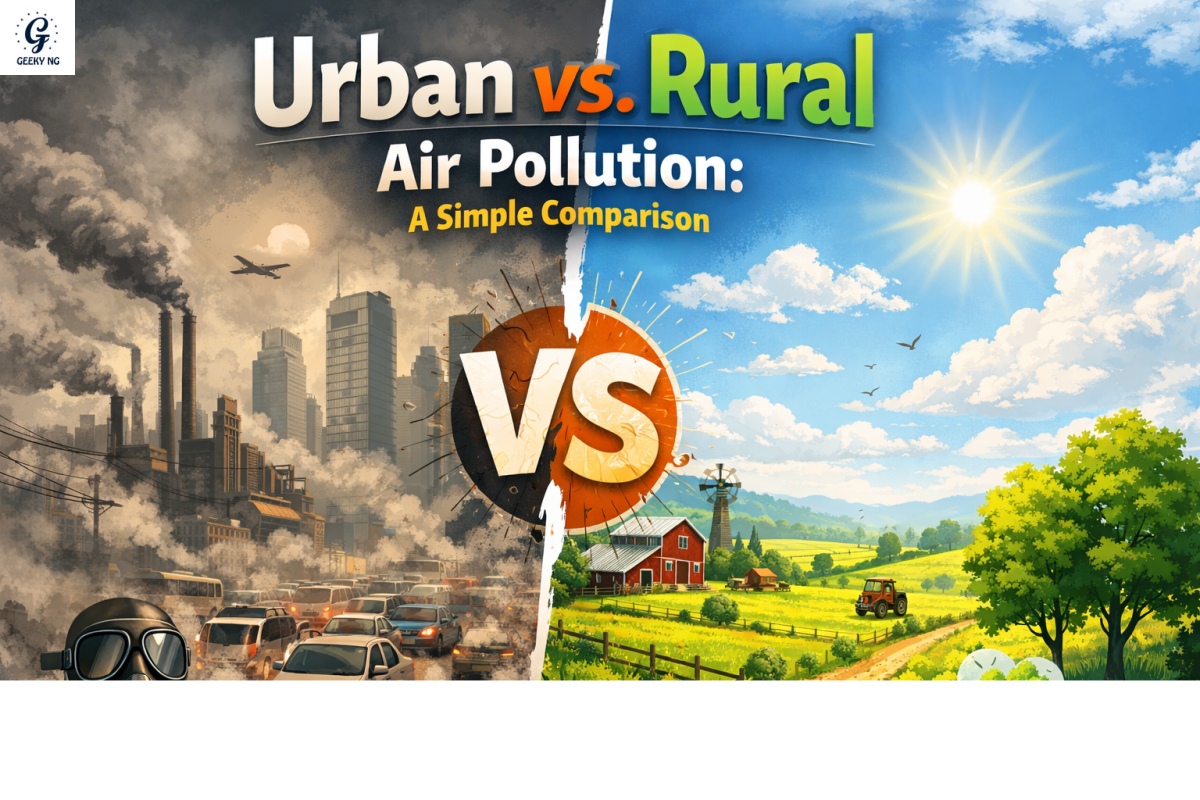
Air pollution is a major environmental issue affecting urban and rural areas.
However, the sources, types, and impacts of air pollution can differ significantly between these settings. Here is a simple comparison of air pollution in urban and rural areas.
Table of Contents
Differences between Urban and Rural Air Pollution
1. Sources of Air Pollution
Urban Areas:
Vehicles: Cars, buses, and trucks emit pollutants like Nitrogen Oxide (NOx) and particulate matter.
Industries: Factories and power plants release various pollutants, including Sulfur Dioxide (SO2) and Carbon Monoxide (CO).
Construction: Dust and emissions from construction sites contribute to urban air pollution.
Households: Using heating systems and cooking appliances can also release pollutants into the air.
Rural Areas:
Agriculture: Activities such as crop residue burning, fertilizers, and pesticides release pollutants like ammonia and methane.
Biomass Burning: In many rural areas, people use wood or other biomass for cooking and heating, which produces smoke and particulate matter.
Natural Sources: Dust from unpaved roads and fields and smoke from wildfires can affect air quality.
2. Types of Pollutants
Urban Air Pollutants: Typically include higher levels of Nitrogen Oxide (NOx), Sulfur Dioxide (SO2), Carbon Monoxide (CO), and fine particulate matter.
Rural Air Pollutants: Often include Ammonia (from fertilizers), Methane (from livestock), and larger particulate matter (dust from soil).
3. Health Impacts
Urban Areas:
Higher pollution levels in cities can lead to respiratory and cardiovascular diseases, such as asthma and lung diseases, as well as other health problems.
People living in cities are more exposed to traffic emissions and industrial pollutants.
Rural Areas:
High pollution levels from agricultural activities can affect respiratory health.
Biomass burning for cooking and heating can lead to indoor air pollution, which is harmful to health.
4. Differences in Air Quality Monitoring
Urban areas often have more advanced air quality monitoring systems, providing better data on pollution levels.
Rural areas might lack extensive monitoring, making it harder to assess the air quality accurately.
5. Climate and Seasonal Variations
Urban Areas: Air pollution in cities can fluctuate based on the seasons. For example, during winter, there may be higher levels of pollutants like particulate matter due to the increased use of heating systems.
Rural Areas: In rural areas, seasonal activities like crop residue burning or harvesting can temporarily increase pollutant levels, especially during the dry season.
6. Population Density Impact
Urban Areas: High population density leads to greater use of vehicles and higher energy demand, contributing to air pollution.
Rural Areas: In contrast, rural areas generally have lower population density, but large-scale agricultural operations can still lead to significant pollution.
7. Indoor vs. Outdoor Pollution
Urban Areas: Indoor pollution in cities can be worsened by poor ventilation in densely populated buildings, along with emissions from household products.
Rural Areas: Indoor pollution is often more severe in rural areas due to the use of biomass for cooking and heating, which releases significant amounts of particulate matter indoors.
8. Economic Factors:
Urban Areas: Industrial growth in cities can lead to higher pollution if environmental regulations are not enforced. However, cities often have more resources for pollution control measures.
Rural Areas: Limited financial resources in rural settings can delay the adoption of cleaner technologies, making it harder to reduce pollution from agricultural or household sources.
9. Impact on Ecosystems:
Urban Areas: Urban air pollution not only affects human health but also causes damage to vegetation, water bodies, and infrastructure through acid rain or smog.
Rural Areas: Air pollution from agricultural activities can affect local ecosystems, contributing to soil degradation or reducing biodiversity through the use of chemical fertilizers and pesticides.
10. Mitigation Strategies
Urban Areas:
- Improving public transportation to reduce vehicle emissions.
- Implementing stricter regulations on industrial emissions.
- Encouraging the use of cleaner energy sources for heating and cooking.
Rural Areas:
- Promoting sustainable agricultural practices to reduce emissions from farming.
- Providing cleaner cooking technologies can help reduce indoor air pollution.
- Managing natural sources like dust through better land use practices.
Final Thoughts
While urban and rural areas face challenges with air pollution, the sources and impacts vary. Understanding these differences is crucial for developing effective strategies to improve air quality and protect public health in both settings.
Read also: The Impacts Of Air Pollution On Respiratory Health