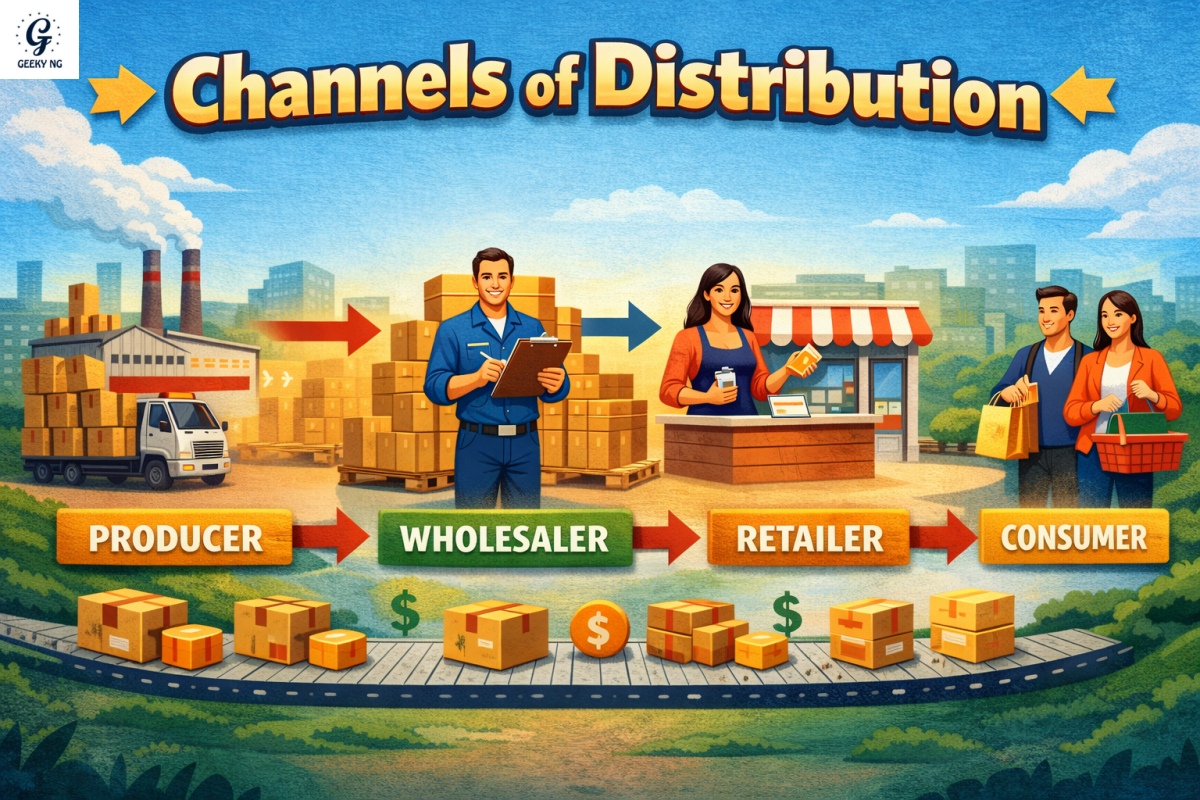
Channels of distribution are the routes that connect your products with those who need them most, no matter their location. It is a great deal for manufacturers.
Table of Contents
LEARNING OBJECTIVES
By the end of the lesson, students should be able to
- Explain the meaning of distribution
- Define channels of distribution
- Describe the process of distribution
- Explain who a wholesaler is
DEFINITION OF DISTRIBUTION
Distribution is the process of making goods and services available to consumers after they have been produced. It involves all activities that move goods from the place of production to the final users.
Distribution ensures that goods reach the right people, at the right place, at the right time, and in the right quantity. Without distribution, goods produced by manufacturers would remain in factories and would not be useful to consumers.
DEFINITION OF CHANNELS OF DISTRIBUTION
Channels of distribution are the routes or paths through which goods and services pass from the producer to the final consumer.
These channels show the sequence of individuals or organizations involved in the movement of goods. Examples of channels of distribution include
- Producer → Consumer
- Producer → Retailer → Consumer
- Producer → Wholesaler → Retailer → Consumer
The channel chosen depends on the nature of the product, distance to the market, and the size of the business.
PROCESS OF DISTRIBUTION IN THE CHANNELS OF DISTRIBUTION
The process of distribution involves several stages through which goods move before getting to the final consumer. These stages include
- Production: Production is the first stage in the process of distribution. At this stage, goods and services are created by manufacturers using raw materials, labour, and capital. The aim of production is to satisfy human wants by making goods available in large quantities. Goods produced at this stage are usually not meant for direct consumption immediately. Instead, they are prepared for movement to other stages of distribution. Without production, there would be no goods to distribute to consumers.
- Transportation: Transportation involves moving goods from the place where they are produced to places where they are needed. This stage helps to bridge the distance between producers and consumers. Transportation can be done by road, rail, air, or water, depending on the nature of the goods and distance involved. Through transportation, goods are taken from factories to warehouses, wholesalers, retailers, and finally to consumers. It ensures that goods are available in different locations.
- Storage: Storage is the stage where goods are kept safely until they are needed. After production, goods may not be sold immediately, so they are stored in warehouses or stores. Storage helps to preserve goods and protect them from damage, theft, or spoilage. It also helps to balance demand and supply by keeping goods during periods of low demand and releasing them when demand increases.
- Wholesaling: Wholesaling is the stage where wholesalers buy goods in large quantities from manufacturers. Wholesalers serve as a link between producers and retailers. They store goods and sell them in smaller quantities to retailers. By buying in bulk, wholesalers help manufacturers to reduce storage and distribution problems. Wholesaling also helps in spreading goods to different markets.
- Retailing: Retailing involves selling goods directly to the final consumers in small quantities. Retailers buy goods from wholesalers or directly from manufacturers. They make goods easily available to consumers by operating shops in convenient locations. Retailers also give information to consumers about products and prices. This stage brings goods closer to the consumers.
- Consumption: Consumption is the final stage in the process of distribution. At this stage, consumers buy and use goods to satisfy their needs and wants. Consumption gives value to goods because goods are produced and distributed mainly for consumers to use them. When goods are consumed, the distribution process is completed, and the cycle continues as producers respond to consumer demand.
THE WHOLESALER IN CHANNELS OF DISTRIBUTION
A wholesaler is a middleman who buys goods in large quantities from manufacturers and sells them in smaller quantities to retailers. Wholesalers usually operate in large markets or warehouses. They do not sell directly to final consumers. Their main role is to link manufacturers with retailers, making distribution easier and faster. Examples of wholesalers include distributors of beverages, food items, and building materials.
SUMMARY
- Distribution is the process through which goods move from producers to consumers to ensure availability and usefulness.
- Channels of distribution are the paths goods follow from the producer through middlemen to the final consumer.
- The process of distribution involves production, bulk purchase, storage, transportation, and sale of goods to consumers.
- A wholesaler is a middleman who buys goods in large quantities from manufacturers and sells them to retailers.
Tags
Distribution, Channels of distribution, Producer, Manufacturer, Consumer, Middleman, Wholesaler, Retailer, Process of distribution, Transportation, Storage.
Read also: Concept Of Supply