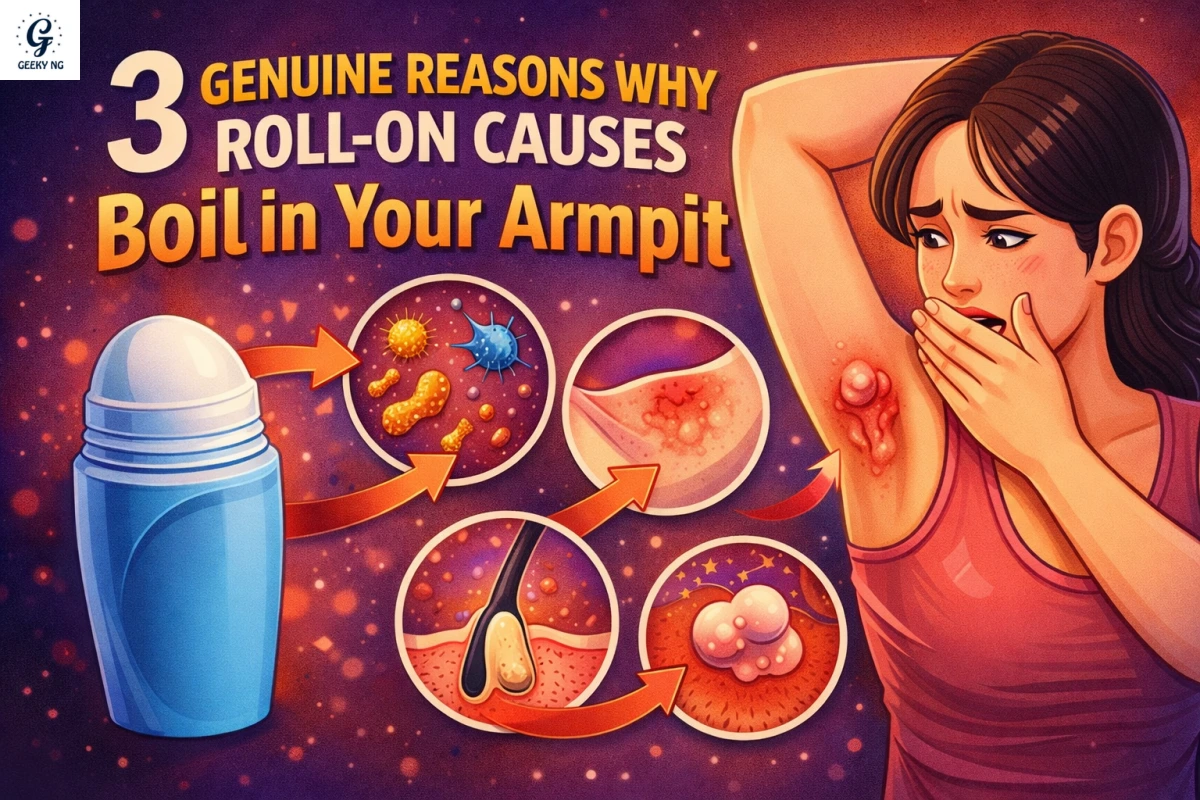
Could your roll-on deodorant be causing those painful boils?
Picture this! You’re getting ready for the day, you swipe on your favourite roll-on, and head out feeling fresh. A few days later, you notice a painful bump underneath your arm. Annoying, right?
That bump might be a boil, and yes, your roll-on could be the very cause. But how?
While deodorants are meant to keep you fresh, some can irritate your skin and even lead to infections.
Boils are painful, red bumps that form when bacteria infect your hair follicle or sweat gland, causing a build-up of pus. They often happen when something clogs or irritates your skin.
Boils are usually caused by bacterial infections, such as Staphylococcus aureus, which can enter the skin through hair follicles or minor cuts and trigger an immune response, leading to inflammation and boil formation.
You may be using roll-on deodorants as a daily routine to stay fresh, but sometimes these products can block your sweat glands, which may lead to the formation of boils.
Let’s dive into how this common product might be affecting your skin and what you can do to prevent it.
Table of Contents
How Does Roll-on Work?
Now, roll-on deodorants do not typically cause boils.
However, using roll-on deodorant can lead to skin irritations or clogged sweat glands in some individuals, potentially contributing to boil development (also known as furuncles).
Roll-on deodorants and antiperspirants work by blocking your sweat glands to stop sweating and reduce odour. They contain ingredients like aluminium compounds that plug your sweat ducts.
Some also have fragrances and alcohol to mask odour and keep you feeling fresh. However, these chemicals can irritate your skin or clog pores, which may lead to problems like boils.
How Does Roll-on Cause Boil in Your Armpit?
-
Clogging of your Sweat Glands
Roll-on products can block your sweat ducts by forming a layer over your skin, especially in your armpit, where it is mostly used.
When sweat can’t escape, it gets trapped under your skin, leading to clogged pores. These blocked pores create an ideal environment for bacteria like Staphylococcus aureus to grow, leading to painful infections such as boils.
-
Irritations and Allergic Reactions
Quite a number of people have very sensitive skin, making them prone to allergic reactions. This is especially true for certain ingredients in roll-on, like fragrances or alcohol.
You might be one of those people and these reactions can cause irritation, redness, and inflammation.
Thus, knowing your skin type will help you properly determine the type of products to use.
When your skin becomes irritated, it’s easier for bacteria to enter and cause you infections, potentially leading to boil formation.
-
Bacterial Growth
When sweat and bacteria get trapped under your blocked pores from using roll-on, they have no way to escape.
This creates an ideal environment for bacteria to grow and cause an infection. The infection can lead to swollen, painful boils forming in the armpit.
How Do You Prevent Boils?
When you want to avoid boils, try switching to fragrance-free or natural deodorants that are gentler on the skin. Avoid alcohol-based roll-ons, as they can be irritating.
Also, keep your armpit clean and dry to reduce the chance of bacteria and sweat building up. These simple changes can help you prevent clogged pores and infections.
If a boil doesn’t heal after a few days and/or keeps coming back, or gets worse with increased pain and swelling, you should see a doctor immediately.
Also, seek help if the boil becomes very large, leaks pus, or causes fever, as it may need medical treatment to prevent further infection.
Conclusion
Now you know that roll-ons can block your sweat glands, irritate skin, and create an environment for bacterial growth, leading to armpit boils.
If you are experiencing boils and suspect it might be related to your roll-on deodorant, it could be due to an allergic reaction, irritation, or poor hygiene practices.
To prevent skin irritation, choose gentle, fragrance-free products and maintain good personal hygiene.
By understanding how roll-ons impact your skin, skin type, and compatible products, you can make smarter choices to prevent boils.
Consider switching to sensitive-skin deodorants or consulting a healthcare professional for personalised advice.
Read also: 10 Personal Skincare Routines To Maintaining A Healthy Skin