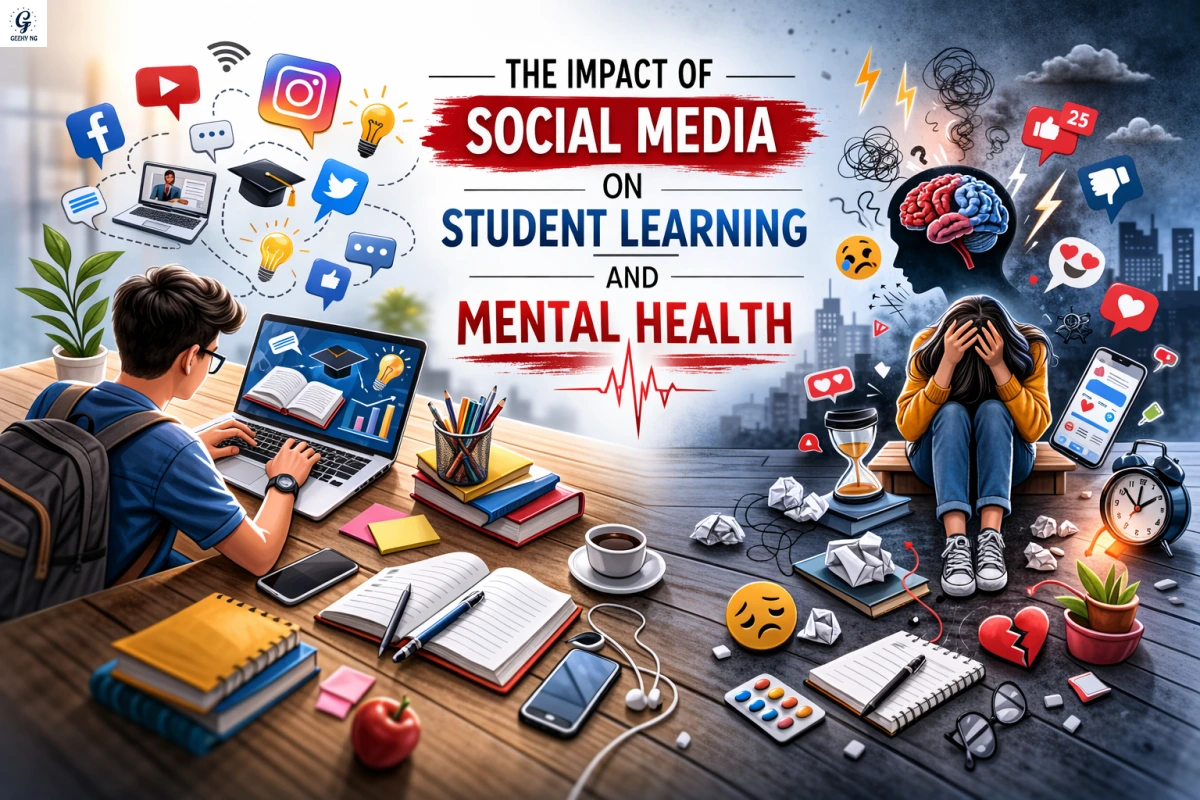
The digital age has ushered in a remarkable transformation in how we communicate, interact, and access information.
At the forefront of this revolution is the meteoric rise of social media, which has become an integral part of the lives of university students worldwide.
As these digital platforms have become woven into the fabric of our daily lives, it is crucial to examine their impact on this influential demographic’s academic and mental well-being.
University students navigating the challenging transitions of young adulthood are uniquely positioned to reap the benefits and face the pitfalls of social media engagement.
On one hand, these platforms offer unparalleled opportunities for connection, collaboration, and knowledge acquisition. Yet, on the other, they present the potential for detrimental effects on mental health, academic performance, and personal development.
This comprehensive article delves into the complex interplay between social media and the student experience, exploring the multifaceted ways in which these digital tools can shape the educational and emotional trajectories of tomorrow’s leaders.
By understanding the nuances of this dynamic relationship, we can empower students to harness the positive potential of social media while navigating its inherent challenges with greater awareness and resilience.
Table of Contents
The Positive Impact of Social Media on Student Learning
1. Connectivity and Collaboration
One of the most transformative aspects of social media for university students is its ability to foster connectivity and collaboration.
These digital platforms have revolutionised how students communicate, share ideas, and work together on academic projects.
Through online communities and discussion forums, students can engage with their peers, exchange knowledge, and form study groups that transcend geographical boundaries.
This enhanced connectivity has the potential to enrich the learning experience, as students are exposed to diverse perspectives and can tap into a wealth of collective expertise.
By collaborating on assignments, sharing resources, and engaging in virtual study sessions, students can deepen their understanding of course material and develop essential teamwork skills that are highly valued in the modern workforce.
Social media platforms have become valuable tools for students to connect with professors, teaching assistants, and academic advisors.
This increased accessibility to faculty members can facilitate more meaningful mentorship opportunities, enabling students to seek guidance, clarification, and feedback in a timely and convenient manner.
2. Access to Information and Educational Resources
The proliferation of social media has also democratised access to information and educational resources, empowering students to take charge of their learning journeys.
These digital platforms have become vast knowledge repositories, providing students with a wide array of content, from educational videos and tutorials to scholarly articles and online courses.
Through social media, students can discover and engage with subject matter experts, thought leaders, and educational institutions from around the world.
This exposure to diverse perspectives and cutting-edge research can significantly enrich the learning experience, broadening students’ horizons and fostering a more profound intellectual curiosity.
Furthermore, social media has revolutionised how students can access and share educational resources.
With the ease of digital content creation and distribution, students can seamlessly share notes and study guides and even co-create learning materials, fostering a collaborative learning and knowledge-sharing culture.
3. Promoting Positive Well-being and Self-expression
Contrary to the common perception of social media as a purely time-consuming distraction, these platforms can also promote positive well-being and self-expression among university students.
Many students utilise social media as a creative outlet, sharing their artistic endeavours, academic achievements, and personal growth journeys.
This self-expression can have a cathartic effect, allowing students to process their thoughts and emotions.
Furthermore, when students engage with and receive positive feedback from their online communities, it can boost their self-confidence and sense of belonging, contributing to their overall mental health and resilience.
Social media can also serve as a valuable resource for students seeking mental health support and wellness resources.
Universities and mental health organisations often remain active on these platforms, sharing educational content, coping strategies, and information on available support services.
By tapping into these resources, students can enhance their mental health literacy and take proactive steps to prioritise their well-being.
The Negative Impact of Social Media on Student Learning and Mental Health
1. Social Comparison and Self-Esteem
While social media can offer numerous benefits, it is also essential to acknowledge its potential risks, particularly in mental health.
One of the most prevalent concerns is the impact of social comparison and the cultivation of unrealistic expectations.
University students are particularly susceptible to the pressure of maintaining a curated online persona, often comparing themselves to their peers’ seemingly perfect lives and achievements.
This constant exposure to carefully edited snapshots of others’ experiences can lead to feelings of inadequacy, low self-esteem, and a distorted sense of self-worth.
The tendency to measure one’s accomplishments against the highly selective and polished representations on social media can have detrimental consequences, undermining students’ confidence and contributing to mental health challenges such as anxiety and depression.
2. Fear of Missing Out (FOMO) and Distraction
Another significant pitfall of social media engagement is the fear of missing out (FOMO). The constant stream of updates, events, and social activities shared on these platforms can trigger a pervasive sense of exclusion and a compulsive need to stay constantly connected.
This FOMO can lead to increased stress and anxiety as students feel pressured to maintain a perpetual online presence and participate in every social opportunity.
The resulting distraction and fragmentation of attention can seriously affect academic performance as students need help to focus on their studies and allocate sufficient time to their coursework.
The addictive nature of social media, with its endless scrolling and constant notifications, can exacerbate time management and productivity issues.
Students may fall prey to these digital platforms’ allures, sacrificing valuable study time and compromising their academic progress.
3. Cyberbullying and Online Harassment
The anonymity and widespread reach of social media have also given rise to the troubling phenomenon of cyberbullying and online harassment.
University students, already grappling with the challenges of young adulthood, may become targets of malicious comments, trolling, or even sustained abuse campaigns.
The psychological impact of such experiences can be devastating, leading to heightened feelings of anxiety, depression, and even suicidal ideation.
Victims of cyberbullying may struggle to concentrate on their studies, experience a decline in academic performance, and suffer from long-lasting emotional trauma.
Universities, mental health professionals, and policymakers must work together to address this pressing issue, ensuring that students have access to robust support systems and effective strategies for navigating the challenges of online harassment.
Conclusion
The ubiquity of social media in the lives of university students has undoubtedly transformed the educational and social landscape.
While these digital platforms offer invaluable opportunities for connectivity, collaboration, and knowledge acquisition, they also present a complex web of challenges that can have far-reaching implications for student learning and mental well-being.
As students navigate social media’s dynamic and ever-evolving world, they must develop a nuanced understanding of its impact.
By cultivating self-awareness, setting healthy boundaries, and leveraging the positive potential of these tools, students can harness the benefits of social media while mitigating its inherent risks.
Universities, too, have a vital role in this endeavour by implementing comprehensive digital wellness programs, fostering digital literacy, and providing robust support systems for students grappling with the mental health consequences of social media engagement.
Ultimately, the impact of social media on student learning and mental health is a multifaceted and ever-evolving landscape.
By approaching this challenge with a balanced and proactive mindset, we can empower the next generation of leaders to navigate the digital realm with resilience, wisdom, and a steadfast commitment to their academic and personal well-being.
Read more: The Impact Of Social Media On Nigerian Society: Benefits And Drawbacks