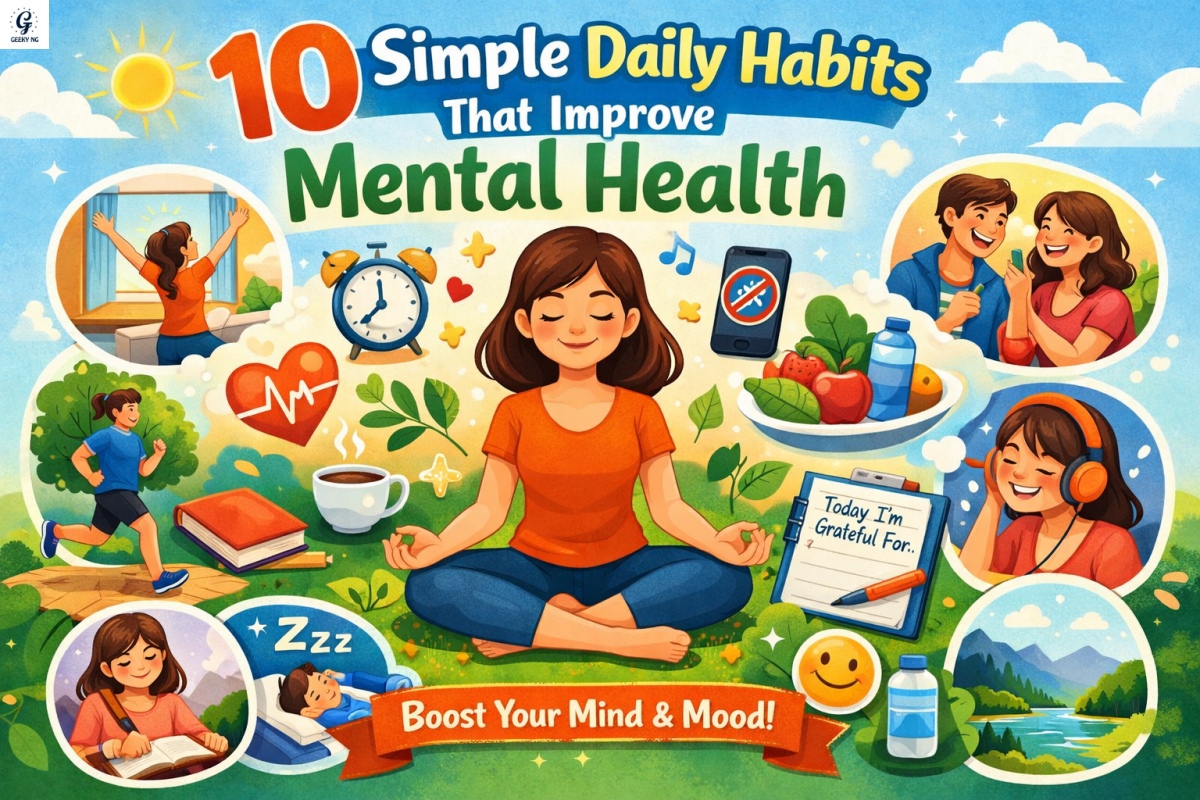
Habits that Improve Mental health are necessary knowledge that everyone must have and imbibe in.
Your mental health doesn’t transform overnight, but here’s the actual truth that research keeps confirming small, consistent actions compound into significant change. With nearly 60 million adults experiencing mental illness annually in the United States alone and over 1 billion people worldwide living with mental health conditions, finding accessible ways to support our emotional well-being has never been more critical.
The good news? Science-backed daily habits for mental health don’t require expensive gym memberships, therapy sessions (though those help too), or drastic lifestyle overhauls. A groundbreaking study of nearly 300,000 people found that maintaining just five out of seven healthy habits reduced depression risk by 57%. That’s a powerful reminder that improving mental health starts with the choices we make each day.
Quickly, let’s look into ten simple, evidence-based habits that can improve mental health, whether you’re in Lagos, London, or anywhere in between.
Table of Contents
Habits That Improve Mental Health
1. Prioritize Quality Sleep (7-9 Hours)
Sleep isn’t a luxury; it is the foundation of mental health, as research consistently shows that adequate sleep helps regulate mood, reduce stress hormones, and improve cognitive function. Most adults need at least seven hours per night, though quality matters more than hitting an exact number.
Create a consistent sleep schedule by going to bed and waking up at the same time daily, even on weekends. Your brain craves predictability, and this routine signals when it’s time to wind down.
2. Move Your Body Regularly
Physical activity isn’t just about fitness; it is one of the most effective natural treatments for depression and anxiety as studies reveal that exercise can be more effective than medication in reducing depression symptoms, with longer-lasting benefits.
You don’t really need to run marathons, because a 15-minute walk, dancing to your favorite Afrobeats playlist, or quick exercise “snacks” throughout the day all contribute to improved mental wellness. The key therefore is consistency, not intensity.
3. Eat Foods That Fuel Your Mind
What you eat directly impacts how you feel. This is so because research shows that diets rich in whole foods, vegetables, fruits, fish, nuts, and olive oil support better mental health outcomes. Conversely, diets heavy in processed foods, refined sugars, and excessive caffeine can worsen anxiety symptoms.
Think of food as medicine for your mind. You’re not just feeding your body; you’re nourishing the brain chemistry that regulates your mood.
4. Practice Daily Gratitude
Reflecting on what you’re grateful for literally rewires your brain to focus on positivity rather than problems. This simple mental health habit takes less than five minutes but creates lasting changes in how your brain processes experiences.
Write down three things you’re grateful for each morning, or share them with a loved one. It could be as simple as appreciating a good meal, a friend’s message, or the fact that you have electricity today.
5. Build and Maintain Social Connections
Loneliness increases the risk of mental health challenges to levels comparable with smoking daily, according to the U.S. Surgeon General. Having strong social support consistently predicts better physical and mental health outcomes.
Schedule regular check-ins with friends or family. Video calls, coffee meetups, or even thoughtful text messages all count. Quality connections do matter more than quantity.
6. Limit Screen Time and Social Media
Excessive social media use contributes to anxiety, decreased self-esteem, and poor sleep quality. Set intentional boundaries around phone use, especially before bedtime.
Consider implementing “no-phone zones” during meals or designating specific times to check social media rather than mindlessly scrolling throughout the day.
7. Incorporate Mindfulness or Meditation
Even 15 minutes of mindfulness practice can reduce stress, improve focus, and enhance emotional regulation. Whether through meditation apps, deep breathing exercises, or simply sitting quietly with your thoughts, these practices anchor you in the present moment.
Start small. Five minutes of focused breathing while commuting or during lunch break is better than aiming for an hour and never starting.
8. Engage in Acts of Kindness
Helping others doesn’t just benefit them; it significantly boosts your own emotional well-being. Research from the Big Joy Project found that brief daily activities like gratitude or helping others meaningfully improved participants’ stress levels and emotional health.
Compliment a colleague, help a neighbor, or send an encouraging message to someone who needs it. These small gestures create positive ripple effects for both parties.
9. Create and Follow a Consistent Routine
Predictable daily routines reduce cognitive load and mental fatigue by decreasing the number of decisions you need to make. This structure creates a sense of order that can significantly lower stress and anxiety.
Design a routine that works for your life, not someone else’s ideal schedule. Maybe it’s a morning ritual of tea and journaling, or an evening walk; consistency builds momentum.
10. Make Time for Activities You Genuinely Enjoy
Your routine should include simple pleasures that make you happy, whether it’s listening to music, gardening, cooking, or reading. These moments of joy aren’t frivolous; they’re essential for mental health maintenance.
Block out time for hobbies the same way you schedule meetings because your well-being deserves that priority.
The Path Forward (Start Small, Stay Consistent)
Here’s what mental health professionals want you to remember: you don’t need to implement all ten habits tomorrow. Start with one or two that resonate most with you. Consistency beats perfection every time.
Track your progress in a journal, celebrate small wins, and be compassionate with yourself on difficult days. Building healthy habits for mental wellness is a journey, not a destination, as some days you’ll nail your routine, other days you won’t, and that’s completely normal.
If you’re struggling despite these efforts, remember that seeking professional help isn’t a sign of weakness; it’s a sign of wisdom. These daily habits that can improve your mental health work best when combined with therapy or medical treatment when needed.
Final Thoughts
Your mental health matters, and these simple, science-backed practices offer an accessible starting point for anyone looking to support their emotional well-being. The question isn’t whether these habits work; research proves they do. The real question is: which one will you start with today?
Read also: Sleep and Rest: Boosting Physical and Mental Health