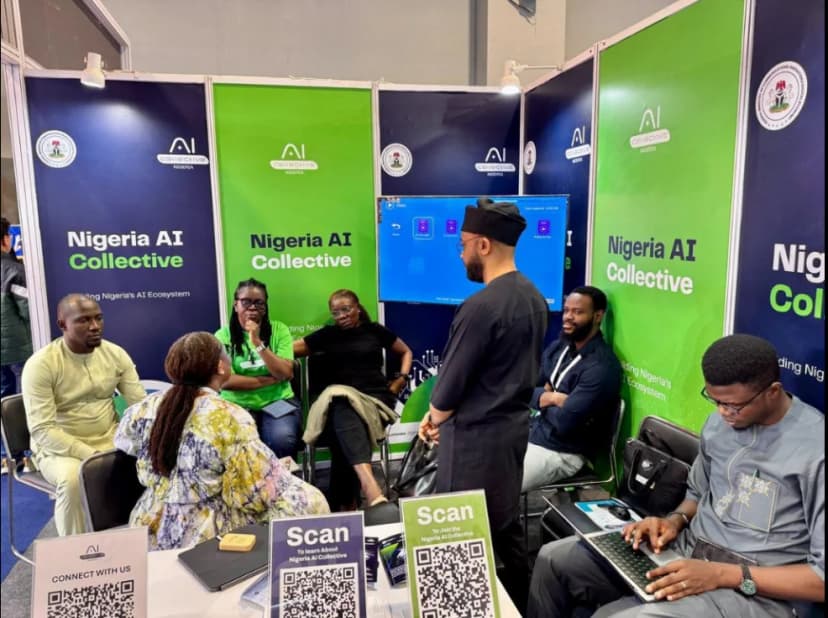
At Moonshot by TechCabal 2026, the Nigeria AI Scaling Hub (NAISH) gave a presentation showcasing five organisations, every one of them developing artificial intelligence tools aimed at health, agriculture and indigenous languages. According to the presentation, infrastructure in the digital space that is held in common, together with cooperation, can help turn locally grown research into practical products that reach a wider audience.
Among the organisations was the digital health provider
- mDoc,
- the agricultural technology startup Extension Africa,
- the data-focused research organisation Data Science Nigeria,
- language technology company awarri, and
- the Masakhane African Languages Hub.
All of them are building AI applications to tackle particular problems facing the continent.
Backing for NAISH comes from the Gates Foundation, which has pledged as much as $7.5 million across three years. The money is meant to close the distance between AI projects still at the experimental stage and solutions ready to be rolled out more widely.
Lagos Business School serves as host of the hub, which has the backing of the Federal Ministry of Communications, Innovation and Digital Economy (FMCIDE). Local innovators receive help from it in the form of computing power, data infrastructure and policy support, so that their technologies can move past the testing phase and into real deployment.
The hub, known as NAISH, concentrates on areas where artificial intelligence might widen people's reach to vital services, among them health, farming, schooling and finance.
How AI is being used to widen access to health and farming support
One of the organisations on show at Moonshot 2026 was mDoc, a digital health firm whose AI-driven chat tools and virtual coaching support people living with chronic conditions.
Its services help patients manage their health and follow care plans outside hospitals, which often face pressure from high patient numbers. However, the company noted that effective healthcare technology also depends on secure access to health data and the ability of patients to use digital services in areas with limited internet connectivity.
On the farming side, Extension Africa combines machine-learning tools with a team of field agents, so that growers receive guidance suited to the conditions where they live.
Getting to farmers in far-flung communities can cost a great deal. NAISH hopes to cut some of the expense of scaling up such services by drawing on pooled cloud resources, data infrastructure held locally and partnerships with companies.
The approach highlights that scaling agricultural technology requires more than advanced software. It also depends on the infrastructure, partnerships and human support needed to reach farming communities.
Developing AI solutions for Nigerian and African languages
Moonshot 2026 will also include two further groups working to close the gap in the presence of African tongues online and in digital tools.
Awarri is building artificial intelligence models for Nigerian languages, among them Igbo, Yoruba and Hausa, together with Nigerian Pidgin. Translation and transcription are among the jobs its technology can handle, and it can also be plugged into other digital systems.
Making technology accessible depends heavily on language, especially for those who feel less at ease communicating in English. Interfaces in local languages and tools driven by voice might allow a larger number of people to use the digital services offered by companies and public bodies.
The work being done at Awarri also points to a wider need: AI systems ought to mirror the linguistic diversity of Nigeria, instead of leaning chiefly on languages that already have strong representation in digital technology.
Oluwalobamise Orafidiya, who is an associate at awarri and heads its marketing and communications, says the firm is getting help from NAISH to display its work, build links with other organisations and look at ways of scaling up its AI solutions.
The Masakhane African Languages Hub pursues a similar goal through NLP research and development. That branch of AI covers the way machines handle, interpret and make sense of human language.
The project, led by Masakhane Research Foundation, seeks to tackle the weak representation of African tongues in artificial intelligence studies and digital technology. It also aims to strengthen research into them and to make sure African researchers steer the building of technologies intended for their own communities.
Together, Awarri and the Masakhane African Languages Hub demonstrate how local-language technology can help make AI more relevant and accessible to African users.
Developing the technical skills needed to adopt AI
VoiceAgent is the new product from Data Science Nigeria (DSN), which serves as lead technical partner for the NAISH rollout. It is a voice-driven platform that lets companies and public-sector agencies build their own interactive voice assistants, shaped around whatever they specifically need.
People can obtain information through voice-based services without having to read or type anything. A simple phone call is enough for users to ask these systems about essential services.
In addition, DSN offers technical help to young organisations as they build, launch and maintain AI solutions, especially where infrastructure and other resources are scarce.
Making funding deliver results that can be measured
At Moonshot 2026, NAISH's showcase drew attention to work aimed at shifting AI development away from demonstrations and trial projects and towards solutions for genuine real-world problems.
Funding from the Gates Foundation and support from the Federal Ministry of Communications, Innovation and Digital Economy provide resources for this work. However, the long-term success of the initiative will depend on how effectively the organisations turn their technologies into services that people can use.
Ultimately, NAISH's impact will be measured not only by the technology developed but also by the results it delivers. These could include more affordable healthcare services, improved agricultural productivity and easier access to public services for millions of Nigerians.