Heart disease Nigeria claims 235,000 lives a year, says NHF
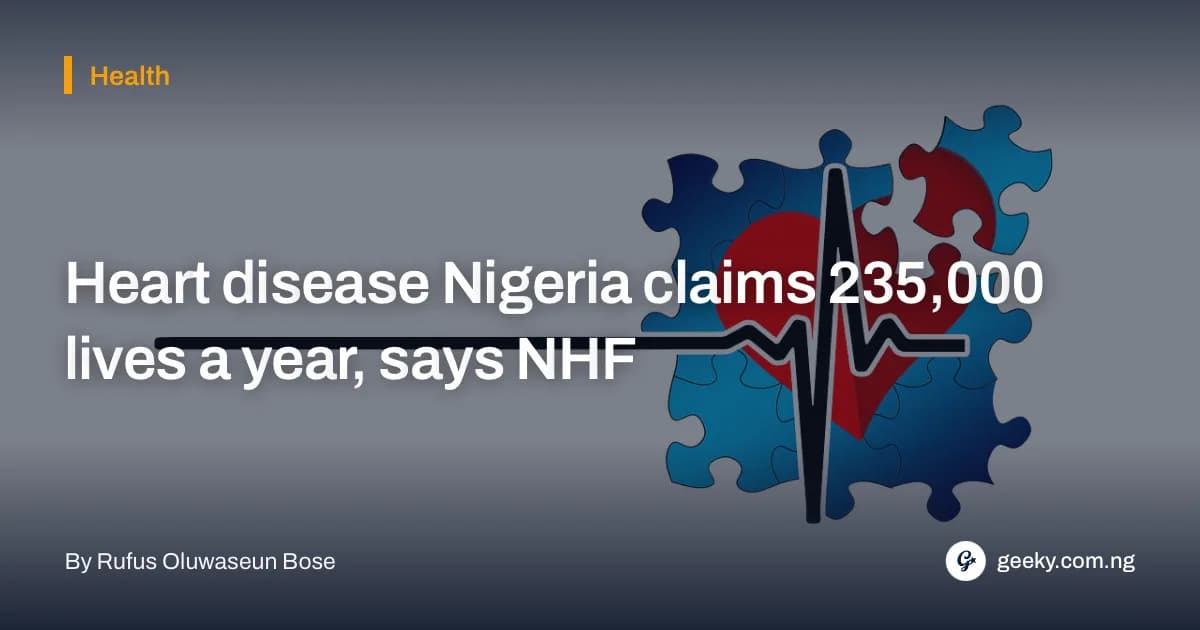
Heart disease Nigeria faces now kills more than 235,000 people a year, according to the Nigerian Heart Foundation (NHF), and the numbers behind it point to a deeper problem than lifestyle alone. World Health Organization (WHO) estimates suggest that of roughly 22 million adults with hypertension, only about 13 per cent have their blood pressure under control.
The NHF also warns that many conditions develop silently, from childhood into adulthood.

What the Nigerian Heart Foundation said about heart disease in Nigeria
According to Vanguard News, the foundation made the disclosure at a press conference in Lagos to mark World Heart Day 2026. It said heart-health education must begin in schools and extend to families.
World Heart Day fell on 29 September.
The foundation says at least 80 per cent of premature deaths from heart disease could be prevented by controlling five risk factors. These are tobacco use, an unhealthy diet, physical inactivity, harmful alcohol consumption and air pollution.
Its Executive Director, Dr Kingsley Akinroye, urged adults to have a medical check at least once a year, especially a blood pressure check. He described hypertension as one of the most common cardiovascular conditions in Nigeria and warned against eating too much salt.
The treatment gap behind the headline figures
General advice about diet and exercise matters, but the data show how far the health system lags behind the problem. Fridayposts, summarising WHO data, reports that 32 per cent of Nigerian adults aged 30 to 79 had hypertension in 2024. That corresponds to around 22 million people.
Only half of them were estimated to have been diagnosed. Just 32 per cent were receiving treatment, and about 13 per cent had their blood pressure controlled.
In practical terms, millions of Nigerians are living with high blood pressure without knowing it. Many others know but are not on treatment, or are treated without reaching a safe level. Uncontrolled hypertension raises the risk of stroke, heart failure and kidney damage.
WHO's Nigeria profile also puts average adult salt intake at around six grams a day in 2021. That is above the organisation's recommended level of less than five grams.
Why the heart disease Nigeria death toll figures differ
The NHF figure is not the only estimate. The same WHO hypertension profile estimates that cardiovascular diseases caused about 185,200 deaths in 2021, which is lower than the NHF's annual number.
The two estimates differ because of the years covered, the methods used and the way conditions are classified. Neither figure changes the central message that heart disease kills a very large number of Nigerians each year, and that a good share of those deaths is preventable.
Cost, imported drugs and the push for policy change
Dr Akinroye named cost as a major obstacle. He said the high price of treatment and dependence on imported medicines were among the biggest challenges. He urged greater investment in local production of cardiovascular drugs and wider access to cardiac treatment.
A separate call for policy action came from a cardiologist at the Lagos State University Teaching Hospital (LASUTH). Dr Folashade Daniel spoke at a conference of physicians in Lagos, reported by the News Agency of Nigeria.
Dr Daniel said there are no statistics on how common cardiovascular disease is among Nigerian doctors. This is despite reports of doctors dying from heart-related conditions while on duty.
She called on the government to tighten rules on the content of food, particularly excessive preservatives, salt and trans fats. She also pressed for affordable medicines and wider National Health Insurance Scheme coverage.
Young Nigerians and routine checks
Concern is also growing about younger people. allAfrica.com reports that doctors have warned of rising hypertension among young Nigerians. They link it to unhealthy diets, obesity, physical inactivity and economic pressure.
Routine screening is the advice repeated most often. At a health outreach by the NUJ NAN Chapel in Abuja, ahead of World Diabetes Day on 14 November, medical experts urged Nigerians to check their blood pressure, blood sugar and cholesterol regularly, according to Peoples Gazette Nigeria.
What readers can do now about heart disease
The experts' recommendations are consistent, and most are within an individual's reach:
- Have your blood pressure checked at least once a year, and more often if a doctor advises it.
- Check blood sugar and cholesterol levels routinely.
- Cut back on salt, and limit tobacco and harmful alcohol use.
- Stay physically active, and encourage children to do the same.
- If you are diagnosed with hypertension, stay on treatment and keep follow-up appointments.
Whether the numbers improve will depend on more than personal choices. The calls for cheaper locally made drugs, stricter food rules and broader insurance cover will need action from government. Until then, the gap between diagnosis, treatment and control remains the clearest measure of the challenge of heart disease Nigeria must face.