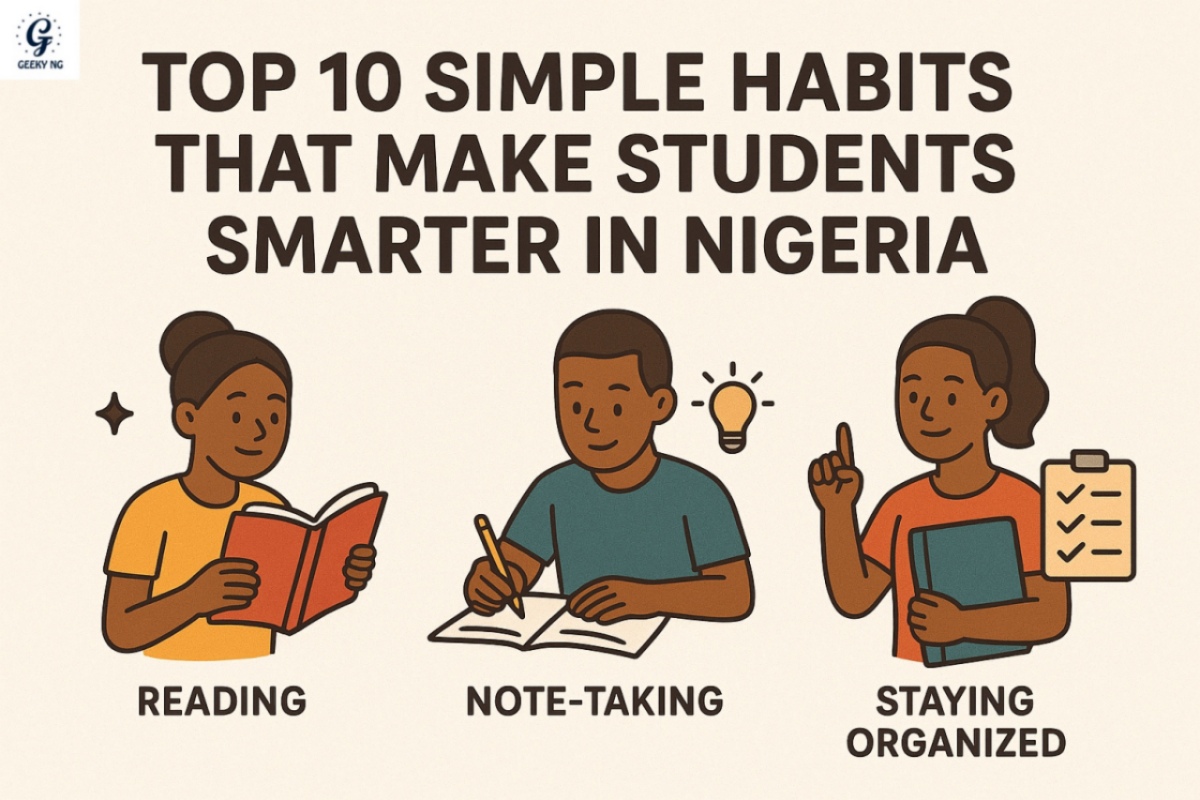
The habits that make students smarter are not necessarily stellar academic achievements but simple but profound daily routines that promote mindfulness.
Every serious student dreams of excelling in school, scoring high grades, gaining respect from peers and making their family proud. But the truth is, becoming smarter is not about overnight miracles or waiting for exam season to push you into last-minute reading. It is about small, but consistent daily habits that sharpen your mind, boost your memory and build resilience over time.
Just as athletes train every day to strengthen their muscles, students can also train their brains with little routines that lead to remarkable results. The best part is that these habits are not complicated, or time-consuming. They simply require commitment, focus and discipline.
This article highlights ten little habits that make students smarter every day, drawing from experiences in Nigeria while connecting with global best practices. By the end, you will see how journaling, daily reviews, reading, mindfulness, and even physical exercise can transform your learning journey. This article will also help you identify consistent little habits that make a big difference in student success.
Table of Contents
The following are top 10 interesting daily habits that make students smarter and successful:
1. Journaling: Writing Your Way To Clarity
Journaling is one of the most underrated tools for students. In Nigeria, many young people use notebooks mainly for classwork or jottings, but very few keep personal journals. Yet journaling has been proven by psychologists to improve memory and self-awareness.
- Morning Reflections: Begin your day by writing three things you are grateful for. For example, you might write, “I am grateful for waking up today, my supportive roommate, and the chance to learn.” This simple exercise sets a positive tone and helps you focus on your goals.
- Evening Reviews: Before sleeping, jot down what went well, what you struggled with, and what you learned. Over time, you will notice patterns in your growth and areas to improve.
- Prompt-Based Journaling: Use questions like “What made me laugh today?” or “What stressed me out this week?” to process emotions and develop critical thinking.
Globally, studies show that journaling reduces anxiety and improves learning retention. For students in Nigeria, it helps to cope with stress from school strikes, power outages, or even exam pressure.
2. The Small Time, Big Impact: Five Minute Review
Have you ever read something in class and forgotten it a few hours later? That is where the five minute review comes in. Neuroscientists argue that revisiting information shortly after learning helps cement it in long-term memory.
- Daily Wrap-Up: Dedicate five minutes before bedtime to summarize what you learned in class. If you studied economics, write down “demand and supply laws” in simple terms.
- Weekly Reviews: Every Sunday evening, spend five minutes reflecting on your achievements and setting small goals for the coming week.
This habit is perfect for students dealing with packed schedules, from tutorials to fellowship meetings. Consistency in short reviews can make the difference between passing and failing.
3. Asking The Right Question Of The Day
Curiosity is the fuel of intelligence. Unfortunately, many students are trained to cram answers rather than ask meaningful questions. But smart learners go further by asking a “thought provoking question of the day.”
- Curiosity-Driven Learning: Ask, “How does this biology concept apply to my daily life?” or “Why is inflation affecting food prices so much?”
- Reflective Inquiry: At the end of the day, ask yourself, “What did I really learn today, and how can I apply it tomorrow?”
In the United States, teachers encourage inquiry-based learning, and in Finland, students are graded on problem-solving skills. Students in Nigeria can as-well learn from this by cultivating curiosity in classrooms. It means developing critical thinking and preparing yourself for real-world challenges.
4. Reading Daily: Building Knowledge Brick By Brick
If there is one habit that separates average students from exceptional ones, it is reading daily. Reading expands your vocabulary, exposes you to new ideas, and boosts creativity.
- Read Beyond Your School Books: Explore Nigerian authors like Chimamanda Adichie or Wole Soyinka. Their works broaden your worldview and improve your expression.
- Global Resources: Websites like Khan Academy, Coursera, and even other open educational resources (OER) offer free learning materials.
A 2023 study in South Africa showed that students who read 20 minutes daily scored 20 percent higher in comprehension tests. In Nigeria, where many struggle with a weak reading culture, developing this habit can set you apart academically and professionally.
5. Physical Exercise: A Strong Body For A Strong Mind
In Nigeria, when you see students jogging on campus, it is often about fitness. But exercise also boosts brain power. According to Harvard research, 30 minutes of moderate exercise increases memory and concentration.
Practical options include skipping rope in your hostel, jogging around your neighborhood, or even playing football. Beyond health, exercise helps students fight stress caused by poor internet, traffic jams, or noisy hostels. A sharp brain sits in a healthy body.
6. Practicing Mindfulness And Meditation
Life as a student can feel overwhelming. Strikes, lack of electricity, and financial pressures all add stress. Practicing mindfulness helps you stay calm and focused.
- Deep Breathing: When exams approach, take five minutes daily to breathe deeply and clear your mind.
- Meditation Apps: Free apps like Calm or Headspace can guide students, even where stress levels are high.
Globally, mindfulness has been shown to reduce exam anxiety by 30 percent. It can help students stay centered despite external challenges.
7. Setting Small Achievable Goals
Many learners aim for big goals like “I must graduate with first class.” But without breaking this dream into daily steps, it becomes overwhelming. Imagine yourself eating a ball of watermelon without cutting it into small pieces.
- Micro-Goals: For example, “I will solve five math problems today” or “I will read 10 pages of my history textbook.”
- Tracking Progress: You can use apps like Google Keep, or simple pen and paper to tick off completed tasks.
This habit boosts motivation and keeps procrastination away. Students battling distractions from social media or noisy environments, need these micro-goals to stay focused.
8. Staying Consistent With Habits
Consistency is the bridge between goals and success. It is not about doing everything perfectly but about showing up daily. Whether it is journaling or exercising, consistency ensures progress.
Research shows that it takes 21 days to build a habit and 63 days to perfect it. For students, consistency could mean reading under a rechargeable lamp every night or journaling even when there is no electricity. The discipline pays off in the long run.
9. Flexibility And Adaptation
For a fact, unlike other places; life in Nigeria is highly unpredictable, it teaches resilience. Sometimes, your schedule may be disrupted by strikes, sudden rain, a curfew, or even fuel scarcity. That is why flexibility matters.
If you miss your morning journaling, do it at night. If you could not jog outdoors, try indoor stretches. The key is to adapt while keeping the habit alive.
10. Celebrating Small Wins
Many students wait until graduation to celebrate. But celebrating little wins like finishing a project, scoring high in a test, or completing 30 days of journaling keeps motivation alive.
Acknowledging progress builds confidence and reminds yourself that you are on the right path. Even small rewards like a snack or hanging out with friends can reinforce good habits
Final Thoughts
Habits that make students smarter are not hidden under the rocks. They are simple underrated practices that can set the pace for excellence. Consistent and intentional little habits create smarter students. Such habits like journaling, reviewing, questioning, reading, exercising, and practicing mindfulness that sharpen the brain and prepare you for success.
So, here are two takeaways:
1. Start small but stay consistent.
2. Build habits that grow your mind every day.
As you reflect, ask yourself: Which little habit will I start today to become a smarter student tomorrow?
Your brain is like a fertile soil. The seeds you plant and the care it receives every day will determine the harvest you reap in the future. The right time to start is right now.