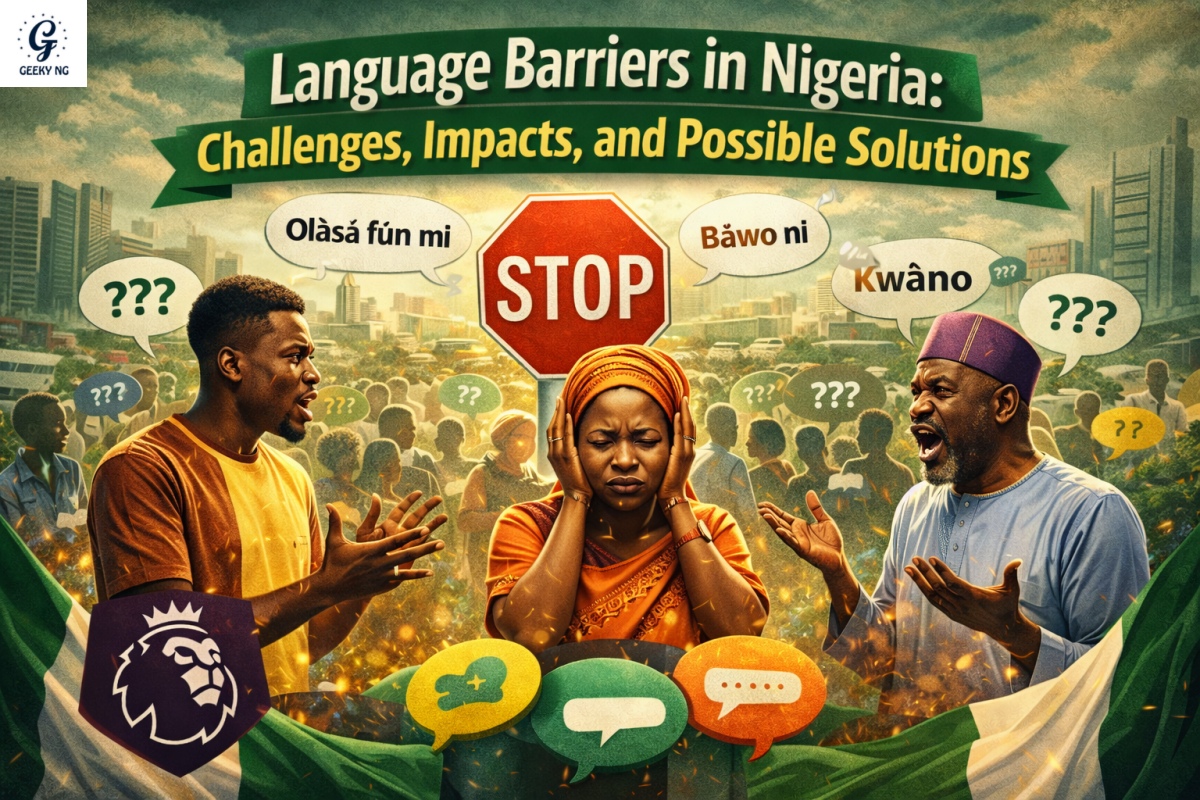
Nigeria, the Giant of Africa, is a country rich in culture, tradition, and most notably, language. With over 500 indigenous languages spoken across the whole nation, Nigeria is one of the most linguistically rich nations in the world. While this diversity is a point of pride and cultural heritage, it has also proven to bear its unique challenges, especially when it comes to communication. From education and healthcare to governance and national unity, Nigeria’s language barrier remains a persistent issue that affects millions of its citizens daily.
Table of Contents
Nigeria: The Tower of Babel
The number of languages in Nigeria alone has created a complex web of communication. Although English is the official language of Nigeria, used in government, education, and formal business. It is not the first language for the majority of Nigerians. Instead, most citizens grow up speaking their native mother tongues such as Hausa, Yoruba, Igbo, Kanuri, Tiv, or Ibibio, among many others.
This language diversity has led to miscommunication and exclusion, more than we care to admit, especially in regions where people do not understand the official language or even the dominant regional languages. For instance, in rural communities, where education levels may be lower, residents may not speak or understand English well enough to access basic services or exercise their rights effectively.
Impact on Education
One of the most visible areas affected by language barriers is education. Nigerian students are often taught in English, a language that is not their mother tongue, making it difficult for them to grasp basic concepts, especially in the early years of schooling. Research has shown that children learn best when taught in their native language. However, Nigeria’s policy of using English as the primary medium of instruction in most schools has alienated students and hindered learning outcomes. Efforts have been made to promote mother-tongue education at the primary level, but implementation is inconsistent due to a lack of teaching resources, trained personnel, and standardised learning materials for many languages.
Healthcare Challenges
Language barriers also have serious consequences in healthcare delivery. Adequate communication between healthcare providers and patients is essential for accurate diagnosis, treatment, and follow-up. In cases where patients cannot express themselves clearly in English or the healthcare worker does not understand the local language, critical information can be lost, sometimes with life-threatening results. This issue becomes even more alarming during public health emergencies when clear and effective communication is vital for public understanding and compliance.
Governance and Access to Information
In Nigeria as a democratic society, access to information is crucial. Yet, many government documents, public service announcements, and political campaigns are delivered primarily in English, which limits its reach and understanding efficiency. Citizens who are not fluent in English may be disenfranchised or unable to fully engage in civic duties such as voting, understanding their legal rights, or accessing public programmes.
A Case for Multilingualism
Despite this challenge, Nigeria’s multilingual nature is not wholly problematic. It can be a strength if well managed. Promoting multilingual education, investing in translation and interpretation services, and supporting indigenous language media can go a long way in bridging the communication gap as well as national unity, as the saying goes, “unity in diversity”.
Additionally, government policies should prioritise inclusivity by ensuring that public information and services are accessible in major local languages. Technology can also play a role, with mobile apps and AI-driven translation tools helping to break down language barriers.
Final Thoughts
Being “lost for words” in a country as linguistically rich and diverse as Nigeria is more than a metaphor; it is a daily reality for millions of its citizens. Addressing language barriers requires more than just recognising the diversity; it demands concrete action and investment in education, public communication, and linguistic inclusion. By embracing and managing its linguistic abundance, Nigeria can transform a potential challenge into a powerful tool for unity and development.
Read also: The Importance Of Preserving Nigerian Languages And Dialects