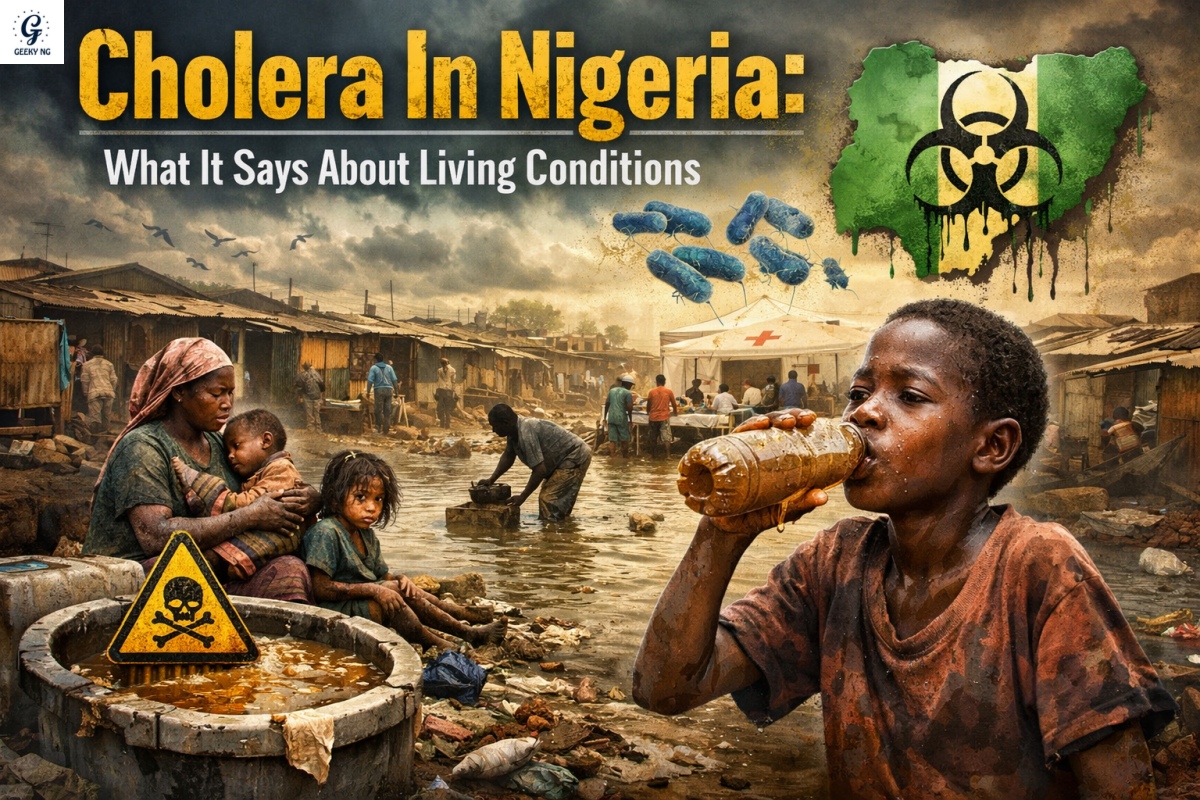
The recurring rates of Cholera in Nigeria is an indicator of deeper welfare concerns in the country.
Cholera should not be a recurring headline in modern Nigeria; however, the disease resurfaces year after year, especially during the rainy season. Quietly at first, then suddenly with hospital admissions, emergency responses, and death records. Headlines from past years and recent times, regarding cholera cases remain a painful reminder that access to clean water and basic sanitation is still far from being guaranteed for many Nigerians. The disease is preventable and treatable, but it continues to thrive in places where conditional daily lifestyles make people vulnerable.
Table of Contents
What Cholera Really Is
Cholera is a bacterial infection spread through contaminated water or food. Once ingested, it attacks the digestive system, causing sudden, severe diarrhea and vomiting. Without treatment, a person can deteriorate within hours because cholera quickly leads to dehydration. When there is serious diarrhea and vomiting, it is only a matter of time until one gets drained. Cholera is easy to manage when noticed early. Administering oral rehydration salts (ORS), clean water, and timely medical care can save lives. Seeing how long cholera has thrived in Nigeria, the problem is obviously not lack of knowledge, it is lack of access to decent and basic amenities.
A Reminder of the Adamawa Outbreak
It is no news that Nigeria recorded another sobering reminder of cholera’s grip on vulnerable communities in Adamawa State. Health authorities got reports of a cholera outbreak affecting several local government areas which began as a few cases of watery diarrhoea then escalated into dozens of hospitalizations.
Unfortunately, the outbreak was as a result of contaminated wells and streams from the heavy rainfall and flooding in the state which claimed the lives of children and elderly residents. Due to poor access and no alternative source, many families knew the water was unsafe but still drank it.
The Adamawa case highlighted a recurring pattern as with many outbreaks before it- late intervention. However, temporary treatment centres were set up, health workers distributed ORS, and community awareness campaigns began. These line of interventions helped to curb the spread. Sadly, lives had already been lost.
Why Cholera Keeps Returning in Nigeria
Cholera outbreaks have become a norm in the Nigerian health sector. They reflect long-standing challenges that affect the daily lives of millions of Nigerians.
Unsafe Water Sources
Many communities depend on rivers, streams, shallow wells, or unregulated water vendors due to lack of access to clean drinking water. This tendency remains one of the biggest gaps in Nigeria’s public health. During floods, these water sources are easily contaminated with sewage and waste.
People are forced to choose between survival and health risks when basic amenities like clean water sources are unavailable. The outcome is yet another Cholera outbreak.
Poor Sanitation and Open Defecation
In rural and peri-urban communities, toilets are inadequately provided or worse still, nonexistent. This gives room to the dehumanizing idea of open defecation as a survival option. Floodwaters wash these bio-wastes into water sources, markets, and homes especially during the rainy season. Enabled by the lack of proper waste disposal systems, Cholera spreads quickly from one point to another; one household to another.
Poverty And Delayed Care
Poverty creates harsh conditions where survival choices increase the risk of cholera outbreak. For many families, seeking medical help is luxury. Medical attention and assistance are often a last minute resort for fear of hospital bills. They arrive at health centres at severe and critical stages. In the case of the Adamawa outbreak, health workers reported that some patients arrived too late for life-saving care.
Who Bears the Greatest Burden?
Although anyone can contract cholera, some groups are more vulnerable to it than others. This could be resultant of high dehydration levels and limited access to healthcare. These category of people include:
- Children under five
- Pregnant women
- The elderly
- Internally displaced persons
- People living in overcrowded or flood-prone areas
The Effect on Families and Healthcare Workers
Cholera goes beyond statistics or numbers. It indirectly means bodily and emotional unrest for parents of suffering children; families struggling to commute and access long distant clinics. It also means communities gripped by fear of markets shutting down, schools closing temporarily, healthcare workers having to work long shifts and suffer emotional strain. Cholera outbreaks takes a toll that will never be fully captured by headlines and reports.
Initiatives such as ‘Government and Partner’ often respond by setting up interventions to save lives, but these are usually reactive and activated only after the epidemic climax. Hence, sustainable prevention remains the missing link.
What Prevention Really Looks Like
Commitment to the basics is all it takes to put an end to cholera. It doesn’t necessarily require advanced technology. The change starts from frequent little basics.
Clean Water for All
Safe drinking water must be treated as a public good, not a privilege. During political campaigns, we still hear politicians talk about providing good water as a favor the citizens should be grateful for. Boreholes, water treatment plants, and proper maintenance systems are essential amenities and should be available all over the country especially in flood-prone regions.
Proper Sanitation Infrastructure
There is a need for functional toilet and sewage systems, and waste management services that work all year-round. Ending open defecation requires more than awareness campaigns, it will require actions and sanctions for offenders.
Community Health Education
Education saves lives when infrastructure falls short. There is a need for grassroot sensitization on how to treat water at home, recognize early symptoms of the disease, and seek care immediately. The media as well as Community Health workers ought to ensure that information on these life saving tips are properly disseminated.
Strong Primary Healthcare
A strong primary healthcare is one that is accessible and affordable which encourages early treatment. When people trust that care is nearby and affordable, they don’t wait until it’s too late. All equipment should be functional and the staff should be well trained, then survival rates can accelerate.
Final Thoughts
Nigeria has the knowledge, experience, and partnership to adequately eliminate cholera as a public health threat. What is needed is consistent investment pro-active and prevention strategies to de-escalate the rates of the spread. Prevention must take priority over emergency reactions and last-minute responses. Access to timely healthcare, safe sanitation, and clean water are essential amenities that can help defeat cholera. With the right systems strengthened and set in place, cholera outbreaks will be history. Every cholera outbreak reveals deeper weaknesses in infrastructure, planning, and inequality.
Read also: Access to Safe Drinking Water Still a Challenge in Nigeria – WaterAid