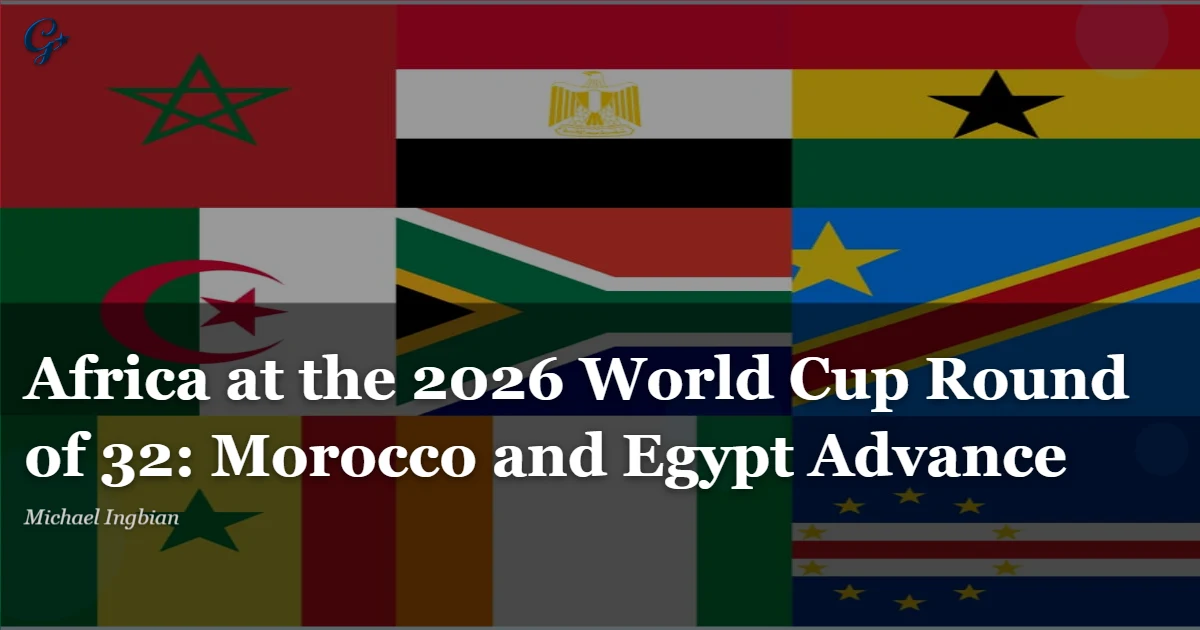
Africa sent nine teams to the 2026 FIFA World Cup Round of 32, a record for the continent under the expanded 48-team format, and only Morocco and Egypt survived to reach the Round of 16.
Both progressed on penalties. Morocco edged the Netherlands 3-2 from the spot after a 1-1 draw on Tuesday, and Egypt beat Australia 4-2 in the shootout on Friday following another 1-1 stalemate through extra time.
Seven of Africa’s nine representatives did not make it. Several were agonisingly close. None hurt more than Senegal, who led Belgium 2-0 with four minutes remaining before losing on a controversial penalty in extra time.
The scale of the group-stage achievement should not be minimised. Nine of Africa’s ten teams progressed from the group stage at this World Cup, outperforming Asia and the CONCACAF region and setting a record for African representation at the business end of the opening round.
Only Tunisia failed to advance, exiting having trailed for a combined 256 minutes across their three group-stage matches, breaking a record that had stood since Mexico’s 1998 campaign. That statistic, together with the nine who progressed, confirmed that Africa’s depth of competitive nations has expanded considerably under the expanded format.
However, the Round of 32 told a different story. Morocco coach Mohamed Ouahbi captured the mood of the broader continent after his side’s shootout victory. “We need to believe in this objective, this target,” he said. “Morocco have entered a whole new dimension.
The players, the fans believe in their team, and our opponents respect our team.” His confidence was earned. His challenge now is transferring it to the rest of the continent’s remaining representatives.
Table of Contents
Africa’s Round of 32 Results: The Full Picture
Here is how each African nation fared in the knockout stage:
Advancing to Round of 16:
- Morocco beat Netherlands (1-1 AET, 3-2 on penalties)
- Egypt beat Australia (1-1 AET, 4-2 on penalties)
Eliminated in Round of 32:
- Ivory Coast lost to Norway 2-1
- South Africa lost to Canada 1-0 (stoppage-time goal)
- Algeria lost to Switzerland 2-0
- DR Congo lost to England 2-1
- Senegal lost to Belgium 3-2 (AET, controversial late penalty)
- Ghana lost to Colombia 1-0
- Cape Verde lost to Argentina 3-2 (AET, own goal in 111th minute)
Morocco and Egypt: The Two Who Made It Through
Morocco’s victory over the Netherlands on Tuesday confirmed their status as the strongest African side remaining in this tournament. Yassine Bounou made five saves and stopped Summerville’s spot kick in the shootout, while Ismael Saibari converted the decisive penalty. Across 120 minutes, Morocco generated 1.38 xG against the Dutch total of 0.24, dominating a match they should arguably have won in normal time.
Egypt’s progress was equally significant and considerably more emotional. Emam Ashour gave the Pharaohs the lead in the first half before Mohamed Hany’s own goal drew Australia level in the 55th minute.
Neither side found a winner after 120 minutes. Mohamed Salah then converted the coolest penalty of the shootout to help Egypt win 4-2 from the spot, marking the country’s first-ever victory in a World Cup knockout match after six previous tournament appearances.
“It’s history,” Salah said afterwards, visibly moved. “I told the boys before the game that this is the biggest stage you can play on. Enjoy it and don’t let the pressure get to you.” His team did exactly that.
The Exits That Stung Most
Senegal’s elimination was the most painful to watch. Leading Belgium 2-0 inside the final five minutes of normal time, Ivory Gueye and then Romelu Lukaku dragged Belgium level.
A contested penalty in extra time then sent Rudi Garcia’s side through. Belgium coach Garcia acknowledged after the match that African teams’ recurring difficulty in closing out results against higher-ranked opposition had shown itself again, though he was careful to credit both Senegal’s performance and the fine margins that decided the tie.
Cape Verde’s exit deserves similar respect. Against defending champions Argentina, they drew level, pushed the game into extra time, and were still threatening a shootout when an own goal in the 111th minute ended their run. Lionel Messi’s side eventually won 3-2, but it required 120 minutes against a team ranked more than 60 places below them.
DR Congo, meanwhile, had led England for long stretches before Harry Kane’s two late goals ended their tournament in Atlanta. Ivory Coast drew level against Norway before losing to a second-half winner. Both exits reflected what Belgium’s Garcia described as a tendency to run out of steam rather than a lack of quality.
What It Means for African Football
Africa’s record of two teams in the Round of 16, previously matched at the 2014 and 2022 editions, has now been equalled again. Morocco’s Mohamed Ouahbi is targeting a quarter-final place and potentially further, which would surpass the semi-final run of the 2022 Morocco side, itself the deepest any African nation has ever gone at a World Cup. Egypt face Argentina next, with Messi’s side looking sharp after overcoming Cape Verde.
Bayer Leverkusen’s Ibrahim Maza caught the eye for Algeria despite their exit. While Ayyoub Bouaddi’s performances for Morocco throughout the group stage and Round of 32 confirmed that the next generation of African talent is genuinely ready to compete at this level. Nine group-stage qualifiers is not a ceiling. It is a foundation.
The Round of 16 begins. Two flags remain flying. Both Morocco and Egypt know what is expected of them.
Also Read: Morocco Beat Netherlands on Penalties to Reach World Cup Round of 16