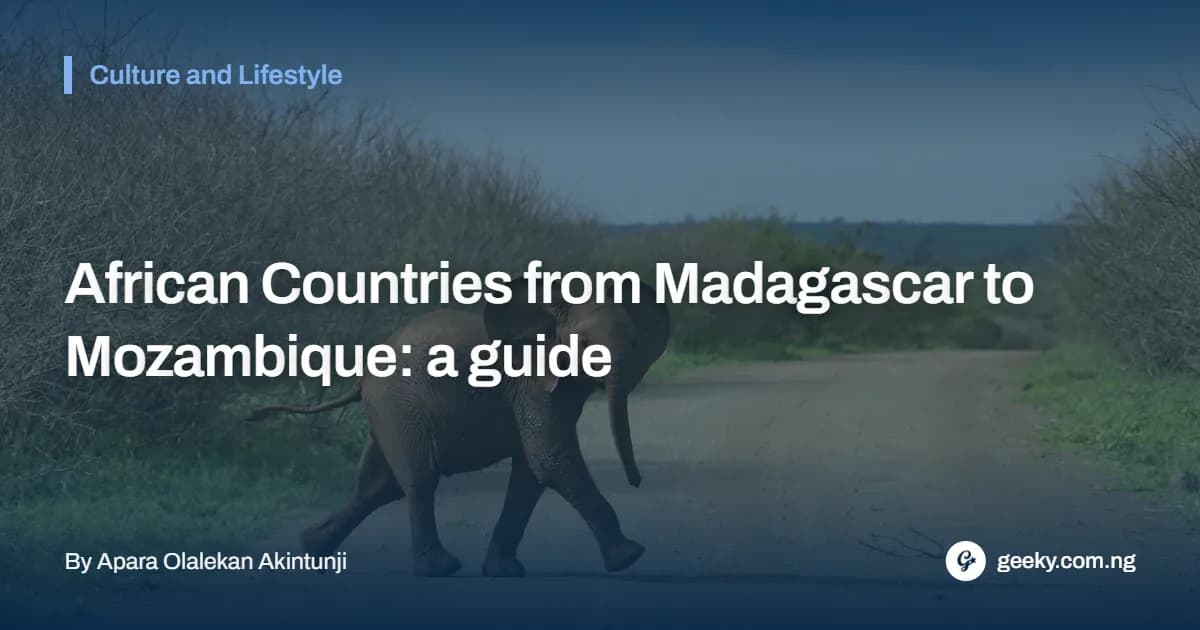
African Countries from Madagascar to Mozambique: 7 Fascinating Facts
Seven African countries beginning with the letter M hold some of the continent's most remarkable natural and historical treasures, and many of their stories remain relatively unexplored. This guide to African Countries from Madagascar to Mozambique covers ancient empires, rare wildlife and heritage sites that deserve wider recognition. Africa is a continent of extraordinary contrasts, where ancient civilisations, remarkable landscapes, diverse cultures and fascinating traditions combine to create some of the world's most interesting destinations. From isolated islands filled with unusual wildlife to historic desert settlements and magnificent coastlines, there is always something new to discover across the continent.
Despite the growing global interest in African tourism, history and culture, many of the continent's remarkable stories remain relatively unexplored.
In our previous editions of Africa Revealed, Rediscovering Africa and The Glory of Africa, we explored some fascinating discoveries from different African nations.
This time, we continue our alphabetical journey with seven countries beginning with the letter M. From Madagascar to Mozambique, here are some remarkable facts, historical treasures and natural wonders that make each country special.
The Seven Countries at a Glance
- Madagascar: the island of extraordinary wildlife.
- Malawi: the Warm Heart of Africa.
- Mali: the land of ancient empires and lost knowledge.
- Mauritania: where the Sahara meets the Atlantic.
- Mauritius: the island of multicultural heritage.
- Morocco: where ancient cities meet desert wonders.
- Mozambique: the treasure of the Indian Ocean.
Madagascar — The Island of Extraordinary Wildlife
Madagascar is one of the most fascinating natural environments on Earth. Located off the southeastern coast of Africa in the Indian Ocean, this island nation is renowned for its unusual wildlife, ancient forests and extraordinary biodiversity.
Madagascar's long geographical isolation has allowed many species to evolve independently, creating an ecosystem unlike almost anywhere else in the world. The country is home to lemurs, a group of primates found naturally nowhere else. From the familiar ring-tailed lemur to the dancing sika, these animals have become some of Madagascar's most recognisable natural treasures. By the way, if you have watched or a fan of the popular animation “Penguins of Madagascar”, then, most certainly, you have seen a lemur.
According to the World Wildlife Fund (WWF), Madagascar also supports an extraordinary range of endemic plant and animal species, although many face threats from habitat loss and other environmental pressures.
The natural beauty of the country goes beyond its wildlife. The Avenue of the Baobabs, near Morondava, is one of Africa's most photographed landscapes. Its towering baobab trees create a magnificent natural corridor, especially during sunrise and sunset.
Madagascar is also home to Tsingy de Bemaraha, a remarkable landscape of sharp limestone pinnacles, deep canyons and unusual rock formations. Its distinctive geological features form part of the UNESCO-recognised Andrefana Dry Forests.
Beyond its natural wonders, Madagascar has an interesting royal history. The Royal Hill of Ambohimanga, a UNESCO World Heritage Site, contains important historical structures associated with the Merina Kingdom and remains a place of cultural and spiritual significance.

Photo: Gavinevans / Wikimedia Commons / CC BY-SA 3.0.
Source: https://commons.wikimedia.org/wiki/File:Walking_the_Avenue_of_the_Baobabs.jpg
Malawi — The Warm Heart of Africa
Malawi is often described as the Warm Heart of Africa, a nickname associated with its welcoming people, rich cultural traditions and beautiful natural environment.
Although it is a relatively small landlocked country in southeastern Africa, Malawi possesses one of the continent's most remarkable freshwater attractions: Lake Malawi.
Also known as the Lake of Stars, this enormous freshwater lake is renowned for its clear waters, sandy beaches and extraordinary aquatic biodiversity. It is famous for its colourful cichlid fish, many of which are endemic to the lake.
In fact, the Lake Malawi National Park was recognised by UNESCO for its exceptional biodiversity, with hundreds of fish species inhabiting its waters. The lake is also an important destination for swimming, kayaking, snorkelling and other water-based activities.
With all of these mentioned, Malawi does have much more to offer beyond its famous lake. Mount Mulanje, located in the country's southern region, is an impressive mountain landscape that attracts hikers and nature enthusiasts. Its forests, streams, distinctive peaks and surrounding cultural traditions make it an exceptional natural attraction. In 2025, the Mount Mulanje Cultural Landscape received UNESCO World Heritage recognition for its ecological and cultural significance.
Another fascinating discovery is the Chongoni Rock-Art Area, which contains 127 documented sites featuring ancient paintings associated with hunter-gatherer and agricultural communities. These artworks also preserve cultural traditions that remain meaningful to the Chewa people.
Malawi's cultural heritage is equally interesting, with traditional music, dance, storytelling, and craftsmanship contributing to its distinctive national identity.
Mali — The Land of Ancient Empires and Lost Knowledge
Mali occupies a special place in African history. Located in West Africa, the country was once home to some of the continent's most influential kingdoms and trading empires, particularly the Mali Empire, which flourished during the medieval period.
One of the most fascinating figures associated with this history is Mansa Musa, the 14th-century ruler of the Mali Empire, whose extraordinary wealth became widely known beyond Africa. His famous pilgrimage to Mecca in 1324 demonstrated the immense economic power of the empire, most notably its gold resources.
Mali's historical significance was not limited to wealth and trade, however. It was also an important centre of education, scholarship, and Islamic intellectual activity.
Timbuktu is perhaps the best-known example. During the 15th and 16th centuries, the ancient city became an influential centre of Islamic learning, with the prestigious Sankore institution and several other centres of scholarship attracting students and scholars. Its historic mosques, manuscripts and architectural heritage provide significant evidence of Africa's intellectual contributions to world history. UNESCO recognises Timbuktu as a World Heritage Site.
Mali is also home to Djenné, one of the oldest towns in sub-Saharan Africa. Its distinctive earthen architecture, traditional houses and magnificent Great Mosque make it one of the most remarkable examples of historic West African architecture. The Old Towns of Djenné have also received UNESCO recognition.
Another significant attraction is the Bandiagara Escarpment, associated with the Dogon people. Its dramatic cliffs, traditional settlements, granaries and cultural practices offer a fascinating insight into the country's indigenous heritage. The Cliff of Bandiagara is recognised for its geological, archaeological and cultural importance.
Mali's heritage faces serious preservation challenges, including insecurity and environmental pressures. Nevertheless, its contribution to African history, scholarship, architecture and cultural development remains remarkable.
Mauritania — Where the Sahara Meets the Atlantic
Mauritania is one of Africa's most geographically fascinating countries, with a landscape dominated by the vast Sahara Desert and an extensive Atlantic coastline.
Situated in northwestern Africa, the country offers an extraordinary combination of desert formations, historic settlements, coastal ecosystems and traditional nomadic heritage.
One of its most remarkable geographical features is the Richat Structure, popularly known as the Eye of the Sahara. Viewed from space, this enormous circular formation resembles a giant target carved into the desert. Measuring approximately 40 kilometres across, the structure initially attracted attention because of its unusual circular appearance. Although it was once thought to be an impact crater, geological research established that it is actually an eroded geological dome formed through natural processes.
According to NASA's Earth Observatory, the Richat Structure is one of the most recognisable geographical features of the Sahara when viewed from above.
Mauritania also preserves an important history of trans-Saharan trade. The Ancient Ksour of Ouadane, Chinguetti, Tichitt and Oualata were established as trading and religious centres along historic caravan routes during the 11th and 12th centuries. These settlements became significant centres of Islamic culture, preserving distinctive architecture, ancient mosques and traditional desert lifestyles. Their historical relevance is recognised through the UNESCO World Heritage listing of the Ancient Ksour.
The country's natural attractions are equally impressive. Banc d'Arguin National Park, along the Atlantic coast, is an significant ecological environment containing sand dunes, coastal wetlands, islands and shallow waters. It provides vital habitats for migratory birds, marine mammals and other wildlife. Its remarkable combination of desert and marine ecosystems makes Banc d'Arguin one of Africa's significant natural conservation areas.
Mauritania is also known for its deep-rooted Moorish and Saharan cultural traditions, including traditional music, poetry, hospitality and nomadic heritage.
Mauritius — The Island of Multicultural Heritage
Mauritius is a beautiful island nation in the Indian Ocean, widely recognised for its turquoise waters, coral reefs, volcanic landscapes and vibrant multicultural society.
Although its beaches and luxury resorts attract international attention, the country's history and cultural heritage are equally fascinating.
One of its most recognisable historical symbols is the dodo, an extinct flightless bird that was native to Mauritius. The bird evolved in an environment with few natural predators before human settlement and the introduction of non-native animals contributed to its extinction.
The dodo became extinct during the 17th century, but it remains an significant part of Mauritius's national identity and conservation history. The Mauritian government's historical account provides interesting information about the bird and the circumstances of its disappearance.
Mauritius also has two UNESCO World Heritage Sites that preserve significant chapters of its history. The first is Aapravasi Ghat, located in the capital, Port Louis. Built in 1849, the site served as an immigration depot for indentured labourers arriving from India, Africa, Madagascar, China and other parts of the world.
It represents an significant chapter in the history of indentured labour and the migration of workers across continents following the abolition of slavery in the British Empire. Today, Aapravasi Ghat stands as an significant historical reminder of the experiences and contributions of these communities.
Another remarkable site is Le Morne Brabant, a mountain in southwestern Mauritius that became a refuge for enslaved people who escaped captivity during the 18th and early 19th centuries. Its history makes it an enduring symbol of resistance, freedom and human dignity.
Much beyond its historical landmarks, Mauritius has developed a distinctive multicultural identity shaped by African, Indian, European and Chinese influences. Its traditional Sega music and dance, recognised by UNESCO, remain significant expressions of Mauritian identity and shared cultural heritage.
Morocco — Where Ancient Cities Meet Desert Wonders
Morocco is a country of extraordinary architectural beauty along with rich traditions and remarkable geographical diversity. Located in northwestern Africa, it offers everything from the sweeping Sahara Desert and Atlas Mountains to historic Medina, coastal settlements, traditional marketplaces and more. Its cultural identity reflects centuries of interaction between Amazigh, Arab, African and Mediterranean communities.
One of the country's most remarkable destinations is Marrakech, a historic city known for its vibrant souks, traditional architecture and the famous Jemaa Elena square. Visitors can explore centuries-old buildings, traditional craft markets and impressive gardens that reflect Morocco's artistic and architectural heritage.
Fez is another remarkable destination. Founded in the ninth century, the city is renowned for its historic medina, traditional educational institutions, mosques and impressive architectural structures. UNESCO describes the Medina of Fez as an outstanding example of a historic Moroccan urban settlement.
Morocco also boasts the extraordinary Ksar of Ait-Ben-Haddou, a fortified settlement built using traditional earthen construction techniques. Located along an ancient trading route, the settlement features impressive mud-brick buildings, towers and defensive walls. Its remarkable architecture has made it a popular location for film and television productions.
The country's natural attractions are as well impressive and safe to say, beyond words. The Atlas Mountains provide breathtaking scenery, with traditional mountain settlements and opportunities for hiking and exploration. Meanwhile, the Sahara offers spectacular sand dunes and desert landscapes.
Morocco's indigenous Amazigh heritage is another important part of its identity. The Amazigh language, alongside Arabic, has official status, while traditional crafts, music, food, and celebrations continue to reflect the rich cultural diversity of the country.
With nine properties on the UNESCO World Heritage List, Morocco offers a remarkable combination of history, architecture, natural beauty and cultural traditions.

Photo: Eric Bauer / Wikimedia Commons / CC BY 2.5.
Mozambique - The Treasure of the Indian Ocean
Mozambique is a country in southeastern Africa blessed with an extensive Indian Ocean coastline, magnificent islands, rich marine biodiversity and an interesting cultural history.
Its coastline offers beautiful beaches, coral reefs, lagoons, and archipelagos that attract visitors interested in marine exploration and nature.
One of the most remarkable natural attractions of the country is the Bazaruto Archipelago, a protected marine environment comprising five islands. Established as a national park in 1971, the area is crucial for protecting dugongs, sea turtles and other marine species. Its clear turquoise waters, white sandy beaches and diverse underwater ecosystems make it one of the Indian Ocean's outstanding natural attractions. The Bazaruto Archipelago National Park also supports a remarkable variety of marine and birdlife.
Mozambique's conservation story has much to tell than just its coastline. Gorongosa National Park, located in the central region of the country, has become one of Africa's notable wildlife restoration projects. Following years of conflict and substantial wildlife losses, conservation partnerships have helped restore important ecosystems and rebuild wildlife populations. Today, the park supports diverse habitats and numerous species of mammals and birds. According to Mozambique's conservation authority, Gorongosa National Park has become an significant example of wildlife restoration and ecotourism development.
The historical heritage here is also enchanting. The Island of Mozambique, located in Nampula Province, was once an significant trading centre along Indian Ocean maritime routes. Its architecture reflects centuries of interaction between African, Swahili, Arab, Persian, Indian and European communities. The island's historic buildings, traditional settlements and Fort of São Sebastião provide evidence of its significant maritime history. UNESCO recognises the Island of Mozambique for its architectural and historical significance.
Mozambique also has a vibrant cultural identity expressed through traditional music, dance, sculpture, and craftsmanship. Its Makonde woodcarving tradition, colourful fabrics, seafood-based cuisine and diverse local languages contribute to the country's distinctive character.
Final Thoughts on African Countries from Madagascar to Mozambique
Madagascar, Malawi, Mali, Mauritania, Mauritius, Morocco, and Mozambique each offer something different, yet they share one significant characteristic: an extraordinary wealth of natural, historical and beautiful cultural heritage.
From Madagascar's unique wildlife and Malawi's freshwater biodiversity to Mali's ancient centres of scholarship and Morocco's historic architecture, these countries demonstrate how much there is to discover across Africa. Their stories teach us that the continent cannot be defined by a single narrative. Beyond the stereotypes often associated with Africa are remarkable communities, ancient knowledge systems, innovative traditions and natural environments that deserve greater recognition.
As we continue our journey through Africa, one country at a time, there are still many more stories waiting to be discovered.