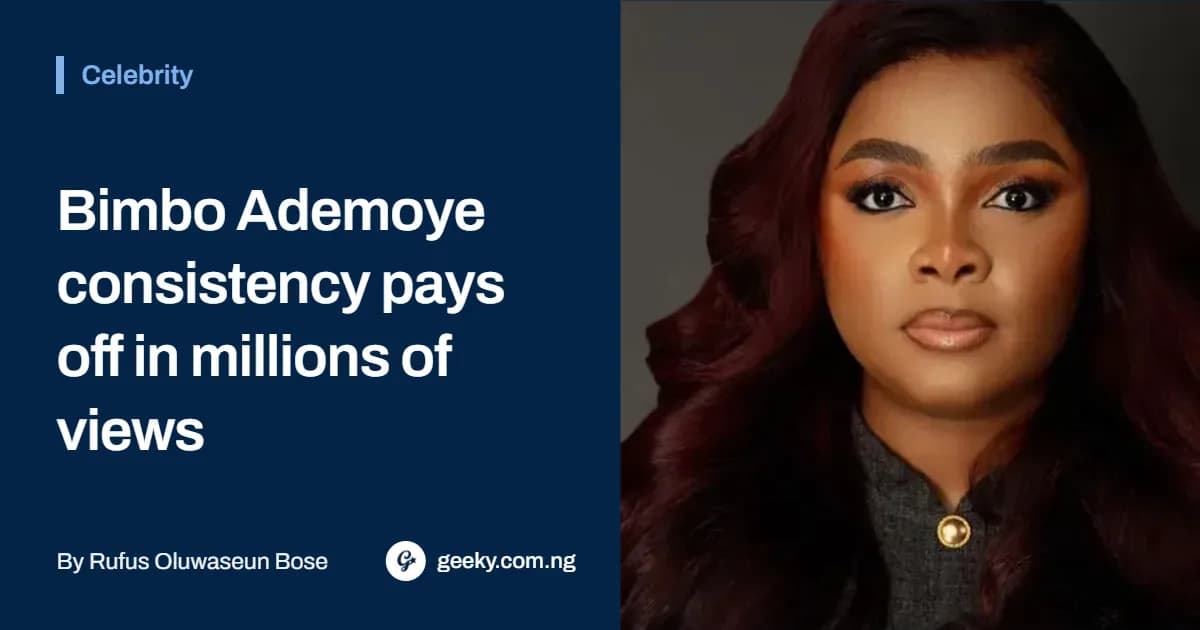
Nollywood actress and filmmaker Bimbo Ademoye has refused an apology from a man identified as Mazi Enemuo, whose copyright claim on her film My 30th Wedding briefly stopped it earning on YouTube. The Bimbo Ademoye copyright row matters beyond celebrity circles, because it is the second time in 2026 that a Content ID claim has hit one of her films, and any Nigerian creator who posts music or video online faces the same risk.
According to QED.NG, the claim temporarily stopped the movie on her channel. She had earlier offered a ₦1 million reward to anyone who could provide information leading to Enemuo's whereabouts, after the claim affected the film's earnings.
Bimbo Ademoye copyright: what she accuses the claimant of
Ademoye alleged in the bimbo anemone copyright dispute that the claimant deliberately uploaded the film's soundtrack to streaming services three weeks earlier. In her telling, the aim was to trigger automated copyright flags and divert the ad revenue her movie generated, as Political Economist reported.
She also argued that he chose his target carefully in the bimbo ademoye copyright row. In a post quoted by OloriSuperGal, she asked: “You specifically took the song I didn’t properly copyright from all the songs in the movie; why didn’t you take Hammerboi’s song?”
She further rejected suggestions that the bimbo ademoye copyright row was a publicity move, or that she had failed to protect her work through copyright registration. That detail comes from a report by HeadTopics, citing Guardian Nigeria.
The apology and why she turned it down
Enemuo apologised in an Instagram post on Tuesday over the bimbo ademoye copyright claim. He said he uploaded the soundtrack to promote the film to a wider audience and did not intend to infringe her rights.
He also explained that the music distribution platform triggered the YouTube Content ID claim. Furthermore, he added that he had taken the song off streaming platforms and was working with his distributor to clear the claim.
Ademoye was unmoved. She described the apology as ” complete bullshit" and said she remained angry. She also questioned how a man with about 250 subscribers could claim to help promote a channel with almost two million.
She warned that she would make an example of him, adding that her silence should not be mistaken for weakness. She urged followers to report Enemuo across social media and called on YouTube and YouTube Africa to intervene.
To back up her position, she shared screenshots of apologies from other people whose channels she said she had reported for copyright infringement.
Not the first time this year
This is a repeat of an earlier episode. In January 2026, a copyright dispute led to the demonetisation of Where Love Lives, a December 2025 release that had already drawn millions of views, The Journal Nigeria reported.
In that case, a person operating under the name Emmanuel Davies falsely claimed ownership of a song featured in the film, according to Vanguard. The dispute was later resolved in her favour.
The latest claim also appears to have been resolved. Ademoye later announced that YouTube had restored the film's monetisation, as noted by OloriSuperGal. Her anger, however, has not subsided.
How Content ID works, and why creators are exposed
The case highlights the risks in YouTube's automated Content ID system, according to Creebhills. The system lets rights holders and their distributors identify matching recordings and claim revenue from them.
The weakness is that a match is automated. If someone else uploads your music to a distributor, the system may treat their upload as the original, and your own video can then be flagged against it.
The Ademoye cases suggest how this can play out. A claim can cut off ad earnings before anyone has checked who actually owns the work. Meanwhile, the creator must go through a dispute process to win the money back.
How to protect your rights as a Nigerian creator
Nothing here guarantees protection, but these steps reduce the exposure:
- Keep dated evidence. Store project files, session recordings, contracts and agreements with composers and producers, so you can prove you made or licensed the work.
- Distribute your own music first. If a soundtrack belongs to you, release it through a distributor you control before the film goes live, so nobody else can register it ahead of you.
- Get written licences. For songs by other artists, such as a track by a named musician, hold a clear licence that covers online video.
- Register your copyright. Registration gives you a document to point to when a dispute starts, though Ademoye's case shows it does not stop a claim being filed.
- Monitor your channel. Check for new claims regularly and dispute wrongful ones quickly, because earnings can be held while a claim stands.
What happens next
Ademoye has not said what action she plans against Enemuo beyond her warning that she will make an example of him. For now, the film's monetisation is back, and the reward offer and her call for YouTube to step in remain part of the public record.
The larger question is whether platforms will tighten checks before an automated claim can interrupt a creator's income. Until they do, the burden of proving ownership falls on the people who made the work.