Nigerian University Graduates Are Being Trained for Jobs That Vanished, Says Ochefu
Nigerian university graduates are being prepared for a public-sector job market that fell apart several decades ago, according to Professor Yakubu Aboki Ochefu, an Iconic Professor of Economic History and the most recent former Secretary General of the Committee of Vice-Chancellors of Nigerian Universities. In his view, the higher education system is in a state of crisis because it has gone on supplying graduates to an employer that walked away 40 years ago.
The country's universities, he said, must rethink the kind of graduates they produce as the employment landscape continues to change.
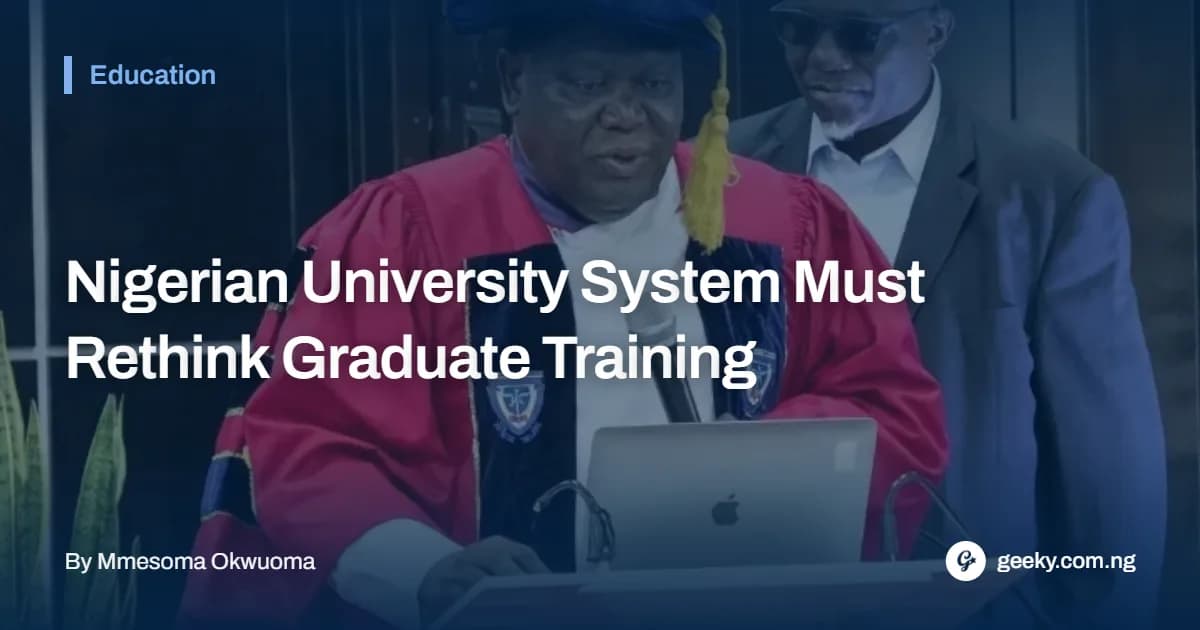
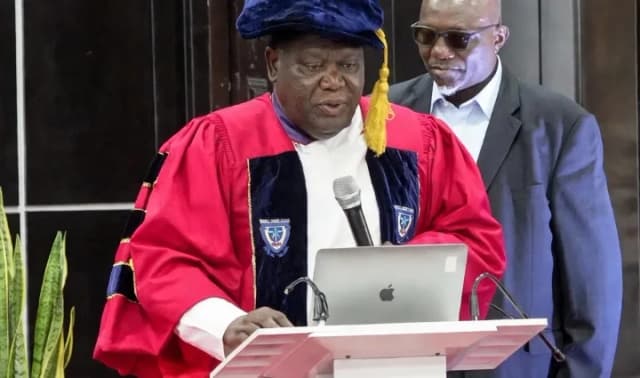
Ochefu observed while delivering the 10th Convocation Lecture at the Federal University Lokoja. His lecture, titled “The Confluence Generation: The University, The Graduate, and The Society That Must Become Our Laboratory”, examined what he described as a growing disconnect between university education and the needs of Nigerian society.
He argued that universities were still preparing students for a system in which government employment was the main destination for graduates, even though that arrangement had largely broken down decades ago.
How the Employment System Changed for Nigerian University Graduates
According to Ochefu, Nigeria's university system was originally structured to provide workers for the government. From the establishment of Yaba Higher College in the 1930s to the opening of University College Ibadan in 1948, higher education was largely expected to produce the personnel needed to administer the colonial government and, later, an independent Nigeria.
Over a long period, the deal gave graduates a fairly dependable route: earn a certificate, land a government post, and enjoy perks including a salary, a car loan and housing.
However, he identified the mid-1980s as a turning point. Falling oil revenue, the introduction of the Structural Adjustment Programme and a government employment embargo weakened the relationship between university qualifications and public-sector jobs.
Rather than significantly changing their approach, Ochefu said, universities continued to expand. Nigeria's higher education landscape grew from the limited number of institutions available in the early years to 328 universities, but many retained similar admission structures, minimum standards and examination practices.
He argued that this expansion did not adequately reflect the changes in the employment market or the needs of the wider economy.
A Changing Society and a Different Labour Market
Ochefu also pointed to major changes in Nigerian society that universities have not sufficiently addressed. His main points were these:
- Since independence, the country's population has risen by more than four times.
- Economic activity has increasingly shifted towards informal work.
- He cited National Bureau of Statistics figures for the second quarter of 2024, which showed that 86 per cent of Nigerians worked for themselves or in family enterprises, with just 14 per cent in jobs that paid wages.
- Approximately 3.5 million young people enter the labour market each year.
In his view, these figures show why the traditional expectation that a university degree should lead directly to salaried employment is no longer realistic for most Nigerian university graduates.
Artificial Intelligence Is Changing the Value of a Degree
Another concern raised by the professor was the changing value of the skills traditionally associated with a university qualification.
He noted that in the past, holding a degree signalled that the holder could work through long reading material, compile well-structured reports and stick to set procedures. Those skills carried weight because few people had them.
However, smartphones and artificial intelligence tools can now perform some of these tasks more quickly. AI systems, in particular, can assist with report writing, routine calculations and the preparation of initial drafts.
Ochefu warned that these developments are affecting the entry-level tasks through which many Nigerian university graduates previously gained their first work experience.
He therefore questioned whether universities are doing enough to equip students with the skills needed in a workplace where routine mental tasks are increasingly being automated.
Universities Must Move Beyond Storing Knowledge
The professor identified another weakness in the system: universities often function as centres for storing and distributing existing knowledge rather than institutions that actively solve problems in society.
He compared what he called knowledge warehouses with intelligence machines. In his explanation, a knowledge warehouse stores lecture materials and provides them to students for examinations. An intelligence machine, on the other hand, identifies problems in its surroundings, investigates them and produces findings that can be used to address those challenges.
Ochefu argued that Nigerian universities have developed research methods but have not established sufficiently organised ways of gathering problems from their communities and returning practical solutions.
He described the current approach as “Mode 1” knowledge, which is mainly developed within academic disciplines, while society requires “Mode 2” research that responds directly to real-world problems.
Research Findings Should Reach the Public
Ochefu also criticised the limited accessibility of university research, arguing that valuable academic work often remains stored in institutional libraries instead of being made available to people who could benefit from it.
He also pointed to a failed attempt to digitise two billion thesis pages written during the preceding ten years, and blamed the failure on the unwillingness of universities to hand over their research materials.
For him, research should not end with the completion of a thesis or its placement on a library shelf. Its findings should be accessible and useful to communities, businesses and public institutions.
Lokoja's Communities as Learning Spaces for Nigerian University Graduates
Using the Federal University Lokoja's location as an example, Ochefu identified several places and activities that could serve as practical research environments.
These include the floodplains of Ganaja and Adankolo, the trailer park along Abuja Road, the Obajana quarry, mining sites in Ankpa and local health centres.
He argued that universities should treat such places as important research environments rather than limiting practical learning to conventional laboratories.
His broader message was that universities must engage more directly with the surrounding communities. Institutions that collect information and resources from society without returning useful knowledge or solutions, he suggested, are failing to fulfil their wider responsibility.