African Startups Gulf Funding Opens a New Route for Founders
Edited by Aloho Esiekpe
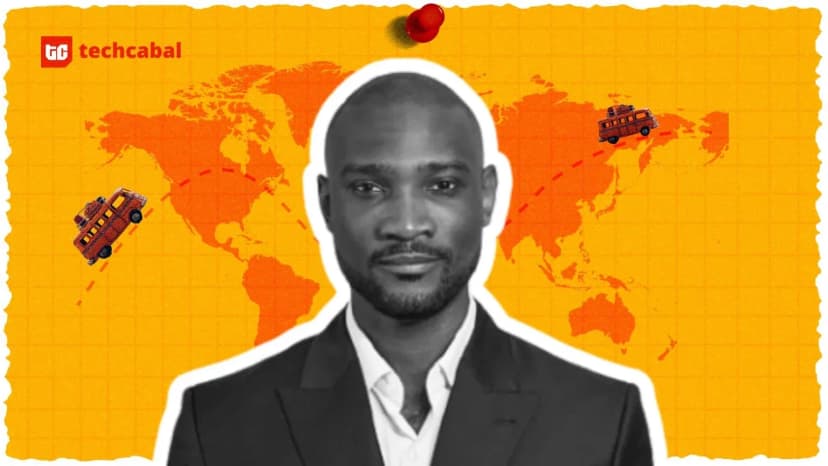
Gulf funding for African startups is becoming a real prospect, as states in that part of the world establish startup hubs, back firms that invest in young companies and compete for founders. African entrepreneurs have long looked to the US or Europe for capital and expansion, yet the Gulf offers a different route, and a number of examples indicate that moving there is not always required.
Our previous Digital Nomads article examined the $5.5 million incentive Qatar is dangling before overseas startups willing to base themselves in its capital, Doha. But Qatar is hardly the only country courting founders. Across the Gulf, governments are building hubs for young companies, backing funds that invest in startups and competing for entrepreneurs who could take new ventures, technical expertise and skills back to their home countries.
Compared with the alternatives, the Gulf is nearer, may be simpler to tap, and is ever more linked to worldwide capital.
The Nigerian entrepreneur Samuel Ubido has relocated from Britain to the United Arab Emirates (UAE), where he thinks African founders are missing out on an opportunity.
How a Nigerian Startup founder found the Gulf
His journey began with an invitation to give talks in Dubai, covering cybersecurity, creativity among entrepreneurs and the rising startup scene across Africa. Attending the conferences there, he noticed that hardly any of the people on stage were African.
Those speaking engagements gradually helped him build a network across the Middle East, and he now leads African delegations to commercial and technology gatherings throughout the Gulf.
Yet whenever he spoke with founders from Africa, they hit the same obstacle: most of them were set on incorporating in Delaware, courting American investors and trying to enter Western markets.
Ubido started to wonder why so few of them were turning their attention to the Gulf, where fresh startup ecosystems, investment schemes and professional connections were emerging.
Ubido says he helped Nearpays get through to the finals of a contest held in Riyadh. Based in Dubai, the entrepreneur set up Africa Market Access, a body that links African startups to investment and commercial openings across the Middle East.
Those appearances in Dubai, at which he discussed caber defence, innovation, and the African startup landscape, left him captivated by the Gulf. In 2024, he was already brokering commercial links between Africa and the Gulf region via Techinnovate Group, whose chairman he is.
“I started being invited to speak in Dubai about maybe five, six years ago,” Ubido said. “I was speaking on cybersecurity, innovation, and the startup ecosystem in Africa. What I noticed was there was an opportunity there because there were not a lot of African speakers at the time speaking at these [events].”
Ubido relocated from the UK to the UAE in 2023. He told TechCabal that the move was shaped by the country's tax advantages, its gateway to newer markets, and his conviction that the Middle East might become a larger source of funding for African businesses.
“My belief was the Middle East would play a better role in African financing than the West,” Ubido said.
Nearpays shows what a pitch competition can do for African Startups
Nearpays is a good example. The Nigerian fintech took home $100,000 in prize funding that took no equity from the MoneySurge pitch competition at Money20/20 Middle East, held in Riyadh in September 2026. The event reportedly attracted more than 38,000 attendees, and Nearpays went up against over 500 applicants, of whom 25 reached the semifinal stage.
The company behind soft POS, called Nearpays, builds technology for contactless payments. Its product, a software-based point-of-sale tool, converts a smartphone into a device that accepts cards for traders, removing the need to buy standard payment terminals.
For Nearpays, the prize meant more than the money. According to Victor Daniyan, who established the company, the event gave it exposure to prospective collaborators, payment firms and new customers, which opened the door to partnerships and fresh markets.
This victory shows one way African startups can tap into the Gulf's expanding technology and investment scene: pitch contests, networks of investors and gatherings for the industry offer an alternative to depending only on the usual routes for raising funds in the US or Europe.
Why the Gulf offers founders far more than capital
Going there need not mean relocating a whole company to Dubai, Abu Dhabi, Doha, or Riyadh. The region can instead serve as a base for reaching backers, clients, and partners who may be hard to get to from a founder's own market.
The UAE, for instance, has turned into a meeting point for global commerce, with investors and firms from the US, Europe, China and elsewhere active there. Ubido argued that going to events in the country can give African founders access to rooms that would otherwise be hard to enter.
Founders eyeing the Gulf may also find schemes and support networks built to help them settle in. Hub71 in Abu Dhabi, the programmes run under Startup Qatar, and Dubai's own startup scene each offer a distinct way into the region, with introductions to investors, business support and the chance to set up operations.
Venture funding is also on the rise across the Gulf, though the bulk of it goes to startups already operating there. MAGNiTT, a data platform that monitors venture investment, reports that Saudi Arabia drew in $1.72 billion in VC funding in 2025, while the UAE secured $1.58 billion. Together, the two countries have become the Middle East's foremost centres for startup investment.
For African startups, this could open the door to a sizeable pool of funding within a tech ecosystem that is still maturing. Ubido thinks founders ought to watch more carefully where money is flowing and which kinds of businesses investors want to back.
“Opportunity goes where capital goes,” Ubido said. “If you are building a business, start by asking:
- Who is sitting on what the venture capital world calls dry powder?
- Where that uncommitted money is parked at present?
- How to shape your company so that it suits those investors.
Founders may not always realise it, but they should recognise that capital exists in this region."
Venture funding is only part of what draws African startups to Gulf backing. The region's entrepreneurial ecosystems for young companies are still taking shape, and governments are putting money into incubators, accelerators, venture studios and similar schemes to lure founders and technology companies. Such programmes can provide funding, links to markets, corporate partners and help with establishing a local presence.
Ubido regards the Gulf as an emerging market, not a substitute for the long-established startup ecosystems of the US, the UK, or China. In his argument, part of the opportunity comes from arriving while Gulf states are still building up their tech sectors and widening the support on offer to entrepreneurs.
Startups from Africa are already drawing money from the Gulf
Ties between the two regions are not brand new, and founders from Africa can often secure Gulf backing without having to move there.
Paymob, the Egyptian fintech focused on payments, secured $35 million in September 2026, in a round that precedes its Series C. Mubadala Investment Company, the state-backed investment vehicle of Abu Dhabi, co-led the deal alongside the European Bank for Reconstruction and Development (EBRD). BII (British International Investment) from the UK, Global Ventures and DPI Ventures also took part.
Paymob's merchant base stands at over 390,000 across Egypt, the UAE, Saudi Arabia and Oman. According to the company, its Gulf revenue rose sevenfold in the previous 18 months, and those markets now account for close to half of everything it earns. That push into the Gulf contributed to winning the new round, whose proceeds will fund more regional expansion.
Paymob's story points to a route for African startups: set up a commercial operation in the Gulf and show that customers want the product, instead of simply relocating to chase capital.
Moove, a mobility fintech that began in Nigeria, provides another example. After teaming up with Mubadala, it relocated its head office to the UAE in 2024, and it has kept expanding globally since then. In August 2026 it secured $250 million in a Series C financing that values it at $2.1 billion. Mubadala took the lead, joined as co-leads by Woven Capital (the Toyota-backed investment arm for scaling companies) and Ion Pacific.
Moove currently runs roughly 42,000 vehicles in 29 cities spread over 13 countries, and it has evolved into a mobility business with worldwide reach. That path is far from what one would expect of a young African startup, yet it shows how a firm with roots in Africa can draw on Gulf money and Gulf operations as one strand of a broader push abroad.
Gulf capital is also reaching African VC vehicles. In 2024, Mubadala and France's Bpifrance pledged money to Partech Africa II, a vehicle aimed at Africa that closed at its hard cap of €280 million ($307 million). It can back young African companies from the seed stage up to Series C, writing first cheques of $1 million to $15 million.
Money from the Gulf can flow to African startups via funds that are already familiar with local markets, so founders need not set up a company in the Gulf itself.
Access, not relocation, is the opportunity
Founders should not see the Gulf as a single, uniform marketplace. Saudi Arabia, the UAE, Qatar, and the other states in the region each run their own funding programmes and regulatory regimes, with differing investment priorities and different customer bases. Rather than aiming at the Gulf as one destination, founders must work out which ecosystem fits their business.
The commercial and trading relationship between the UAE and Nigeria has also deepened. Both governments are party to a Comprehensive Economic Partnership Agreement, which spans commerce, services and investment, as well as access to markets.
The agreement, concluded in January 2026, could help companies that want to forge business links between the two economies once its terms come into force.
Ubido urges founders to think past the location itself and work out which openings it actually holds.
“One easy way is to look at what events are happening in the region and what pitch competition opportunities are available for startups,” he said.
In the Gulf, founders may find investors to meet, grants that take no equity to compete for, new business contacts to build, and customers beyond the African continent. Startups gain most from these when they have a firm plan for expansion, offer a product aimed at a problem in the Gulf, and have a genuine motive for courting buyers or partners there.
The Gulf comes with difficulties too. Launching a company, moving employees, keeping operations running in Africa, and forging ties in an unfamiliar market can all cost a great deal. Competition is stiff for accelerators, funding schemes and pitch contests, so a startup ought not to expect that turning up at a conference or applying to an accelerator will bring in a cheque.
Founders in Africa need not give up on the US, Europe or their domestic markets in order to tap Gulf capital. What they must do is cast a wider net, learn about the funders and schemes on offer, and judge whether the Gulf provides a benefit that their companies cannot readily obtain elsewhere.
The aim is not just to relocate to wherever the money sits. It is to grow a company that gives that capital a motive to flow in.