Moniepoint MFB Abuja headquarters now serves North Central
Edited by Aloho Esiekpe
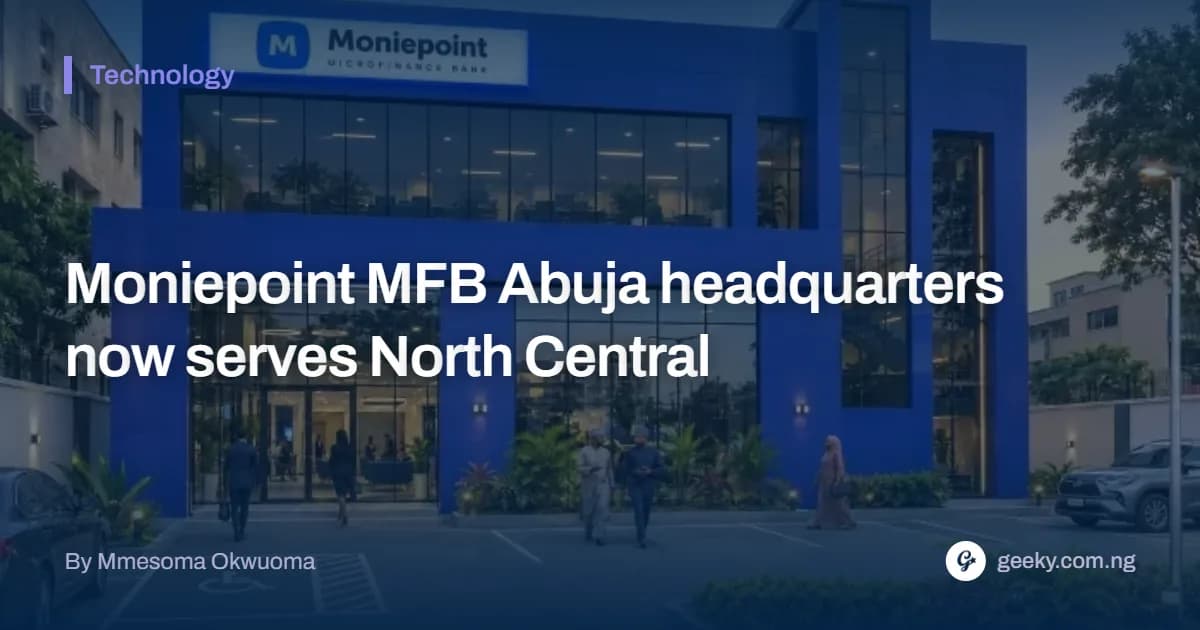
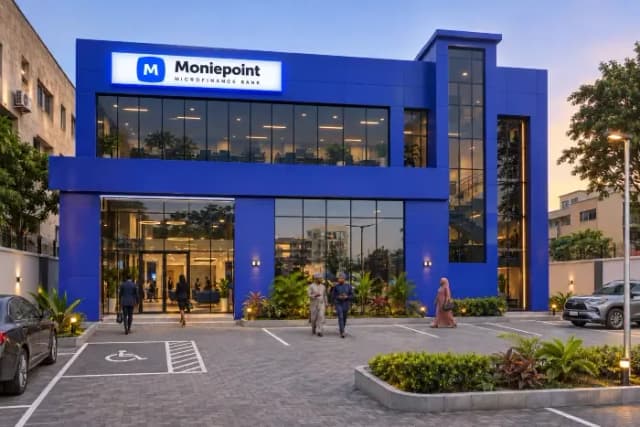 Moniepoint Microfinance Bank (MFB) has officially launched its North Central hub in Abuja, extending its brick-and-mortar presence to satisfy a Central Bank of Nigeria (CBN) requirement.
Regulators are increasingly pressing fintechs, as their customer numbers and business activity grow, to open more physical locations. Demanding a bigger physical footprint is meant to ensure that banking delivered digitally across the country comes with support customers can reach in person.
Moniepoint MFB Abuja headquarters: the regional model
Babatunde Olofin, managing director of Moniepoint MFB, addressed the commissioning ceremony on Friday and said the bank intends to repeat the model of regional headquarters elsewhere in the country. According to Olofin, the bank handles over ₦1 trillion ($719.8 million) every day on behalf of 21 million customers.
Abuja joins a physical network the bank has already built, made up of branches and service points across several northern states, including Borno, Bauchi, Kaduna, Kano and Sokoto. Beyond that, Moniepoint operates a network of point-of-sale terminals serving businesses in all 774 councils nationwide.
Businesses across northern Nigeria, a region long dominated by cash dealings, are increasingly adopting digital settlement. Consider some markets in Borno State: over 45% of shoppers there would sooner pay digitally, with bank transfers making up 28.6% and POS transactions 17%.
Why a physical presence still matters
Olofin explained that having physical locations would let the bank assist customers who may feel less at ease sorting out banking problems solely through digital channels.
"Banking is a business of trust," he said. "We began by serving the informal economy, which the established banks overlooked: the traders dealing in spare parts at Ladipo and the women who sell corn along the roadside. Many of these customers have little formal education. There should be somewhere they can simply walk in, be attended to in whichever local language they prefer, and be certain that their savings are secure."
Olofin stated plainly that Moniepoint MFB has no plan to follow the costly, branch-heavy route that conventional commercial banks have taken. What it will maintain is only a small number of physical centres, where customers can meet relationship managers and get their knotty problems sorted out. Although this slimmer approach holds down the cost of growth, the fintech can still anticipate higher running costs, because buildings and the people who staff them both come at a price.
Vice President Kashim Shettima of Nigeria, who was represented by Taiwo Oyedele, the Minister of Finance and Coordinating Minister of the Economy, tied Moniepoint's growth to the wider drive to extend financial inclusion and back small businesses.
“Technology offers speed and reach, but people also need someone who can explain,” Shettima said. “Moniepoint’s decision to combine digital services with face-to-face assistance responds to an important reality. Its lasting value will be measured by the businesses it helps to grow.”
Beyond payments: lending and the wider fintech shift
The company is also stepping up its lending. Over the course of 2025, it paid out upwards of ₦1 trillion ($719.8 million) to small enterprises in loans, and it plans to widen its credit offering to cover agriculture, micro-businesses and Compressed Natural Gas (CNG) projects. Tobi Amira, the Chief Business Officer, said that firms taking working capital from Moniepoint see their transaction volumes climb by 40% a year on average.
“Going into next year, we want to further accelerate that impact by coming further down to even smaller micro-businesses,” Amira said. “While we are doing a general expansion of our credit, we also have specific programmes targeted at agriculture and fuel, which are impacting the country the most right now.”
Moniepoint, which began life as TeamApt, has become one of the biggest platforms for payments and business banking in Nigeria. It says its network of agents and merchants has generated more than one million jobs.
The opening of the Moniepoint MFB headquarters in Abuja points to a wider change in Nigeria's fintech sector. Firms that first grew through online channels and networks of agents are putting more money into bricks-and-mortar facilities, as they shoulder the duties that come with being regulated financial institutions.
TechCabal reported in June that Kuda Microfinance Bank intends to set up additional experience centres, where customers can get support and engage with the community, now that the CBN has granted it a licence to operate as a microfinance bank nationwide.