Online Learning in Nigeria Grows as Students Study by Phone
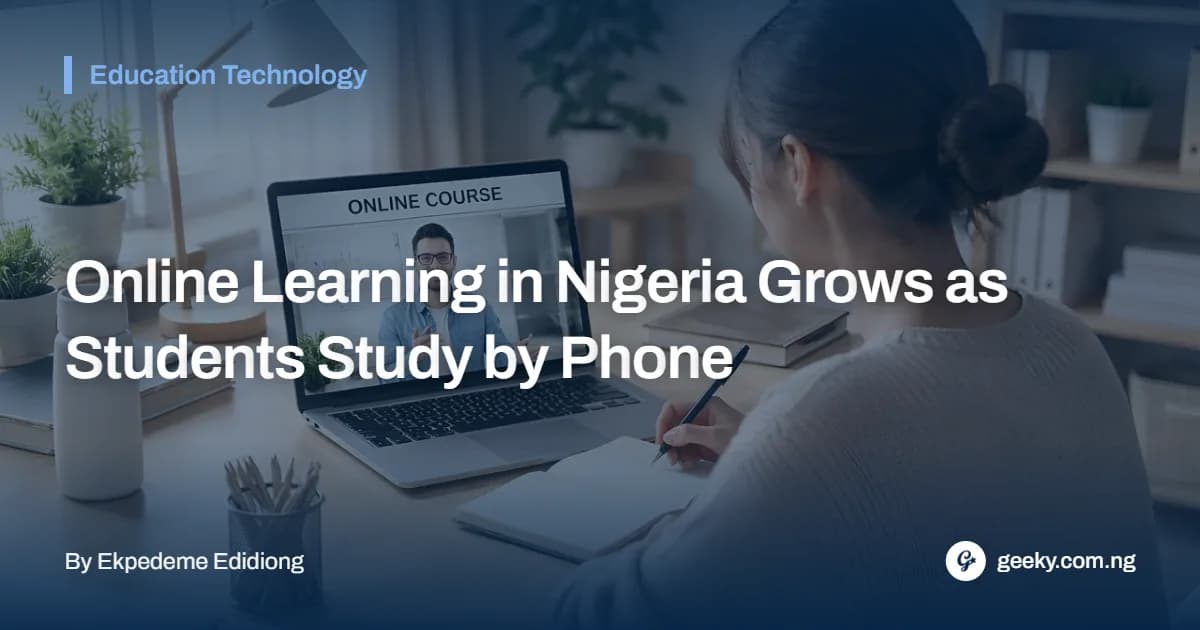
Online Learning in Nigeria is growing fast, as students use smartphones to attend lectures, learn new skills and complete professional courses from almost anywhere. It matters because it is changing how Nigerians gain knowledge, and who can gain it. A Nigerian student no longer needs to sit in a physical classroom to learn something new. With a smartphone, an internet connection and a little determination, that is now possible.
That's how much education has changed.
Online learning is becoming increasingly popular among Nigerian students. Some use it to support their university education. Others take online courses to improve their chances of getting a job, changing careers or starting a business.
The COVID-19 pandemic played a major role in accelerating this change. When schools closed, students and teachers had to find other ways to continue learning. Many discovered that education could happen outside the traditional classroom.
That experience has stayed with us.
Today, online learning is more than an alternative to classroom education. It's becoming an important part of how Nigerians acquire knowledge and develop new skills.
But what's driving this interest? And can online education really solve some of Nigeria's longstanding educational challenges?
Why More Nigerian Students Are Embracing Online Learning
Convenience is one of the biggest attractions.
Traditional education comes with fixed schedules. Students have to attend lectures at specific times and travel to particular locations. Online learning offers more flexibility. Students can watch recorded lectures, download materials and complete assignments at times that suit them.
Consider a young Nigerian working in an office who wants to learn data analysis. Rather than resigning from their job or enrolling in a full-time programme, they can take an online course after work.
A university student can do the same. They can study programming, digital marketing or graphic design alongside their regular academic programme.
Then there's the cost.
Studying online can reduce expenses associated with transportation, accommodation and printed materials. Some platforms also offer free courses, making it possible to learn without spending a fortune.
For students from low-income households, that matters.
The widespread use of smartphones has also helped. Many students can now access educational materials without owning expensive computers. A smartphone is often enough to watch tutorials, read course materials and participate in online discussions.
Digital Platforms Are Changing How Nigerians Learn
The internet has opened up a world of educational opportunities.
Platforms such as Coursera, Udemy, edX and Alison offer courses in different fields. Students can learn about business management, computer programming, artificial intelligence, project management and other professional subjects.
YouTube has become another popular learning resource. A student struggling with a mathematics topic can find a video explaining it step by step. Someone interested in learning Excel can follow practical tutorials without paying for a classroom course.
It's learning at your own pace.
Nigerian students are also becoming familiar with platforms such as Google Classroom, Moodle, and Blackboard. These tools allow lecturers to share materials, conduct assessments, receive assignments and communicate with students.
The growth of digital education isn't limited to foreign platforms.
Nigeria is developing its own digital learning initiatives. In September 2026, UNICEF announced that its Learning Passport programme had reached more than 2.45 million registered users in Nigeria. The platform also recorded an 81.6 per cent course completion rate in its second year, compared with 69 per cent in its first year.
That's a notable improvement.
The Learning Passport provides digital educational content for children and young people. It also supports offline access, which is particularly useful in communities where internet connectivity is unreliable.
Government Initiatives Supporting Online Learning in Nigeria
Access to educational content is one thing. Being able to afford the internet needed to access it is another.
This is a challenge many Nigerian students understand.
In September 2026, the Federal Government announced an initiative to provide students with free access to approved educational platforms. Under the programme, participating telecommunications operators are expected to provide 100 megabytes of free daily data for accessing approved educational websites and platforms.
The initiative involves the Federal Ministry of Education and the Nigerian Communications Commission (NCC). It is designed to reduce the cost of accessing digital learning materials.
The programme was scheduled to commence on October 1, 2026.
If properly implemented, it could make a difference for students who struggle to pay for internet data. However, its actual impact will depend on the participating platforms, network availability and how easily students can access the service.
There are other signs of progress.
In April 2026, The Guardian reported that approximately 278 tertiary institutions had been onboarded onto the Blackboard learning management platform, supporting more than 2.2 million users.
This suggests that digital learning is gradually becoming part of institutional education in Nigeria, rather than remaining something individual students pursue on their own.
The Challenges Facing Online Learning in Nigeria
Despite its growing popularity, online learning isn't without problems. In fact, some of the biggest obstacles are the same challenges Nigerians face in their everyday lives. The main ones are:
- The cost of internet data. Online learning depends heavily on internet access. Students need data to attend virtual lectures, download materials and participate in discussions. Unfortunately, data isn't always affordable. A student who has to choose between buying internet data and meeting other basic needs may struggle to complete an online course.
- Unreliable electricity. Imagine attending an important online lecture when the power suddenly goes out. It's frustrating. Students require electricity to charge their phones, laptops and other devices. Those who depend on generators or alternative power sources also have to deal with additional expenses.
- Poor network connectivity. Internet access isn't the same everywhere in Nigeria. While students in some urban areas enjoy relatively reliable connections, others in rural communities struggle with weak signals and limited broadband coverage. A virtual lecture is difficult to follow when the network keeps disconnecting.
- Limited digital skills. Owning a smartphone doesn't automatically make someone digitally literate. Some students struggle with navigating learning platforms, uploading assignments, conducting online research and identifying credible educational resources. Without basic digital skills, even the best learning platform can become difficult to use.
- Limited interaction with lecturers and classmates. There is also the human side of learning. Traditional classrooms allow students to ask questions, share ideas and interact directly with their lecturers. Online learning can make these interactions less personal, particularly when courses rely mainly on recorded videos and written materials. Some students also find it difficult to stay motivated without the structure of physical classes.
Can Online Learning Replace Traditional Education?
Not entirely. At least, not yet.
Physical classrooms still offer important benefits. Students interact with lecturers, participate in group activities and develop social skills. Some subjects also require practical demonstrations and hands-on training that are difficult to deliver entirely online.
However, this doesn't mean students must choose between traditional education and digital learning.
There is another option: blended learning.
Blended learning combines physical classroom teaching with digital educational resources. For example, a university lecturer can teach students in person and then upload additional reading materials, recorded lessons and assignments to an online platform.
Students can revisit the materials after lectures and study at their own pace.
It's a practical approach, particularly for Nigerian institutions that want to improve access to learning without completely abandoning face-to-face teaching.
What the Future Holds for Online Learning in Nigeria
The future of online learning in Nigeria will depend on more than the availability of educational websites and mobile applications.
Students need affordable internet access. Schools require reliable electricity and suitable digital infrastructure. Lecturers also require training to use online learning tools effectively.
Quality matters too.
Not every online course offers meaningful education. Some provide little more than recorded videos and downloadable documents. Educational institutions must ensure that their digital programmes have clear learning objectives, credible instructors and proper assessments.
Students also have a responsibility. They need to develop the discipline to study independently and make good use of available resources.
There are plenty of opportunities.
A Nigerian student interested in technology can learn data analysis, cybersecurity, artificial intelligence or software development through online courses. Someone interested in business can study digital marketing, accounting, or project management.
These skills can improve employment prospects and open up opportunities beyond traditional academic qualifications.
The possibilities are wide.
Why Online Learning in Nigeria Must Be Open to All
Online learning is changing how Nigerian students acquire knowledge. It offers flexibility, reduces some educational expenses and gives learners access to courses that may not be available in their schools or communities.
The progress is encouraging. But there is still work to do.
High data costs, unreliable electricity, poor network connectivity and limited digital skills continue to prevent many students from benefiting fully from online education.
Nigeria must address these challenges if digital learning is to become accessible to students from different backgrounds.
Education shouldn't depend entirely on where someone lives or how much money their family earns.
A student in a rural community deserves the same opportunity to learn as someone in Lagos or Abuja. Technology can help make that possible.
The goal isn't to replace the classroom. It's to make learning more accessible, flexible and useful for everyone.